
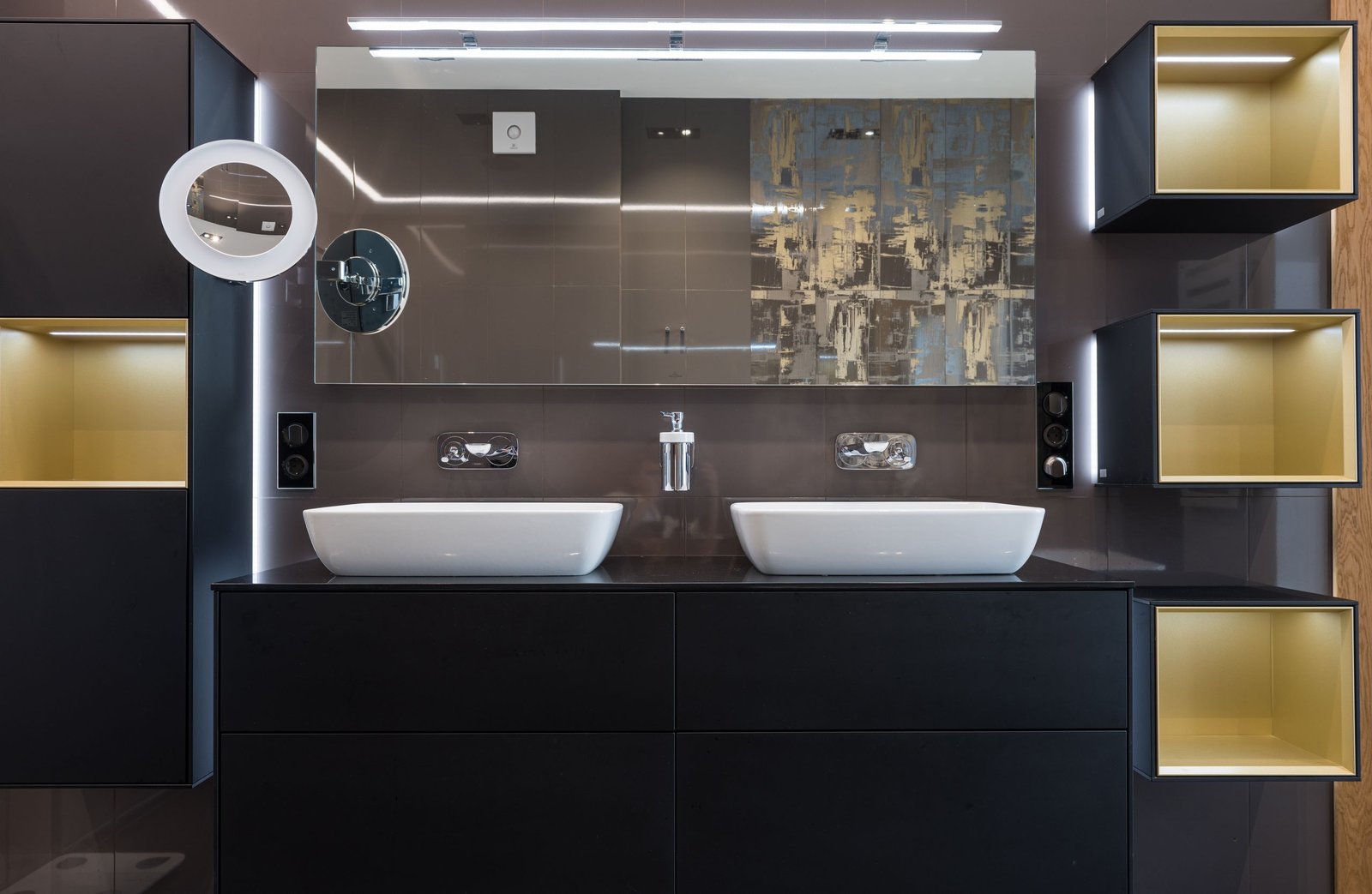
A bathroom can be perfectly ordinary in size and still feel crowded. The problem isn’t always a lack of cabinets or shelves. How to Organize Bathroom Cabinets Sometimes the real issue is that everyday products don’t have a logical home, backup supplies are mixed with daily essentials, and the countertop has quietly become the storage system.
The smartest approach is to work through the space in order:
Declutter → Categorize → Find Unused Space → Choose the Right Storage → Improve Accessibility → Maintain
Bathroom storage ideas are practical ways to organize toiletries, towels, cleaning supplies, beauty products, and everyday essentials using cabinets, shelves, drawers, baskets, wall space, and other available areas.how to organize bathroom cabinets The best solutions improve access while reducing clutter and making the bathroom easier to maintain.
Don’t start by buying storage. Start by deciding what deserves storage.
If your bathroom feels crowded no matter how often you tidy it, the problem may be where things are stored, not how often you clean.
Start With a Bathroom Storage Reset
Before adding a shelf, basket, cart, or organizer, take a quick look at what is already taking up space. Pull out products that have accumulated in drawers, cabinets, under the sink, around the shower, and on the counter.
Declutter Before Adding Storage
The smartest bathroom storage idea may be removing items before adding storage for them.
Old products, duplicates, unused toiletries, empty containers, and things that belong somewhere else all consume space. Adding another bin doesn’t solve that problem. It simply gives the clutter a new container.
You don’t need to empty the entire bathroom at once. Start with one zone, such as the vanity drawer or under-sink cabinet.
Group Products by Function
Once unnecessary items are out of the way, group what’s left.
Keep similar categories together, such as:
- Dental-care products
- Skincare
- Hair products
- Makeup
- Bath products
- Towels and linens
- Toilet paper
- Cleaning supplies
- Grooming accessories
This makes the next decision much easier because you’ll know what needs storage and how much space each category actually requires.
Keep Everyday Items Within Reach
Frequency of use should influence where something lives.
A face cleanser used every morning shouldn’t be buried behind backup shampoo. Extra toilet paper doesn’t need prime vanity space. how to organize bathroom cabinets A guest towel doesn’t need to occupy the easiest-to-reach drawer if it is only used occasionally.
Here’s the thing: good bathroom organization isn’t about making every shelf look perfect. It’s about reducing the number of unnecessary steps between you and the things you use.
35 Smart Bathroom Storage Ideas
1. Add Floating Shelves
Floating shelves can turn unused wall space into useful bathroom storage without taking up floor area. They’re especially helpful above a vanity, beside a mirror, or on an otherwise empty wall.
Use them for folded hand towels, attractive everyday toiletries, baskets, or frequently used products.
The limitation is visibility. Everything placed on an open shelf remains part of the room’s visual landscape, so it can look cluttered if too many small products are displayed together.
2. Use the Space Above the Toilet
The wall above the toilet is often overlooked. A suitable over-the-toilet shelving unit or cabinet can provide useful vertical storage for toilet paper, towels, baskets, or backup supplies.
Choose the setup carefully. It shouldn’t interfere with access to the toilet, make the area feel cramped, or create a difficult-to-clean arrangement.
In a small bathroom, this can be one of the most useful ways to gain storage without sacrificing floor space.
3. Install a Slim Rolling Cart
A narrow rolling cart can make an awkward gap surprisingly useful.
Place one between the vanity and wall, beside a cabinet, or in another suitable narrow space. Depending on its design, it can hold hair products, skincare, toilet paper, towels, or cleaning supplies.
The advantage is flexibility. how to organize bathroom cabinets You can move the cart when cleaning or change its purpose later.
Quick note: measure the available gap before choosing one. A cart that’s slightly too wide won’t be a space-saving solution at all.
4. Add Drawer Dividers
Bathroom vanity drawers can become chaotic because small products quickly mix together.
Drawer dividers create simple boundaries for categories such as dental care, cosmetics, grooming tools, skincare, or hair accessories.
The goal isn’t to divide every individual item. Instead, create broad categories that make sense for your routine.
A drawer should help you find something quickly, not require a second organizing project every morning.
5. Organize Under the Sink
Under-sink storage is valuable because it can hold supplies that don’t need to remain visible.
Use suitable bins, pull-out organizers, or adjustable containers for items such as backup toiletries, cleaning supplies, toilet paper, and other appropriate products.
Keep the plumbing area accessible. how to organize bathroom cabinets Avoid packing containers so tightly that you can’t reach pipes or identify a leak.
If products have specific storage requirements, follow their labels and manufacturer instructions rather than assuming every item belongs under the sink.
6. Use Stackable Bins
Stackable bins make better use of cabinet height than a collection of single containers sitting side by side.
They’re particularly useful for backup toiletries, hair products, washcloths, or smaller bathroom accessories.
Use separate bins for broad categories rather than creating a container for every type of item. Otherwise, you can end up with more containers than useful storage.
Transparent or clearly labeled options can make less frequently used supplies easier to locate.
7. Add a Shower Caddy
A shower caddy can keep shampoo, conditioner, body wash, razors, and other shower essentials together instead of scattered around the tub or shower floor.
Choose a style that suits the shower layout and the manufacturer’s recommended installation method.
A caddy can reduce visual clutter, but it also has a capacity limit. If bottles are constantly overflowing from it, that’s a sign that the product collection may need to be reduced rather than expanded.
8. Use Corner Shower Shelves
Corners are easy to overlook, yet they can provide useful shower storage.
Corner shelves can hold everyday bath products while keeping them away from the main walking area. how to organize bathroom cabinets They’re particularly useful when a flat wall doesn’t offer enough practical space.
The shelf should not interfere with movement or create a sharp obstacle in a cramped shower.
For permanent solutions, consider the installation requirements carefully. A storage solution that requires drilling should be appropriate for the surface and installed according to manufacturer guidance.
9. Hang Hooks Behind the Door
The back of a bathroom door can provide useful storage without occupying floor or cabinet space.
Depending on the door and mounting method,how to organize bathroom cabinets hooks can hold robes, towels, lightweight bags, or accessories.
This approach works especially well when wall space is already occupied by a mirror, shelves, or fixtures.
Before adding anything, make sure the door can still open and close comfortably and that the hardware is suitable for the surface.
10. Use an Over-the-Door Organizer
An over-door organizer can turn unused vertical space into storage for smaller bathroom supplies.
Use pockets for hair accessories, toiletries, spare personal-care products, or other lightweight items.
This is especially useful in rentals because it may avoid permanent wall changes, How to Organize Bathroom Cabinets although rental rules and the organizer’s weight limits still matter.
Don’t overload it. how to organize bathroom cabinets A door organizer is helpful because it uses overlooked space, not because it can hold unlimited supplies.
11. Add Towel Hooks
Traditional towel bars aren’t the only option.
Towel hooks can be useful when several people share a bathroom or when wall space is limited. Each person can have an assigned hook, making it easier to return towels to the same place.
Hooks can also work well for robes or lightweight accessories.
The key is placement. A hook should be positioned where the towel can dry properly and where it won’t interfere with doors, fixtures, or movement.
12. Create a Dedicated Towel Shelf
A dedicated towel shelf gives folded towels a predictable home.
Use a shelf above a suitable open wall area, inside an appropriate cabinet, How to Organize Bathroom Cabinets or as part of a larger storage unit.
Keeping bath towels, hand towels, and washcloths grouped can make the bathroom easier to reset.
If open shelving makes the room look too busy, place smaller towels in a basket on the shelf and reserve exposed space for only a few frequently used items.
13. Roll Towels Instead of Folding Them
Rolling towels can make certain bathroom shelves and baskets easier to use.
Rather than stacking towels into a tall pile that becomes unstable when one is removed, rolled towels can sit side by side or vertically in a suitable basket.
This isn’t automatically better than folding. how to organize bathroom cabinets It depends on the storage shape and how often towels are removed.
For a narrow shelf or deep basket, rolling may make it easier to see what you have without disturbing the entire stack.
14. Use Baskets for Toiletries
Baskets can group products that would otherwise spread across shelves and counters.
Create broad categories such as daily skincare, How to Organize Bathroom Cabinets hair products, guest supplies, or bath accessories.
The basket becomes the category’s home.
Choose a size that matches the amount you actually own. An oversized basket can encourage accumulation, how to organize bathroom cabinets while a basket that’s too small will constantly overflow.
15. Create a Toilet Paper Station
Toilet paper doesn’t need to be stored wherever there happens to be an empty corner.
Create one dedicated location for spare rolls using a suitable basket, cabinet shelf, freestanding holder, or other bathroom-friendly storage.
Keeping backup rolls together makes them easier to find and helps prevent them from taking over vanity or under-sink space.
In a small bathroom, vertical storage can be particularly useful because it keeps the supply organized without requiring a wide piece of furniture.
16. Use a Narrow Freestanding Cabinet
A slim freestanding cabinet can add storage where a full-size vanity or cabinet won’t fit.
Use it for towels, toiletries, paper products, or less frequently used supplies.
Measure carefully before buying or placing one. Bathroom circulation matters, and a cabinet that technically fits can still make a narrow room uncomfortable to move through.
This option can also be useful for renters because it may provide additional capacity without permanent alterations.
17. Maximize Medicine-Cabinet Storage
The medicine cabinet can often hold more when its interior is organized by category rather than treated as one large compartment.
Small suitable containers or internal organizers can separate dental products, grooming items, or frequently used personal-care supplies.
Be selective about what belongs there. How to Organize Bathroom Cabinets Medicines and other health products should be stored according to their labels and appropriate instructions rather than automatically being placed in the bathroom.
Or maybe I should say it this way: the goal is to make the cabinet useful, not to fill every available inch.
18. Add a Magnetic Storage System
A magnetic storage system can be useful for compatible small metal accessories and tools.
It can keep lightweight items visible and accessible without using a drawer or countertop.
Before using magnets, make sure the items are compatible and the mounting method is appropriate for the bathroom environment.
This is a good example of using a small amount of wall or cabinet space for a specific category instead of adding another large organizer.
19. Create Hair-Tool Storage
Hair dryers, brushes, straighteners, curling tools, How to Organize Bathroom Cabinets and their cords can quickly consume valuable counter space.
Create a dedicated hair-tool zone using an appropriate organizer, drawer section, cabinet area, or wall-mounted solution designed for the tools being stored.
Heat-producing tools require extra care. Follow the manufacturer’s instructions for cooling, storage, and electrical use, and don’t place hot tools into storage that isn’t designed to handle them.
The best storage is the one that makes putting the tools away easier than leaving them on the counter.
20. Use Wall-Mounted Organizers
Wall-mounted organizers can move frequently used products off the counter and into a designated vertical zone.
They can work for toiletries, brushes, grooming accessories, or small containers.
Before mounting anything, check the wall surface, How to Organize Bathroom Cabinets hardware requirements, weight limits, and installation instructions.
For renters, removable options may be appropriate in some situations, but their stated weight limits and surface requirements should still be respected.
21. Add Recessed Storage Where Appropriate
Recessed storage can create useful capacity without projecting far into the room.
It can be particularly valuable in bathrooms where floor and wall space are limited.
However, this is different from simply adding a shelf. Recessed storage can involve cutting into walls and may interact with plumbing, electrical components, insulation, or structural elements.
That makes it a more involved project. Follow appropriate installation guidance and use a qualified professional when the work requires expertise beyond simple organization.
22. Use a Ladder Shelf
A ladder shelf provides several levels of vertical storage while maintaining a relatively narrow footprint.
Use it for folded towels, baskets, toiletries, or decorative items that also serve a practical purpose.
It can work well in bathrooms that have an empty wall but limited floor width.
Keep the shelf stable and appropriately positioned. How to Organize Bathroom Cabinets Bathroom floors can become wet, so stability should take priority over simply squeezing another piece of furniture into the room.
23. Organize Vanity Drawers by Category
Instead of placing products wherever they fit, give each vanity drawer a clear purpose.
One drawer might hold dental supplies. Another could hold skincare. How to Organize Bathroom Cabinets Another might be used for grooming accessories or makeup.
The exact categories should match the household.
If several people share the bathroom, how to organize bathroom cabinets assigning drawers or sections by person can also make the space easier to maintain.
The advantage is predictability. When everything has a category, putting it away becomes much faster.
24. Use Small Containers Inside Drawers
Small containers can stop tiny products from rolling into a mixed pile.
They work well for items such as hair ties, cosmetic accessories, cotton products, grooming tools, or other small bathroom essentials.
Don’t automatically buy a dozen containers. How to Organize Bathroom Cabinets Start by identifying which category actually needs separation.
Containers should make the drawer easier to use, not reduce the usable space so much that the drawer becomes inefficient.
25. Create a Makeup Storage Zone
Makeup often spreads across the bathroom because individual products are small and used frequently.
Create one dedicated makeup zone using a suitable drawer, organizer, basket, or countertop container.
Keep everyday products together and move occasional-use items somewhere less accessible.
If you share the bathroom, consider whether makeup should remain in the bathroom at all. Humidity and product-specific storage guidance can matter, How to Organize Bathroom Cabinets so follow the manufacturer’s recommendations for sensitive products.
26. Organize Skincare Products Vertically
Skincare bottles and tubes can consume more surface area than expected.
Vertical organizers can help keep products visible while using the height of a drawer, cabinet, or shelf.
Group products by routine or function instead of simply arranging them by size.
For example, the products used every morning can have a dedicated accessible location, How to Organize Bathroom Cabinets while backups can move to a cabinet or higher shelf.
That way, organization follows behavior rather than appearance.
27. Store Cleaning Supplies Separately
Cleaning products should have their own storage area rather than being mixed casually with toiletries and personal-care products.
A suitable under-sink cabinet or designated storage bin can keep cleaning supplies together.
Follow product labels for storage requirements, keep products in their original containers where appropriate, and avoid transferring chemicals into containers that could be mistaken for other products.
If children are present, How to Organize Bathroom Cabinets storage should also account for child safety and the product’s instructions.
28. Use a Basket for Extra Linens
A dedicated basket can create a simple home for backup towels, washcloths, or other linens.
This works especially well when there isn’t enough cabinet space for a full linen-storage system.
Use one clearly defined basket rather than several loosely categorized containers.
If the basket becomes permanently overfilled, that’s useful information. How to Organize Bathroom Cabinets The household may own more backup linens than the bathroom storage system can reasonably accommodate.
29. Turn an Empty Wall Into a Storage Zone
An empty wall doesn’t have to remain unused.
Depending on the layout, you might combine shelves, How to Organize Bathroom Cabinets hooks, rails, or suitable organizers to create a storage zone.
The important part is to design the wall around a specific need.
For example, one section might hold towels while another stores daily toiletries. Randomly placing several shelves on the wall can create storage without creating organization.
Keep electrical fixtures, ventilation, mirrors, doors, and other essential bathroom elements accessible.
30. Use the Side of a Vanity
The side of a vanity can become useful storage when there is a suitable surface and enough clearance.
Depending on the vanity and mounting method, it may accommodate hooks, narrow organizers, or small accessories.
This is particularly useful in compact bathrooms because it uses an existing piece of furniture rather than adding another one.
Always make sure the solution won’t interfere with cabinet doors, drawers, plumbing, or movement around the vanity.
31. Create a Guest Bathroom Supply Basket
A guest bathroom doesn’t need to store every household product.
Instead, create one dedicated basket for guest-friendly essentials such as spare towels, How to Organize Bathroom Cabinets unopened toiletries, or other appropriate supplies.
This keeps occasional-use products from taking over the space used every day.
It also makes preparation easier when visitors arrive. You can simply check the basket instead of searching through several cabinets.
32. Use Closed Cabinets for Visual Clutter
Closed storage is useful when you want the bathroom to feel visually calmer.
Cabinets can hide bulk toiletries, backup supplies, personal products, cleaning accessories, and other items that don’t need to remain visible.
This doesn’t mean every product should be hidden. how to organize bathroom cabinets.
Closed cabinets can become frustrating if frequently used items are buried inside them. Place daily essentials somewhere accessible and reserve closed storage for categories that benefit from being concealed.
33. Use Open Shelves for Everyday Essentials
Open shelves can make frequently used items easy to see and reach.
They’re particularly useful for neatly folded towels, attractive containers, or a small number of everyday products.
The trade-off is that open shelves require visual discipline. If every available inch is filled with bottles and accessories, the storage can make the bathroom look more cluttered.
Use open shelving selectively.
34. Add Storage Above the Vanity
The area above a vanity can provide valuable vertical storage through appropriate shelves, cabinets, or organizers.
It can be useful for everyday skincare, hand towels, grooming supplies, or other items that need to remain accessible.
However, the space above a vanity often contains a mirror, lights, electrical components, or other fixtures. Storage should never interfere with their intended use.
Plan the available space first rather than installing something simply because the wall is empty.
35. Create a Five-Minute Bathroom Reset
A storage system works only if people can maintain it.
At the end of the day or after a busy morning, how to organize bathroom cabinets spend a few minutes returning products to their assigned homes. Put towels back where they belong, move toiletries off the counter, and return loose accessories to their categories.
This small habit prevents clutter from becoming a major project.
The goal isn’t a perfect bathroom every minute. It’s a bathroom that can return to an organized state quickly.
Best Bathroom Storage Ideas for Small Spaces
Small bathrooms require a different mindset. The answer isn’t always more furniture.
Prioritize Vertical Storage
When floor space is limited, look upward.
Floating shelves, wall-mounted organizers, suitable over-the-toilet storage, hooks, and narrow shelving can add capacity without taking over the walking area.
Vertical storage is particularly helpful when the bathroom has a large unused wall.
Use Narrow Gaps
Look at the spaces between existing fixtures.
A narrow rolling cart may fit between a vanity and wall. A slim cabinet might work beside another piece of furniture. Even a small gap can become useful when the storage is designed around the available dimensions.
Measure first.
Choose Wall-Mounted Solutions
Wall-mounted storage can preserve valuable floor space.
Use it for categories that benefit from easy access, such as towels, toiletries, grooming accessories, or small everyday supplies.
Installation matters. Check the wall type, mounting requirements, weight limits, and manufacturer instructions before attaching anything.
Keep the Floor Clear
A small bathroom can feel even smaller when baskets, cabinets, and carts occupy every open area.
Try to keep the main walking path clear.
If an item can reasonably move to a wall, cabinet, drawer, or existing storage area, consider doing that before adding another floor-standing piece.
Use Hidden Storage
Under-sink cabinets, vanity drawers, medicine cabinets, and closed shelves can provide capacity without adding visual clutter.
Hidden storage is particularly helpful when the room already has plenty of visible objects.
The trick is to keep categories organized inside the hidden space. A closed cabinet isn’t organized simply because you can’t see the mess.
Avoid Oversized Furniture
Large furniture can make a small bathroom harder to navigate.
Before adding a cabinet or shelf, consider its footprint, door swing, drawer clearance, and relationship to other fixtures.
A smaller storage solution that remains accessible is often more useful than a large unit that makes the room uncomfortable.
Open Shelves vs. Closed Bathroom Storage
Open shelves and closed cabinets solve different problems.
Open shelves vs. closed cabinets: Open shelves make frequently used items visible and accessible, while closed cabinets hide clutter and create a cleaner appearance. Open storage works well for attractive, everyday essentials; cabinets are often better for bulk supplies, personal products, and items you prefer to keep out of sight.
When Open Shelves Work Best
Open shelving is useful when visibility matters.
You can quickly see towels, baskets, skincare products, or other everyday essentials. It can also make a smaller room feel more accessible because you don’t have to open multiple doors to find something.
The downside is that every item becomes part of the visual design.
When Closed Cabinets Make More Sense
Closed cabinets are helpful when visual clutter is the bigger problem.
They can conceal bulk products, cleaning supplies, personal items, backups, and other categories that don’t need to be visible throughout the day.
They’re also useful when several people share a bathroom and the room contains many different types of products.
Use a Combination of Both
You don’t have to choose one storage style for the entire bathroom.
A combination often makes sense. Open shelving can handle attractive everyday items and towels, while closed cabinets can store backups, cleaning supplies, and less frequently used products.
Open shelves can make everyday routines easier, but closed cabinets may be better when the household needs visual calm. Neither is universally better.
How to Organize Bathroom Storage by Frequency of Use
A useful bathroom organization system follows the way the room is actually used.
Keep Daily Essentials at Eye Level
Products used every day should generally be easy to reach.
That might mean a vanity drawer, medicine cabinet, open shelf, or another convenient location near where the item is used.
The fewer steps involved, the more likely the system is to stay organized.
Move Backup Products Higher or Farther Away
Extra shampoo, unopened toiletries, spare toilet paper, and occasional-use supplies don’t need prime storage positions.
Use higher shelves, deeper cabinets, or other less accessible areas where appropriate.
This frees the most convenient locations for things you reach for every morning and evening.
Create a Dedicated Home for Each Category
Every major category should have a predictable location.
When several people share a bathroom, this becomes even more important. A household shouldn’t need to ask where towels, hair products, cleaning supplies, or spare toiletries belong.
The exact arrangement will vary from bathroom to bathroom.
Avoid Overfilling Containers
A basket or drawer organizer shouldn’t be packed so tightly that removing one item disrupts everything else.
Leave enough room to use the storage comfortably.
A useful principle is simple:
Store things according to how often and where you use them.
This makes the system easier to maintain than arranging everything according to color, size, or appearance alone.
How to Keep Bathroom Storage Organized
Organization is a maintenance system, not a one-time decorating project.
Give Everything a Home
If an item has no obvious home, it will eventually return to the countertop, floor, or nearest empty shelf.
Create simple homes for the categories that appear repeatedly.
The system should be obvious enough that someone else in the household can use it without asking for instructions.
Avoid Buying Organizers for Every Problem
More containers aren’t always the answer.
If a bathroom has too many products, adding another basket may only make the problem harder to see.
Start with decluttering. Then identify the storage problem that remains.
This prevents spending money and space on organizers that solve symptoms instead of the underlying issue.
Reassess Products Regularly
Bathrooms accumulate products quickly.
A moisturizer gets replaced, a shampoo is abandoned, a duplicate purchase appears, or a beauty product stops being used.
Every so often, reassess the categories. Remove products that are expired, empty, unwanted, or no longer appropriate to keep.
This creates storage space without buying anything.
Use a Five-Minute Reset
A short reset can prevent a small amount of clutter from becoming a major weekend project.
Return products to their homes. Straighten towels. Clear the countertop. Put backup supplies back into their category.
You don’t need a perfect system.
You need one that’s easy enough to use repeatedly.
Quick Comparison: Which Storage Solution Fits Your Bathroom?
| Storage Solution | Best For | Main Benefit | Potential Limitation |
| Floating shelves | Towels and everyday products | Uses wall space | Items remain visible |
| Closed cabinets | Bulk and personal supplies | Hides clutter | Requires available wall depth |
| Rolling cart | Narrow gaps | Flexible and movable | Limited capacity |
| Over-the-toilet storage | Small bathrooms | Uses vertical space | Can visually crowd the toilet area |
| Baskets | Toiletries and accessories | Easy categorization | Contents can be forgotten |
| Over-door organizer | Small accessories | Uses unused door space | Door must support the organizer |
| Drawer dividers | Vanity supplies | Keeps small items separated | Takes up some drawer space |
| Wall hooks | Towels and robes | Saves shelf space | Requires suitable mounting |
| Shower caddy | Bath products | Keeps products together | May not suit every shower layout |
What Is the Best Way to Organize Bathroom Storage?
The best approach is to declutter first, group remaining products by function, and then place everyday items close to where they’re used. Less frequently used supplies can move to higher, deeper, or closed storage. This approach reduces unnecessary searching and makes the bathroom easier to reset because every major category has a predictable home.
How Can You Add Storage to a Small Bathroom?
Small bathrooms can gain useful capacity by taking advantage of vertical and overlooked areas. Floating shelves, narrow rolling carts, suitable over-the-door organizers, wall-mounted storage, under-sink organizers, and over-the-toilet solutions can help without consuming much floor space. The key is choosing storage that fits the layout rather than adding bulky furniture.
Where Should Bathroom Essentials Be Stored?
Bathroom essentials should generally be stored close to the place where they are used. Daily skincare can stay near the vanity, shower products can remain within convenient shower storage, and towels can be placed where they’re easy to reach. Backup and occasional-use items can occupy less accessible cabinets, shelves, or baskets.
Frequently Asked Questions
What is the best way to add storage to a small bathroom?
Start with vertical and overlooked spaces. Floating shelves, narrow carts, over-the-door organizers, wall hooks, and suitable over-the-toilet storage can add capacity without taking up much floor space.
How can I organize my bathroom without adding cabinets?
Use floating shelves, baskets, wall hooks, rolling carts, over-door organizers, drawer dividers, and suitable wall-mounted storage. Start by decluttering so you don’t create storage for items you don’t need.
How do I organize a bathroom with very little counter space?
Move frequently used products into drawers, baskets, wall-mounted organizers, or shelves. Keep only the items you use every day on the counter.
What should be stored under the bathroom sink?
Under-sink storage can work well for suitable cleaning supplies, backup toiletries, extra toilet paper, and other items that don’t need to remain on the counter. Keep products separated and follow their storage instructions.
How do I organize towels in a small bathroom?
Use vertical shelving, towel hooks, wall-mounted racks, or baskets. Rolling towels can also make efficient use of open shelving or baskets when the layout allows it.
Are open shelves or cabinets better for bathroom storage?
Neither is universally better. Open shelves provide visibility and quick access, while cabinets hide clutter. A combination can work well when everyday items need easy access but bulk or personal products are better concealed.
How can I reduce bathroom counter clutter?
Remove unused products first, then give frequently used items designated homes in drawers, baskets, cabinets, or wall-mounted storage. Keep only genuine daily essentials on the counter.
What is the best storage solution for a rental bathroom?
Choose solutions that don’t require permanent alterations where possible, such as freestanding carts, suitable over-door organizers, removable hooks, baskets, and existing cabinet or drawer organizers. Always follow rental rules and product instructions.
A Practical Bathroom Storage System That Lasts
A bathroom doesn’t need dozens of organizers to stay functional.
It needs a system that matches the way people actually use the room.
Start by removing products that don’t deserve valuable space. Group what’s left by function. Look at walls, doors, corners, gaps, drawers, cabinets, and other overlooked areas. Then choose storage based on accessibility, frequency of use, available space, and how much visual clutter the household can comfortably handle.
For some bathrooms, that might mean floating shelves and towel hooks. For others, it could mean closed cabinets, drawer dividers, or a narrow rolling cart. A family bathroom may need clearly separated categories, while a guest bathroom may benefit from one simple supply basket.
The best solution isn’t necessarily the one that adds the most capacity.
It’s the one that makes the room easier to use.
Storage systems that require drilling, anchoring, electrical work, plumbing changes, or structural modifications should be installed according to manufacturer instructions and, where necessary, by a qualified professional.
Start with one bathroom zone today. Clear out the products you no longer use, group what remains, and choose one storage solution that makes your daily routine easier. Once that area works, move to the next.
Don’t organize the bathroom around what looks good.
Organize it around what you actually use and where you use it.

2 Comments
Pingback: Bathroom Remodel: How to Choose Anaheim Contractors for Your Home
Pingback: How to Clean Bathroom Step by Step: 8 Easy Tips for a Sparkling, Fresh Space