



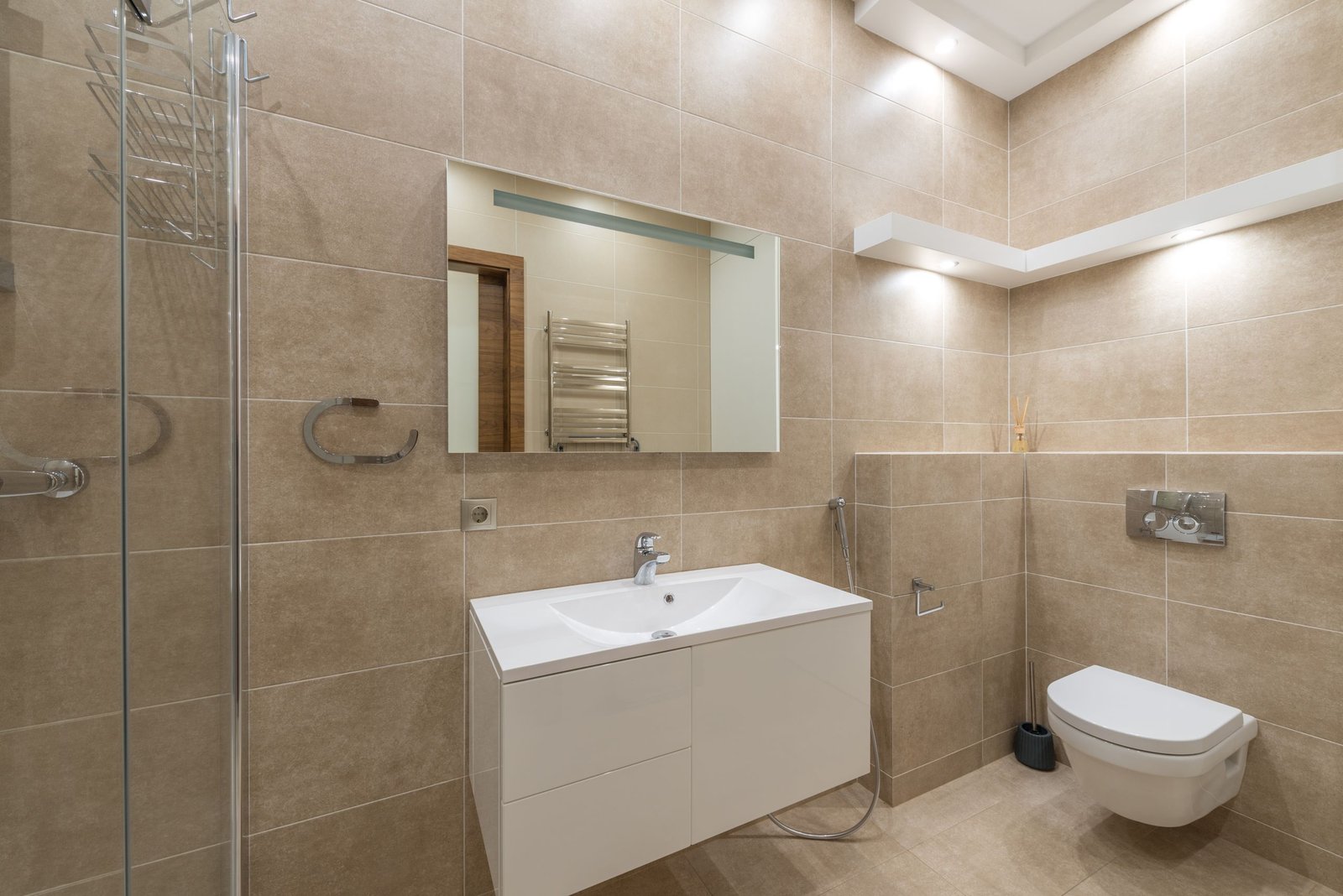
Choosing bathroom tile is one of the few design decisions that is hard to undo. Paint takes an afternoon to change. Tile takes a demolition crew. Bathroom Tile Ideas That is why the best bathroom tile ideas do two jobs at once: they look good, and they hold up to water, steam and daily use.
This guide gives you 40 bathroom tile ideas, grouped by where you will use them (showers and walls, floors, small bathrooms, styles, budget fixes and details). Bathroom Tile Ideas After the ideas, you will find a plain-English material guide, a cost breakdown, a list of common mistakes and answers to the questions homeowners ask most.
Key takeaways
- Porcelain is the safest all-round choice for bathroom floors and showers because it absorbs very little water.
- Fewer grout lines (large tiles, narrow joints) make a small bathroom look bigger and are easier to clean.
- Tile and grout are not waterproof on their own. A shower needs a proper waterproofing layer behind the tile.
- Check the slip rating of any floor tile before you buy. Look for a wet DCOF of 0.42 or higher.
- Most estimates put installed bathroom tile at roughly $10 to $25 per square foot, but stone, mosaics and complex patterns cost more.
Bathroom Tile Ideas for Showers and Walls
1. Floor-to-ceiling large-format porcelain
Big rectangles such as 24 x 48 inches leave very few grout lines, so the shower looks calm and is quick to wipe down. Ask your installer to check that the wall is flat first, Bathroom Tile Ideas because large tiles show uneven surfaces.
2. Vertically stacked subway tile
Turn classic subway tile on its end and line up the joints in a straight stack. Bathroom Tile Ideas The vertical lines draw the eye up and make the ceiling feel higher. A matching grout color keeps the look clean.
3. Glossy, handmade-look glazed tile
Glazed tiles with slight shade and edge variation add warmth that perfectly uniform tile cannot. Real handmade zellige is beautiful but uneven, so it needs an experienced installer. Handmade-look porcelain gives a similar mood with more consistency.
4. A single color from floor to ceiling
Sometimes called color drenching, this means using one hue across walls, and sometimes the floor, for a bold, cohesive room. Soft sage, deep blue and warm clay all work. Bathroom Tile Ideas Use two finishes (matte and gloss) to avoid a flat look.
5. Fluted or ribbed 3D wall tile
Raised vertical ridges add texture and catch shifting light. They work best on a single feature wall, such as behind the tub or vanity. Choose a design with shallow ridges so soap and dust do not collect.
6. Herringbone shower walls
Laying rectangular tile in a zigzag pattern adds movement without needing a bold color. Plan for extra tile, because diagonal cuts create more waste (see the cost section).
7. An accent tile niche
Line the recessed shelf in your shower with a contrasting tile, such as a patterned or darker color. It adds a design moment for the price of a few square feet of tile.
8. Marble-look porcelain
Porcelain printed with realistic veining gives the look of marble with less upkeep. Bathroom Tile Ideas Real marble can etch (dull) when it meets acidic products, while porcelain does not. Look for tiles with varied patterns, so walls do not look repeated.
Bathroom Floor Tile Ideas
9. Classic black-and-white checkerboard
A timeless pattern that suits traditional, vintage and modern bathrooms. Bathroom Tile Ideas Use a matte finish and a small tile size for better grip underfoot.
10. Checkerboard in softer colors
Swap black for charcoal, green, terracotta or warm brown, and white for cream. The pattern stays playful but feels less stark.
11. Hexagon mosaics
Small hexagons suit both floors and shower pans. The many grout lines give extra traction, and the shape works in modern and vintage rooms alike.
12. Penny round mosaics
Tiny circles bend easily around curved edges and shower slopes. Contrasting grout shows the pattern clearly. Matching grout gives a softer look.
13. Terrazzo-look floors
Chips of color in a neutral base hide dust and water spots well. Terrazzo-look porcelain is lighter on the budget than real terrazzo.
14. Patterned cement-look tile
Bold geometric or floral prints add personality to a floor while keeping walls simple. Choose porcelain versions, because real cement tile is porous and needs regular sealing.
15. Wood-look porcelain planks
You get the warmth of timber without the risk of water damage. Lay the planks in a one-third offset (not 50 percent) to reduce edge lifting on long tiles.
16. Honed travertine
Warm, earthy stone has a natural, spa-like feel. Choose a honed (matte) finish for better grip, and seal it as the manufacturer recommends.
Small Bathroom Tile Ideas
17. Use the same tile on floor and walls
A continuous surface removes visual breaks, so the room feels larger. Pick a tile rated for both floor and wall use, with a slip-resistant finish.
18. Large tiles with narrow grout
Rectified tiles (cut with very straight edges) allow thin joints. Fewer lines mean less visual clutter in a tight space.
19. Light, glossy tile
Pale colors and a glaze reflect light and bounce it around the room. Bathroom Tile Ideas Pair with a matte floor so the surface is not slippery.
20. Vertical layouts
Stacking tile vertically or choosing tall rectangles raises the eye line and makes a low ceiling feel taller.
21. Grout that matches the tile
Tone-on-tone grout blurs the lines and makes small rooms feel seamless. Bathroom Tile Ideas Use contrasting grout only if you want the pattern to stand out.
22. Tile halfway, paint above
Tile the lower half of the walls, or the wet zone only, and paint the rest in a moisture-resistant bathroom paint. It protects the splash zone and keeps the room airy.
Bathroom Tile Ideas by Style
23. Japandi
Think matte, earthy tones, soft stone looks and clean lines. Add a wood-look vanity and keep patterns minimal.
24. Mid-century modern
Speckled glazes, muted greens, mustard and warm browns suit this style. Slim rectangular tiles in a stacked layout feel period-correct.
25. Coastal
Soft blues, sandy beiges and crisp whites with gloss or wave-shaped tile create a relaxed seaside mood. Keep the pattern subtle so it does not feel themed.
26. Art Deco
Geometric patterns, fan shapes and black, white and deep green combinations suit this look. Bathroom Tile Ideas Add a slim metal-look edge trim for glamour.
27. Traditional
White subway tile on the walls with a marble-style hexagon floor is a dependable pairing that rarely dates.
28. Modern minimalist
Concrete-look or stone-look porcelain in large formats, with thin grout joints in a matching color, gives a quiet, gallery-like space.
29. Moroccan and boho
Patterned floor tile, scalloped shapes and handmade-look wall tile add warmth. Use one pattern per surface to avoid visual noise.
30. Cottage
Small floral prints, soft pastels and beadboard-style details give a cozy, homey feel. Keep the tile pattern small in scale.
Budget and Renter-Friendly Tile Ideas
31. Tile only the wet zone
Spend your budget where water hits hardest: the shower walls and the floor. Use paint elsewhere.
32. A tile border or stripe
A single row of patterned tile among plain field tile gives a custom look for only a few extra tiles.
33. Peel-and-stick tile outside the wet zone
These are a low-cost, removable option for renters on a dry wall or backsplash. Do not use them inside a shower or where water sits.
34. Tile paint for a short-term refresh
Specialty tile paint can update dated tile on low-splash surfaces. Bathroom Tile Ideas It needs careful cleaning and priming, and it may not last long in a daily shower, so treat it as a temporary fix and follow the manufacturer’s instructions.
35. Stock subway tile, creative layout
Standard white tile costs little. Bathroom Tile Ideas Laying it in a herringbone, vertical stack or offset pattern gives it a custom look for the same material price.
36. One premium feature wall
Splurge on one beautiful tile for the vanity or tub wall, and use simple tile everywhere else.
Tile Details That Make a Difference
37. A built-in shower bench
A tiled bench adds comfort and a place to rest your foot while shaving. It must slope slightly so water drains off.
38. Metal edge profiles
Slim metal trims finish exposed tile edges neatly and protect corners. Choose a finish that matches your faucets.
39. Tile behind the vanity
Carry the tile up behind the mirror to protect the wall from splashes and add a focal point.
40. Contrasting grout lines
Dark grout on white tile or white grout on dark tile makes the pattern graphic. Test a sample first, as the effect is stronger than most people expect.
How to Choose Bathroom Tile: A Material Guide
Porcelain. Dense and very low in water absorption (0.5 percent or less), so it suits floors, showers and wet rooms. Bathroom Tile Ideas It is harder to cut than ceramic, so installation can cost more.
Ceramic. Usually cheaper and easier to cut. It is a good choice for walls and light-traffic floors, Bathroom Tile Ideas but it absorbs more water than porcelain, so check the product label before using it on a floor.
Natural stone (marble, travertine, slate). Beautiful and unique, but porous. It needs sealing and gentle, pH-neutral cleaners. Marble can etch if it contacts acids, such as some bathroom cleaners.
Glass tile. Reflects light and does not absorb water. It works well on walls and as accents, but it is slippery, so avoid it on floors unless it is rated for floor use.
Handmade tile and zellige. Rich in character, with natural variation in shade, edges and thickness. Use experienced installers, and expect wider grout joints.
Terrazzo and cement tile. Real versions are porous and need sealing. Porcelain copies give the look with much less upkeep.
Size, Shape, Layout and Grout
Size. Large tiles mean fewer grout lines and a more spacious look. Small tiles, such as mosaics, bend around curves and give grip on shower floors.
Layout. Straight stack is modern and neat. Brick or running bond is classic. Herringbone adds movement. For long tiles, offset by about one third, not half.
Grout. Matching grout blends in. Contrasting grout highlights the pattern. Cement grout needs sealing. Epoxy grout resists stains and does not need sealing, but it is harder to install. Use sanded grout for wider joints and unsanded for very narrow ones, following the manufacturer’s advice.
Waste. Order about 10 percent extra tile for straight layouts and about 15 percent for diagonal or herringbone patterns.
Floor Safety and Waterproofing
Two things matter more than looks. First, slip resistance. Wet floors need tile with a wet DCOF of 0.42 or higher, which is the usual benchmark for level floors that get wet. Matte finishes and small mosaics usually grip better than polished tile. Second, waterproofing. Tile and grout are water-resistant at best, so showers need a waterproofing membrane or a waterproof backer system behind the tile. Follow local building codes and use a qualified installer for wet areas.
How Much Does Bathroom Tile Cost?
Prices vary widely by region, tile type and installer, and different cost guides give different numbers. Use the ranges below for planning only, and get at least three local quotes. These figures are US estimates checked against published cost guides in October 2026.
- Typical installed cost: roughly $10 to $25 per square foot for standard ceramic or porcelain, including labor.
- Tile material alone: ceramic can start around $1 to $5 per square foot, while porcelain ranges from about $3 to $30, and designer or natural stone can cost much more.
- Labor: commonly about $5 to $15 per square foot, higher for mosaics, herringbone and large heavy tiles.
- Removing old tile: about $1 to $5 per square foot.
- Example: a 40-square-foot bathroom floor (about 5 x 8 feet) typically falls around $450 to $1,150 for tile installation, before shower walls or extras.
Ways to save: tile only the wet zone, choose standard sizes, use stock tile in a creative layout, Bathroom Tile Ideas and keep one premium tile for a feature area.
Common Bathroom Tile Mistakes to Avoid
- Choosing floor tile without checking its slip rating.
- Skipping waterproofing behind shower tile.
- Buying exact quantities instead of ordering extra for cuts and breakage.
- Using a trend tile everywhere, rather than as a feature.
- Ignoring grout color, which changes the look a lot.
- Using polished tile on a bathroom floor.
- Not checking that walls and floors are flat before laying large tiles.
- Using porous natural stone without sealing it.
Frequently Asked Questions
What is the best tile for a bathroom floor?
Porcelain is usually the best choice. It absorbs very little water, is durable and comes in many styles. Choose a matte or textured finish with a wet DCOF of 0.42 or higher.
What is the best tile for a shower?
Porcelain or ceramic wall tile works well, and small mosaics are a common choice for the shower floor because they grip well and follow the slope. A waterproofing layer behind the tile is essential.
What tile size is best for a small bathroom?
Large tiles with narrow grout lines make a small bathroom feel more open. Small mosaics work best on shower floors where grip and slope matter.
Final Thoughts
The best bathroom tile is the one that suits your space, your budget and your daily routine. Start with the practical choices: material, slip rating and waterproofing. Then choose color, pattern and layout. If you are unsure, pick one standout feature, such as a feature wall or patterned floor, and keep the rest simple. Order samples, look at them in your own bathroom light, and ask a qualified installer to check the plan before you buy.



1 Comment
Pingback: How to Clean Grout: Step-by-Step Guide for Floors, Showers, and Backsplashes