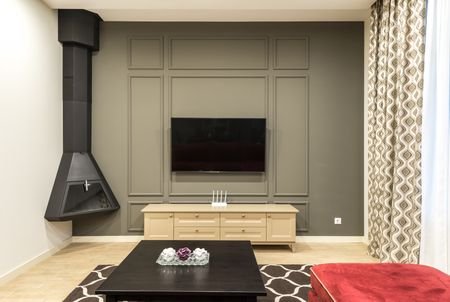




Curtains that are too short, too narrow or hung too low can make a room look unfinished. How to Measure for Curtains The good news is that how to measure for curtains comes down to three numbers: the rod width, the curtain width and the curtain length. How to Measure for Curtains This guide walks you through each one with a worked example, clear formulas and both inches and centimetres, so you can order with confidence.
What You Need Before You Start
- Steel tape measure (it will not stretch like a fabric one)
- Pencil and notepad
- Sturdy step stool or ladder
- Level
- Masking tape to mark the rod position
A helper makes things easier, especially for tall or wide windows.
Step 1: Decide Where the Rod Will Go
Measure after you choose the rod position, because every other number depends on it.
- Height: Mount the rod 4–6 in (10–15 cm) above the window frame. How to Measure for Curtains To make the ceiling look taller, go 6–12 in (15–30 cm) above the frame, or even close to the ceiling.
- Width: Extend the rod 6 in (15 cm) past each side of the frame. This lets the open curtains rest on the wall instead of blocking glass.
Mark both points with masking tape and check them with a level.
Step 2: Measure the Rod Width
Measure the window frame from outer edge to outer edge, then add the side extensions.
Rod length = frame width + 12 in (30 cm)
Example: a 60 in (152 cm) frame needs a rod of about 72 in (183 cm). How to Measure for Curtains If you already have a rod, measure its length without the decorative end caps (finials).
Step 3: Work Out the Curtain Width
Curtains need extra fabric so they fall in soft folds instead of hanging flat. This extra fabric is called fullness.

Total curtain width = rod length × fullness
Choose the fullness that suits your heading style:
| Heading or fabric | Fullness |
| Tab top, rod pocket | 1.5–2x |
| Eyelet (grommet) | 2x |
| Pencil pleat, pinch pleat | 2–2.5x |
| Sheer fabric | 2.5–3x |
For a standard, full look, 2x is the safest choice.
Worked example: a 72 in (183 cm) rod with 2x fullness needs 144 in (366 cm) of fabric in total. How to Measure for Curtains With two panels, each panel should be 72 in (183 cm) wide. Round up, never down, because narrow curtains look thin when closed.
When buying ready-made panels, check whether the listed width is flat or already gathered, so you compare the right numbers.
Step 4: Measure the Curtain Length
Start from the point where the fabric attaches to the hardware. For eyelet, rod-pocket and tab-top curtains, that is the top of the rod. How to Measure for Curtains For curtains on rings or clips, measure from the bottom of the rod to the ring eye, then add the ring drop if needed.
Measure down to your chosen length style:
- Sill length: ends ½ in (1 cm) above the windowsill. Casual and practical for kitchens or windows above furniture.
- Apron length: ends 6 in (15 cm) below the sill. Covers the wall under the window and keeps a neat shape.
- Floor length: ends ½ in (1 cm) above the floor. The most popular choice, and it makes ceilings look taller.
- Pooled (puddled): add 6 in (15 cm) to the floor-length measurement for a soft pool of fabric. Use it for a dramatic look, not for curtains you open and close daily. How to Measure for Curtains More than 12 in (30 cm) of extra fabric looks messy.
Uneven floors: floors and sills are rarely perfectly level, so take three length measurements (left, centre, right). For floor-length curtains, use the shortest figure so the hem clears the floor everywhere.
Quick Length Guide by Ceiling Height
Use this as a starting point for floor-length curtains with the rod 4–6 in above the frame, How to Measure for Curtains then confirm with your own measurement.
| Ceiling height | Typical ready-made length |
| 8 ft (244 cm) | 84 in (213 cm) |
| 9 ft (274 cm) | 96 in (244 cm) |
| 10 ft (305 cm) | 108 in (274 cm) |
If you are unsure, choose the slightly longer size. Curtains can be hemmed, but they cannot be lengthened.
Special Cases
No rod installed yet: measure the window frame, then add 6 in (15 cm) per side for the width. For length, begin 4–6 in above the frame and measure down to your chosen style.
Bay windows: fit a bay rod or track first. Measure each straight section, add them together for the rod length, then apply your fullness. Measure the length separately for each section.
Curtain track on the ceiling: measure the track length, then apply the same fullness formula. How to Measure for Curtains Measure the length from the track to your chosen hem point.
Inside mount: if the curtain sits inside the window recess, measure the recess width and height at three points each (top, middle, bottom) and use the smallest figure so it fits. How to Measure for Curtains Most full-length curtains use an outside mount, as above.

Common Mistakes to Avoid
- Measuring the window instead of the rod. The curtain width is based on the rod, not just the glass.
- Forgetting fullness. Curtains equal to the rod width look flat and cannot cover the window when closed.
- Hanging the rod too low. It makes the window and ceiling look shorter. Place it at least 4 in (10 cm) above the frame.
- Ignoring the starting point. Rod, ring and clip headings add or subtract a few inches of length.
- Skipping the second measurement. Measure each number twice and write it down.
- Buying exactly the right length for floors that slope. Check all three points.
- Using the wrong ladder. Never stand on a wobbly chair to reach a high rod.
FAQs
How wide should curtains be for a 72 in window?
A rod of 84 in (72 + 12) with 2x fullness needs 168 in (427 cm) of fabric, or two panels of 84 in (213 cm) each.
How much wider than the window should curtains be?
The rod should extend about 6 in (15 cm) per side, and the curtain fabric should be 1.5–3x the rod length, depending on heading and fabric.
How high should I hang curtains?
4–6 in (10–15 cm) above the frame is standard. Go higher to add height to the room.
Should curtains touch the floor?
No. Floor-length curtains should stop ½ in (1 cm) above it. Only pooled curtains rest on the floor on purpose.
Final Checklist: How to Measure for Curtains
- Rod position marked and levelled
- Rod length = frame width + 12 in (30 cm)
- Curtain width = rod length × fullness
- Length measured from the correct starting point, at three spots
- Length style chosen: sill, apron, floor or pooled
Follow these five checks and you will get a clean, full, professional fit the first time.