
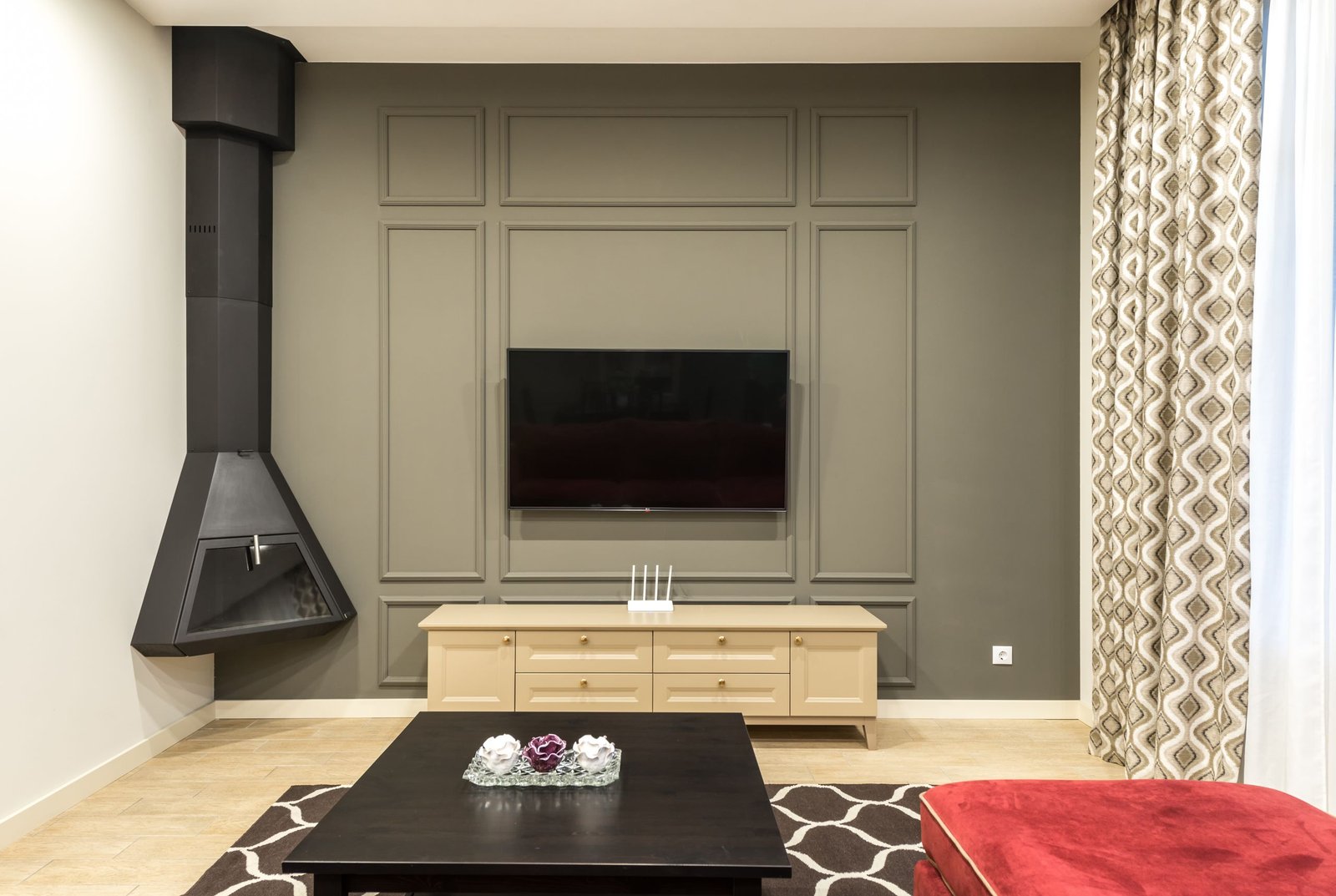
The best accent wall ideas give a room a clear focal point without a full redesign. Accent Wall Ideas With one free weekend and a can of paint, or a bigger budget for stone, tile and custom panelling, a single wall can change how an entire room feels.
This guide covers 25 accent wall ideas grouped by material, with approximate costs, difficulty and rental-friendly options in one table. Accent Wall Ideas You will also learn how to choose the right wall and colour, which mistakes to avoid and how to paint a DIY accent wall step by step.
What Is an Accent Wall?
An accent wall, also called a feature wall, is one wall finished differently from the rest of the room, using bold colour, pattern, texture or a different material. Accent Wall Ideas It draws the eye to a focal point, Accent Wall Ideas adds depth to a plain room and can mark a zone in an open-plan space. Most rooms need only one.
Accent Wall Ideas at a Glance
Costs are rough, materials-only estimates in US dollars for one average wall (about 12 × 8 ft). Prices vary by country, brand and whether you hire a professional.
| # | Idea | Difficulty | Approx. cost (USD) | Time | Rental-friendly |
| 1 | Solid bold colour | Easy | 30–80 | 3–5 hours | Ask first |
| 2 | Colour block or two-tone | Easy | 40–100 | 4–6 hours | Ask first |
| 3 | Painted arch | Moderate | 30–80 | 3–5 hours | Ask first |
| 4 | Accent ceiling | Moderate | 40–100 | 4–6 hours | Ask first |
| 5 | Ombré wall | Moderate | 40–100 | 4–6 hours | Ask first |
| 6 | Board and batten | Moderate | 100–300 | 1 weekend | No |
| 7 | Vertical wood slats | Moderate | 150–500 | 1 weekend | No |
| 8 | Shiplap | Moderate | 150–400 | 1 weekend | No |
| 9 | Wainscoting | Moderate | 150–400 | 1–2 weekends | No |
| 10 | Geometric wood trim | Hard | 100–300 | 1–2 weekends | No |
| 11 | Herringbone wood | Hard | 200–500 | 1–2 weekends | No |
| 12 | Reclaimed wood | Moderate | 200–600+ | 1 weekend | No |
| 13 | Bold patterned wallpaper | Moderate | 50–300 | 1 day | No |
| 14 | Grasscloth | Hard | 150–600 | 1 day | No |
| 15 | Scenic mural | Moderate | 100–500 | 1 day | Peel-and-stick only |
| 16 | Peel-and-stick wallpaper | Easy | 40–150 | 2–4 hours | Yes |
| 17 | Hand-painted mural | Hard | 30–150 | 1–2 days | Ask first |
| 18 | Painted or faux brick | Moderate | 150–500 | 1 weekend | No |
| 19 | Stone veneer | Hard | 400–1,500+ | 2+ days | No |
| 20 | Limewash or plaster | Moderate | 60–200 | 1 weekend | Ask first |
| 21 | Tile | Hard | 200–1,000+ | 1–3 days | No |
| 22 | 3-D wall panels | Moderate | 100–400 | 1 day | Some types |
| 23 | Gallery wall | Easy | 50–300 | 2–3 hours | Yes |
| 24 | Mirror wall | Easy | 100–500 | 1–3 hours | Yes, if leaning |
| 25 | Fabric or tapestry panel | Easy | 30–150 | 1–2 hours | Yes |
How to Choose the Right Wall
Pick the wall before the treatment. The best accent wall is the one your eye reaches first when you walk in:
- The wall behind the bed in a bedroom
- The wall behind the sofa, or the fireplace wall, in a living room
- The wall a dining table faces
- The wall opposite the entrance in a hallway
Avoid short walls, walls broken up by several doors and windows, and any wall you would rather hide. Accent Wall Ideas Check outlets, switches and vents too, since they affect panelling and wallpaper layouts.
How to Pick Accent Wall Colours
- Create contrast. Choose a shade a few steps darker or lighter than your other walls. Deep colours add drama to light rooms, while a softer accent lifts a dark room.
- Think about temperature. Cool shades such as blue and green tend to recede, and warm shades such as terracotta feel cosier.
- Borrow from the room. Pull a colour from a rug, artwork or bedding so the wall feels planned.
- Test first. Paint a large sample and check it in morning light, evening light and under lamps.
- Choose the right finish. Matte or eggshell suits most walls. Satin or semi-gloss copes better with splashes in kitchens and bathrooms.
25 Accent Wall Ideas
Paint Accent Wall Ideas
Paint is the cheapest and fastest route, and the best place to start.
1. Solid Bold Colour
The quickest accent wall idea: pick a saturated shade such as deep green, navy or terracotta, and wrap it right into the corners. Best for: the wall behind a bed or sofa. Tip: match the colour to a rug or artwork.
2. Colour Block or Two-Tone
Paint the lower two-thirds in a deeper shade, or split the wall with a clean horizontal line. Accent Wall Ideas It adds interest without the weight of a fully dark wall. Best for: kids’ rooms, hallways, home offices. Tip: press painter’s tape edges down firmly for sharp lines.
3. Painted Arch
A painted arch behind a bed or console works like a headboard on a flat wall. Best for: small bedrooms, nurseries, entryways. Tip: trace the curve with a string and pencil, and keep the arch wider than the furniture in front of it.
4. Accent Ceiling
If your walls are crowded, paint the “fifth wall” instead. Accent Wall Ideas A deeper ceiling colour makes a room feel cosier. Best for: bedrooms, studies, powder rooms. Tip: use a flat finish, which hides roller marks on a surface that catches light.
5. Ombré Wall
Blend two or three shades of one colour from light to dark for a soft, modern gradient. Best for: nurseries, reading nooks, bedrooms. Tip: stay in one colour family and blend while the paint is still wet.
Wood and Panelling Accent Wall Ideas
Panelling adds architectural character that paint alone cannot.
6. Board and Batten
Narrow vertical strips fixed over a flat painted base, commonly spaced 12 to 16 inches apart, give plain rooms instant structure. Best for: entryways, dining rooms, bedrooms. Tip: caulk every seam before painting.
7. Vertical Wood Slats
Natural or painted slats add warmth and texture, and the vertical lines make ceilings look taller. Gaps of roughly half an inch to an inch work well. Best for: bedrooms, living rooms. Tip: mount slats on a dark backer so the gaps read as shadow lines.
8. Shiplap
Horizontal boards with a small groove suit cottage and modern farmhouse styles, and diagonal boards look more graphic. Best for: living rooms, offices, laundry rooms. Tip: check every board with a level, because few walls are perfectly straight.
9. Wainscoting or Picture Frame Moulding
Panelling on the lower third of the wall, or framed boxes across the full wall, looks traditional and timeless. Best for: dining rooms, hallways, formal entries. Tip: paint the panelling and the wall above in one colour for a modern look.
10. Geometric Wood Trim
Thin trim laid in diagonals, diamonds or grids creates a sculptural pattern, especially over dark paint. Best for: entryways, offices, powder rooms. Tip: tape the layout on the wall first, because angled cuts leave little room for error.
11. Herringbone Wood
Planks cut at an angle form a V pattern with a custom-millwork look. Best for: powder rooms and guest bedrooms, where a small wall keeps the work manageable. Tip: keep the paint colour subtle so the pattern does the talking.
12. Reclaimed Wood
Salvaged boards bring colour variation and a rustic or industrial feel. Best for: dens, open-plan living areas, dining nooks. Tip: seal the wood to control dust and splinters.
Wallpaper and Mural Accent Wall Ideas
13. Bold Patterned Wallpaper
Large botanical, geometric or abstract prints add colour and personality in one move. Best for: dining rooms, behind a bed, powder rooms. Tip: let the wallpaper lead and keep furniture and decor simpler.
14. Grasscloth
Woven natural-fibre wallpaper adds subtle texture and warmth to neutral rooms. Best for: living rooms, bedrooms, dining rooms. Tip: avoid humid rooms, and consider a professional installer because seams are hard to fix.
15. Scenic Mural
A wide landscape, botanical or abstract mural turns a wall into artwork, so you need no framed pictures. Best for: bedrooms, living rooms, kids’ rooms. Tip: measure the wall before ordering, since murals come in set panel sizes.
16. Peel-and-Stick Wallpaper
The best accent wall in a rental: it goes up without paste and, removed carefully, usually leaves the paint intact. Best for: rentals and small apartments. Tip: test a hidden patch first, because some paints peel when it comes off.
17. Hand-Painted Mural or Stencil
Painted botanicals, abstract shapes or stencilled patterns give a custom look for the cost of paint. Best for: nurseries, kids’ rooms, home offices. Tip: sketch the design on paper, then mark key points on the wall in light pencil.
Texture, Stone and Tile Accent Wall Ideas
18. Painted or Faux Brick
If you do not have real exposed brick, faux brick panels or thin brick veneer give an industrial look. Best for: living rooms, basements, kitchens. Tip: whitewash or paint faux brick to soften its uniform colour.
19. Stone Veneer
Stacked stone brings a strong cabin or modern-rustic feel, especially around a fireplace. Best for: living rooms and entryways. Tip: check the wall can carry the weight, or choose lighter manufactured stone.
20. Limewash or Plaster Finish
Limewash and textured plaster create soft, cloudy colour variation with an old-world feel. Best for: bedrooms, living rooms, dining rooms. Tip: practise on a spare board first, because brush technique changes the look.
21. Tile Accent Wall
Tile is durable and water-resistant, so patterned or handmade tile can replace wallpaper in wet areas. Best for: bathrooms, kitchens, behind a tub or stove. Tip: use tile, adhesive and grout rated for wet zones.
22. 3-D Wall Panels
Sculpted panels add depth through texture instead of colour, and some types help soften sound. Best for: home offices, media rooms, bedrooms. Tip: read the product details for acoustic claims, and look for peel-and-stick versions if you rent.
Decor-Led Accent Wall Ideas (Low Commitment)
23. Gallery Wall
A cluster of frames, art and objects makes an accent wall with nothing more than hooks. Best for: hallways, staircases, living rooms. Tip: lay the arrangement on the floor first, and use removable strips within their weight limits if you rent.
24. Mirror Wall
Large mirrors, leaning or layered, reflect light and make a space feel wider. Best for: entryways, small living rooms, dining rooms. Tip: place mirrors opposite a window, and anchor large ones safely.
25. Fabric or Tapestry Panel
A large textile hung from a rod or stretched over a frame adds colour and softens sound with no paint at all. Best for: rentals, dorms, bedrooms. Tip: steam or iron the fabric before hanging.
Best Accent Wall Ideas by Room
- Bedroom accent wall: board and batten, vertical slats, a painted arch, wallpaper or an accent ceiling behind the bed.
- Living room accent wall: slats, plaster or stone around the fireplace, or a gallery wall behind the sofa.
- Dining room: wainscoting, a mural or a bold paint colour.
- Kitchen: tile, or paint in a washable finish.
- Bathroom: tile or moisture-resistant paint. Skip grasscloth.
- Entryway: board and batten, bold colour or a mirror wall.
- Kids’ room: a painted arch, a mural or peel-and-stick wallpaper.
- Home office: a deep colour behind the desk or 3-D panels.
Plan Lighting Before You Build
Lighting turns a good accent wall into a great one. Sconces, picture lights and LED strips tucked behind slats all make the wall glow. Accent Wall Ideas Decide on lighting before installing panels, because new wiring is far easier behind an open wall. Accent Wall Ideas Have a licensed electrician handle any new wiring, or use plug-in sconces with cord covers. Warm-white bulbs, around 2700K, flatter most colours.
8 Accent Wall Mistakes to Avoid
- Choosing a wall nobody looks at. An accent wall should anchor the room, not fight its layout.
- Adding too many. Use one per room, or one per zone in an open-plan space.
- Skipping samples. Colours shift between daylight and lamplight.
- Ignoring the rest of the room. Link the wall to your textiles, furniture or artwork.
- Forgetting lighting. Plan sconces and strips before the build.
- Rushing prep. Fill holes, sand, clean and prime, or the finish will show every flaw.
- Using the wrong material in wet rooms. Choose tile or moisture-resistant paint, not grasscloth.
- Starting too ambitious. Try paint or board and batten before herringbone or stone.
How to Paint a DIY Accent Wall in 6 Steps
- Choose the wall and test large samples.
- Clear the wall, clean it, fill holes and sand lightly.
- Tape the ceiling, trim and neighbouring walls, and cover the floor.
- Prime if you are covering a dark colour or bare patches.
- Cut in the edges with a brush, then roll two coats, letting each dry fully.
- Remove the tape slowly at an angle once the last coat is touch-dry, then touch up.
Accent Wall FAQs
Which wall should be the accent wall?
Choose the wall your eye reaches first: behind the bed, behind the sofa, the fireplace wall or the wall a dining table faces. Skip short walls and walls crowded with doors and windows.
Should an accent wall be darker or lighter?
Either works if there is clear contrast. A darker accent usually creates the strongest focal point in a light room, while a lighter accent can lift a dark room.
How much paint do I need for an accent wall?
A 12 × 8 ft wall is about 96 square feet, so two coats need roughly 190 square feet of coverage. Most gallons are labelled for about 350 to 400 square feet, so one gallon is plenty. A quart often is not. Check your can’s label.
How much does an accent wall cost?
A paint-only wall usually costs about 30 to 80 USD in materials. Wood panelling, wallpaper and mural options typically run from about 50 to 600 USD, while stone and tile can cost more. Professional labour is extra. See the table above.
Can I do an accent wall in a rental?
Yes. Peel-and-stick wallpaper, gallery walls, leaning mirrors and fabric panels are all removable. Read your lease first, because painting may need written permission and a repaint before you move out.
Final Thoughts
A great accent wall starts with the right wall, then the right treatment for your budget, skill level and room. Accent Wall Ideas Use the table to compare options, test your colour, Accent Wall Ideas plan the lighting and keep the rest of the room calm.
- Pick the focal wall first.
- Choose a treatment that suits your budget and skill.
- Test colour samples in different light.
- Plan lighting and wiring early.
- Keep it to one wall per room or zone.
