
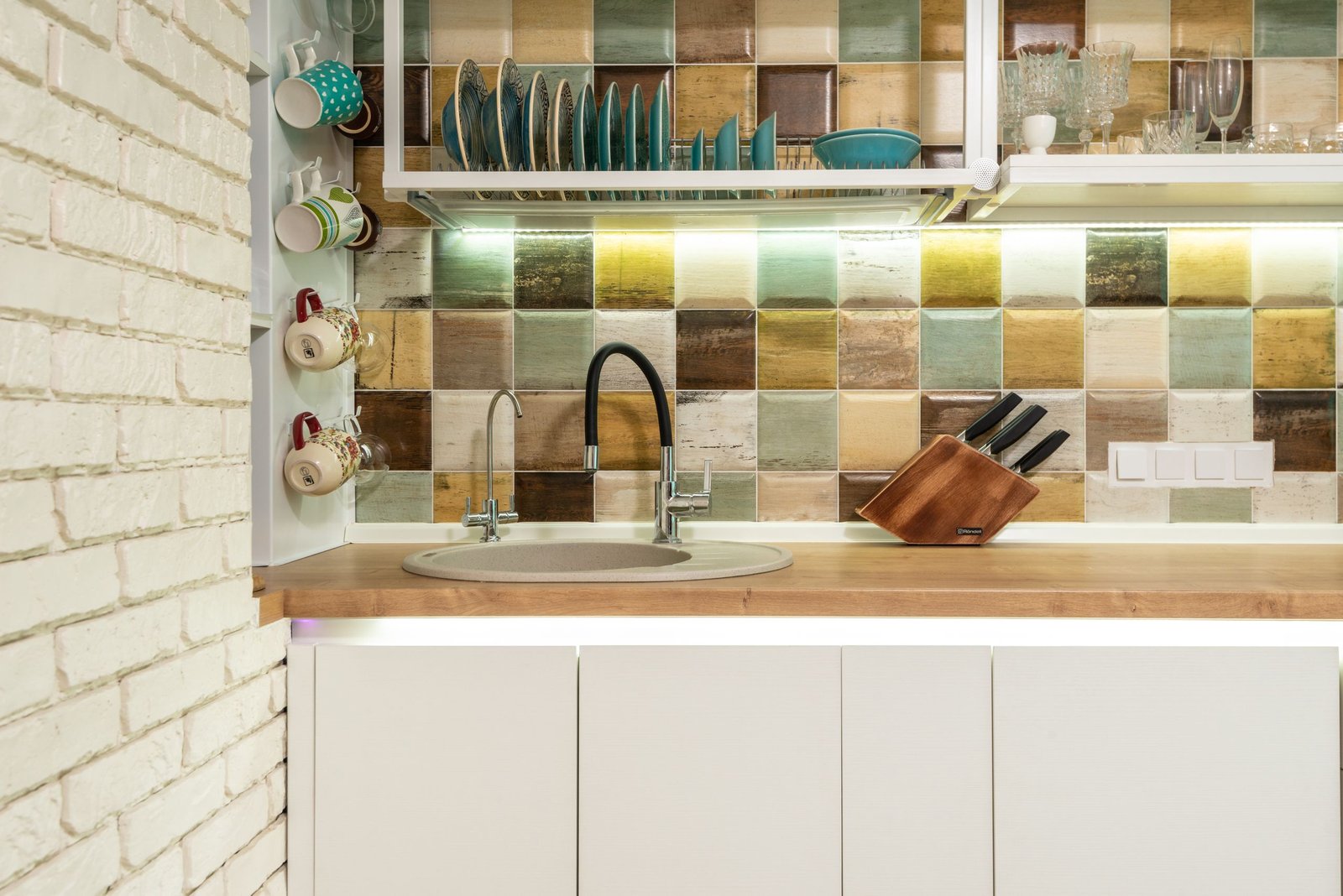
The best kitchen backsplash protects your wall from grease and water, and it is also the easiest place to add colour, texture and personality. This guide shares 25 kitchen backsplash ideas, grouped by material, colour, pattern and budget, so you can find a design that fits the way you cook and what you can spend.
Quick answer: for most kitchens, ceramic or porcelain tile gives the best balance of price, durability and easy cleaning. Kitchen Backsplash Ideas Choose natural stone or zellige if you love character and accept extra care. Choose peel-and-stick tile or wipeable wallpaper if you rent or want a low-cost refresh.
Below you will find a material comparison table, installed cost ranges, standard heights, stove safety tips, Kitchen Backsplash Ideas a simple installation checklist and straight answers to the questions people ask most.
What Does a Kitchen Backsplash Do, and How Do You Choose One?
A kitchen backsplash is the protective surface on the wall behind your countertop, sink and stove. Its first job is to stop water, oil and food splatter from damaging the wall. Its second job is to set the style of the room, because it sits at eye level between your cabinets and countertop.
Before you look at designs, answer four questions:
- How do you cook? Frequent frying and high heat call for a surface that wipes clean fast, such as glazed tile, glass or stainless steel.
- What is your budget? Installed prices range from about $10 to $180 per square foot, so material choice matters more than size.
- How much upkeep will you accept? Grout lines, natural stone and uneven handmade tile all need more care.
- What else is in the room? If your countertop has strong veining or pattern, keep the backsplash simple. If the countertop is plain, the backsplash can be the feature.
Kitchen Backsplash Materials Compared
Use this table to shortlist materials before you pick a design. Kitchen Backsplash Ideas Prices are approximate US installed costs per square foot and change with your city and the complexity of the layout.
| Material | Installed cost per sq ft (US, approx.) | Heat resistance | Cleaning | Best for |
| Ceramic tile | 12–45 | High | Easy; grout needs care | Most kitchens and budgets |
| Porcelain tile | 16–60 | High | Easy; very stain resistant | Busy family kitchens |
| Glass tile | 22–75 | Good | Very easy | Small or dark kitchens |
| Natural stone tile | 25–90 | Good | Needs sealing; marble can etch | Character and luxury looks |
| Mosaic sheets | 25–80 | High | Many grout lines | Accent areas |
| Peel-and-stick tile | 10–30 | Low | Easy; wears faster | Renters and quick updates |
| Stainless steel panels | 20–60 | Excellent | Easy; shows fingerprints | Behind a high-heat range |
| Quartz or solid-surface slab | 70–180 | Moderate; follow the maker’s guidance | Very easy; few seams | Seamless, modern kitchens |
Kitchen Backsplash Ideas by Material
1. Classic Ceramic Subway Tile
The standard 3×6 inch subway tile in a brick-style layout is still the safest choice for a kitchen backsplash. It is affordable, easy to clean and works with almost every cabinet colour. Kitchen Backsplash Ideas To make it feel fresh, pick a bevelled edge, a handmade-look glaze or a darker grout.
2. Handmade Zellige Tile
Zellige tiles are glazed clay tiles with slightly uneven edges and soft colour changes from tile to tile. They give a white or pale kitchen real depth. Kitchen Backsplash Ideas The uneven surface needs wider grout lines and a little more cleaning, so it suits tidy cooks best. Zellige-look porcelain tile is a cheaper, easier alternative.
3. Natural Marble Slab
A single marble slab behind the counter has no grout lines and shows dramatic veining. Marble can etch when acidic foods such as lemon juice, tomato or vinegar sit on it, so seal it and wipe spills quickly. A honed finish hides etching better than a polished one.
4. Quartz or Porcelain Slab (Countersplash)
When the same slab runs from the countertop up the wall, the kitchen looks calm and seamless, and there is almost no grout to clean. This is a premium option, so it gives the best value when the backsplash truly matches the countertop.
5. Glass Tile
Glass tile is glossy, non-porous and reflects light, which brightens small or dark kitchens. It comes in many colours, from pale aqua to deep green. Ask an experienced installer to set it, because uneven spacing is easy to see on a reflective surface.
6. Stainless Steel Panels
Stainless steel handles heat well, wipes clean quickly and gives a professional-kitchen look. It works best behind a serious range. It shows fingerprints and water spots, so balance it with warm wood or soft finishes elsewhere.
7. Sealed Brick
Exposed brick or thin brick veneer adds warmth and texture to a modern kitchen. Brick is porous, so it must be sealed before it sits behind a sink or stove, or grease can soak in.
8. Painted Beadboard or Wood Paneling
Beadboard gives a cottage or farmhouse feel at a modest price. Kitchen Backsplash Ideas Use it only in dry zones away from the sink and stove, and finish it with a moisture-resistant, wipeable paint.
Kitchen Backsplash Ideas by Colour
9. White Tile With Contrast Grout
A white kitchen backsplash looks crisp and clean, and a grey or charcoal grout turns it into a graphic grid. Kitchen Backsplash Ideas Epoxy grout resists stains better than standard cement grout, which helps white and light tiles stay fresh.
10. Navy and Deep Blue Tile
Dark blue tile adds richness to white or light wood kitchens and pairs well with brass or brushed gold hardware. Keep the countertop plain so the colour stays the focus.
11. Sage and Olive Green
Soft green tile looks natural next to wood, cream cabinets and white countertops. Kitchen Backsplash Ideas Choose a glossy finish for a brighter room or a matte finish for a calmer, earthy look.
12. Black or Charcoal
Matte black tile or dark stone makes a bold, modern statement, especially against light cabinets. Dark glossy surfaces show water spots, so wipe them dry and add good task lighting.
13. Terracotta and Warm Earth Tones
Terracotta, clay and sand colours bring a warm, Mediterranean feel and hide small splatters well. Kitchen Backsplash Ideas Choose glazed tile, or seal unglazed terracotta, which is porous.
Kitchen Backsplash Designs by Pattern and Layout
The same tile can look completely different when you change the layout. These ideas use the pattern, not just the material, to create impact.
14. Herringbone
Rectangular tiles set in a zigzag give movement and a classic look. Herringbone needs more cuts than a straight layout, so expect higher labour costs and order extra tile.
15. Vertical Stacked Tile
Turn subway tile upright and stack it in straight lines. The vertical lines draw the eye up and make the ceiling feel taller, which suits small kitchens.
16. Hexagon and Elongated Hexagon
Hexagon tiles add a geometric, honeycomb look. Elongated hexagons laid vertically feel more modern and work well behind a range or in a narrow kitchen.
17. Scallop (Fish Scale) Tile
Curved scallop tiles create a soft, playful wall in pastel shades or a bold, saturated colour. They have more grout lines, so choose a stain-resistant grout.
18. Penny Round Tile
Small circles give a retro, textured finish. Because of the many grout lines, pick epoxy grout or a mid-tone colour that hides marks.
19. Patterned Encaustic-Look Tile
Decorative tile with Moroccan or vintage patterns makes a strong focal point. Use it only behind the range to keep the kitchen balanced and the cost down. Porcelain versions copy the look without the sealing that real cement tile needs.
Budget, Renter-Friendly and Small Kitchen Backsplash Ideas
20. Peel-and-Stick Tile
Peel-and-stick tile costs roughly $10 to $30 per square foot installed and is the easiest upgrade for renters. Clean and dry the wall first, and keep it away from direct burner heat. Check the maker’s heat rating, because it may not last as long as ceramic in a busy kitchen.
21. Wipeable Wallpaper or Vinyl Panels
Washable wallpaper adds pattern for very little money and peels off when you move. Kitchen Backsplash Ideas Choose a product labelled scrubbable or kitchen-safe and use it away from the sink and stove, where splashes are heaviest.
22. Scrubbable Painted Wall
A satin or semi-gloss paint is the lowest-cost option for a light cook. Repaint every few years and avoid it directly behind the cooktop.
23. Mirrored Backsplash
A mirror bounces light around and makes a small or dark kitchen feel bigger. Kitchen Backsplash Ideas An antiqued mirror hides spots better than clear glass. Ask your installer about heat-rated glass if the mirror will sit near the cooktop.
24. Tile Only Behind the Range
Tiling just the cooking zone and painting the rest of the wall gives you a feature wall at a fraction of the cost. This also lets you afford a more expensive tile in a small area.
25. Short 4-Inch Backsplash
A low backsplash cut from your countertop material protects the wall edge and costs less than a full-height design. It suits kitchens with open shelving or windows above the counter.
How High Should a Backsplash Be? Height, Stove Safety and Installation Tips
Standard Backsplash Height
A short backsplash is usually 4 inches high. A full-height backsplash runs from the countertop to the underside of the upper cabinets, which is usually about 18 inches. Kitchen Backsplash Ideas Where there are no upper cabinets, such as behind open shelving or a range, many designers continue the tile higher or all the way to the ceiling. Stop the tile at a natural line, such as the cabinet bottom, a shelf or a window frame, so the edge looks planned.
Backsplash Behind the Stove
Choose a heat-resistant, easy-to-clean material behind the cooktop, such as ceramic, porcelain, stainless steel or sealed stone. Follow the range maker’s clearance instructions, and avoid peel-and-stick tile and wallpaper directly behind burners.
Outlets, Grout and Quantity
- Outlets: turn off the power at the breaker and use outlet box extenders so the cover plates sit flush with the new surface. Call an electrician if you are not sure.
- Grout: epoxy grout resists stains and does not need sealing. Cement grout costs less but needs sealing in a kitchen.
- Quantity: multiply width by height, subtract windows, and order 10 to 15 percent extra for cuts and breakage.
Installation Checklist
- Clear the counter, turn off power at outlets and clean the wall.
- Repair holes and level uneven areas.
- Dry-fit the layout and start from the centre of the main wall, so cut tiles at the ends match.
- Spread tile adhesive with a notched trowel and set the tiles with spacers.
- Let the adhesive cure as the label says, usually about 24 hours, then apply grout.
- Wipe off grout haze, seal natural stone and finish the joint where the countertop meets the tile with flexible silicone caulk, not grout.
Kitchen Backsplash Cost: What Will You Really Pay?
Most kitchen backsplash projects in the US cost roughly $900 to $3,500 for a 20 to 40 square foot area, and installed prices run from about $25 to $90 per square foot depending on the material. Simple ceramic tile sits at the low end, while stone, glass and slab sit at the high end. Use the table earlier in this guide to compare each material.
Is DIY cheaper? It can be, but the savings are smaller than most people expect. Kitchen Backsplash Ideas Labour on a typical 30 square foot job is often $500 to $1,200, and tools such as a wet saw, spacers and quality adhesive can use up a large part of that. Peel-and-stick tile and mosaic sheets on mesh backing are the easiest first projects.
Ways to lower the cost:
- Stop the tile at the bottom of the upper cabinets instead of the ceiling.
- Choose common tile sizes such as 3×6 or 4×12 inches to reduce waste.
- Pick a simple layout, because herringbone and small mosaics need more cuts.
- Choose ceramic when you like the look of porcelain or stone but want a lower price.
- Group outlets so there are fewer cutouts.
- Combine the backsplash with a countertop replacement so wall repairs happen once.
Kitchen Backsplash FAQ
What is the best material for a kitchen backsplash?
Ceramic or porcelain tile is the best choice for most kitchens. Both resist heat, wipe clean easily and cover a wide range of budgets and styles.
How high should a kitchen backsplash be?
A short backsplash is usually 4 inches high. Most full backsplashes run from the countertop to the bottom of the upper cabinets, about 18 inches. You can also take the tile to the ceiling for a dramatic look.
Is white subway tile out of style?
No. White subway tile is still a safe, timeless choice. To update it, use a contrast grout, a bevelled edge, or lay the tile vertically or in a herringbone pattern.
Should the backsplash be lighter or darker than the countertop?
There is no fixed rule. Choose contrast so both surfaces are visible, and keep one of them simple. If the countertop has strong veining, pick a plain backsplash.
Can I use peel-and-stick tile behind the stove?
Avoid placing it directly behind burners, because high heat can damage the adhesive and the tile. Use it in areas that stay cool, or choose ceramic, porcelain or stainless steel behind the cooktop.
Conclusion: Choose the Kitchen Backsplash That Fits Your Life
The best kitchen backsplash is the one that suits how you cook, how much cleaning you want to do and what you can spend. Kitchen Backsplash Ideas Ceramic and porcelain tile cover most needs. Glass and slab work well for easy cleaning, stone and zellige add character with more care, and peel-and-stick tile or wipeable wallpaper keep renters and small budgets covered.
Before you buy, take a sample home and hold it against your cabinets and countertop in your own kitchen light. Kitchen Backsplash Ideas Then check the height, the stove clearance and the cost per square foot, and order 10 to 15 percent extra. With those steps done, any of the 25 ideas above can look good for years.
