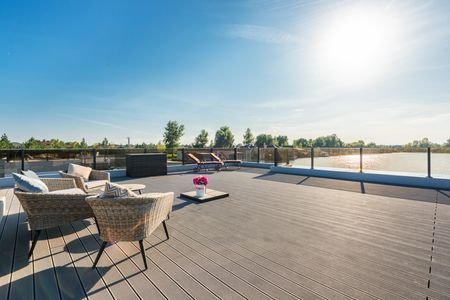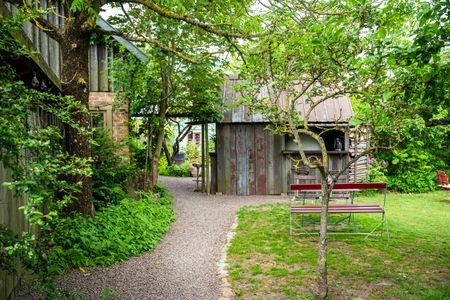



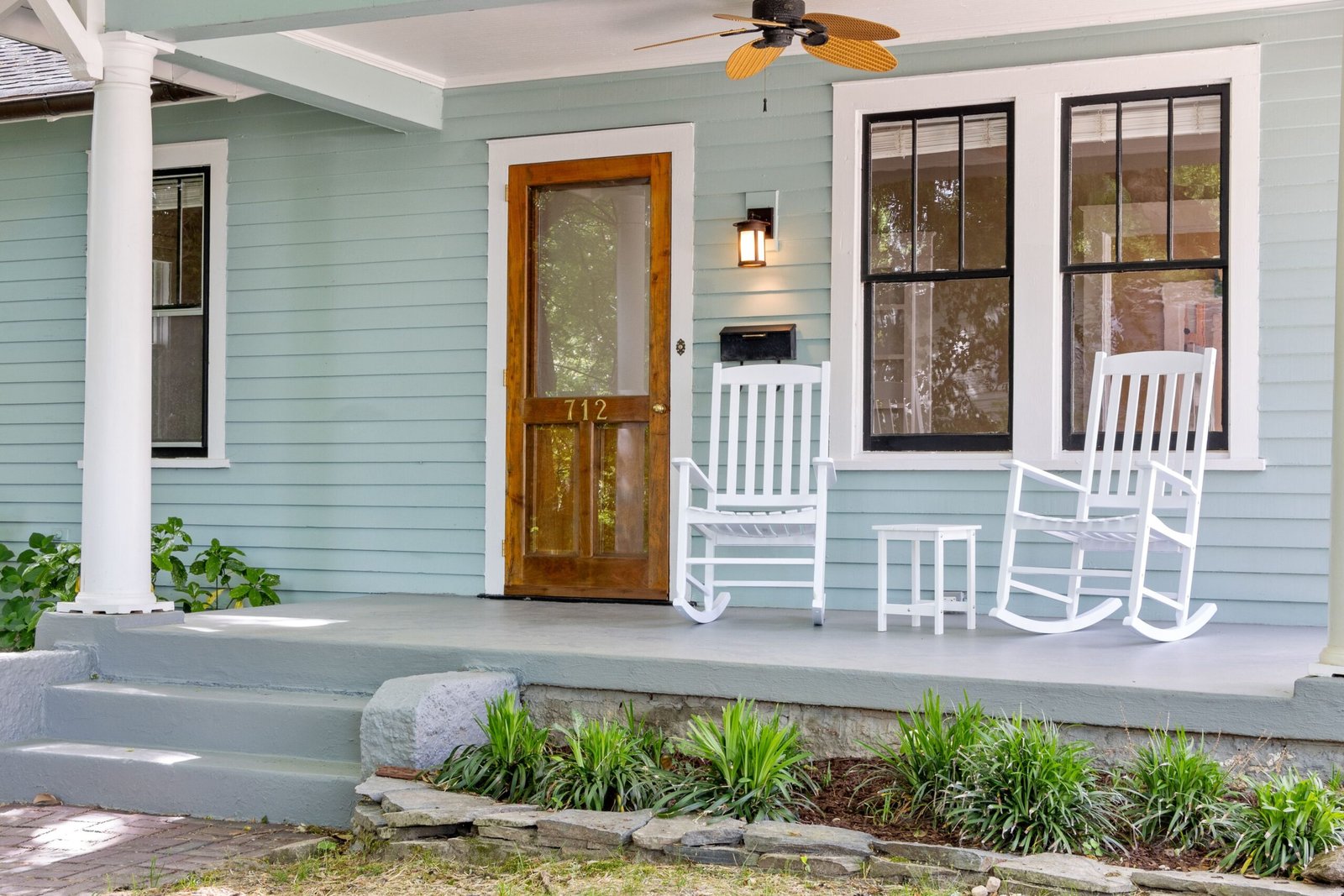
Your front porch is the first part of your home that people see and the last part they pass through when they leave. It also shapes how you feel when you come home. Front Porch Ideas A good porch doesn’t need a big budget or a big footprint. It needs a clear purpose, the right proportions, and a few well-chosen pieces.
This guide covers front porch ideas for every size and budget, with real measurements, cost ranges, maintenance advice, and safety notes. Front Porch Ideas You’ll also find direct answers to the questions people ask most.
Key Takeaways
- Decide what the porch is for (sitting, entertaining, or simply a polished entry) before buying anything.
- Measure first. Most seating needs at least 36 inches of clear walking space.
- Lighting, a good door, and one comfortable seat do more than a crowded layout.
- Choose outdoor-rated materials, or your upgrades will fade, mildew, or rust within a season.
- Small and narrow porches work best with vertical decor, compact furniture, and fewer, larger pieces.
- Check local rules before changing railings, steps, or structure.
Start Here: Plan Before You Buy
Define the job of your porch
Ask yourself which of these fits you best:
- A place to sit: one or two chairs, a bench, or a swing.
- A place to entertain: a conversation set, a dining table, or an outdoor sectional.
- A polished entrance: a great door, lighting, planters, and house numbers, with little or no furniture.
Most porches blend two of these. Naming the main purpose stops you from buying pieces that fight for space.
Measure your porch
Measure the depth (door to edge or railing), the width, and the ceiling height. Then use these working guidelines:
- Depth under 5 feet: a narrow porch. Plan for a bench, wall-mounted decor, and slim planters.
- Depth of 6 to 8 feet: room for two chairs and a small table, or a bistro set.
- Depth of 8 feet or more: room for a loveseat with chairs, or a small conversation set.
- Walkway: keep a clear path of about 36 inches from the steps to the door.
- Door swing: never place furniture where the door or a storm door must open.
Mark the layout on the floor with painter’s tape before you buy. It takes five minutes and prevents most sizing mistakes.
Match your home’s style
A porch should look like it belongs to the house. Front Porch Ideas A traditional home suits wood rockers, wicker, and ferns. A modern home suits clean lines, simple planters, and a limited color palette. Whatever you choose, repeat one or two colors from the house, such as the shutters or the door.
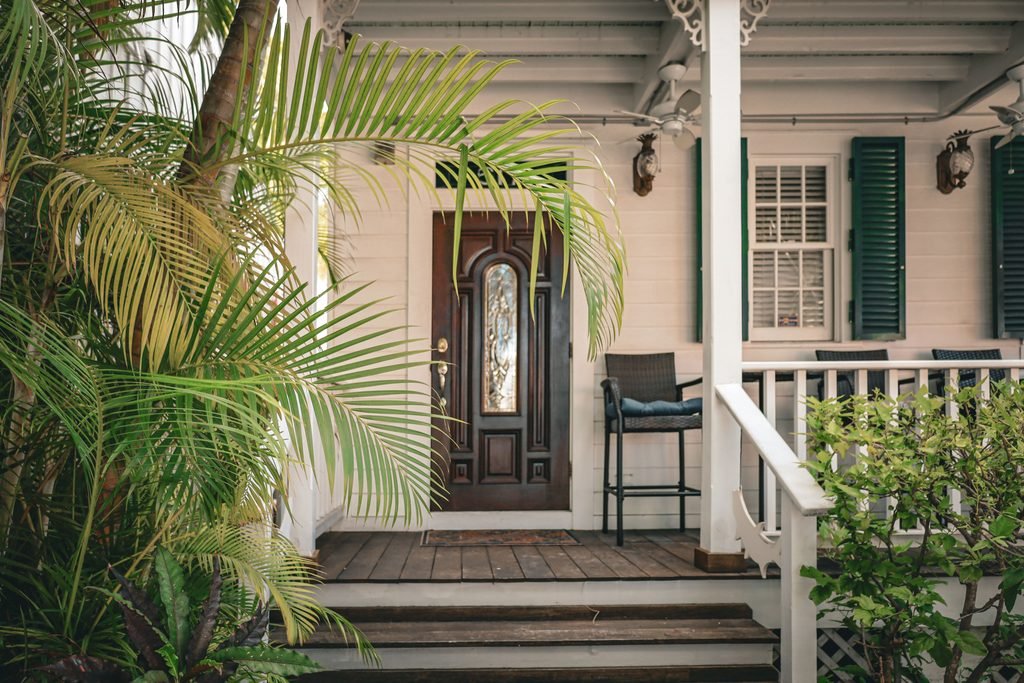
Seating Ideas
1. Choose one comfortable anchor seat
Everything else on a porch is decoration until there’s somewhere to sit. Front Porch Ideas Pick one piece you will actually use: a chair, a bench, or a loveseat. Add a side table within arm’s reach and the porch becomes usable.
2. Add rocking chairs
Rockers need room to move. Allow roughly 2 to 3 feet of clearance behind and in front of each chair, and keep them away from railings and steps. Wood, metal, and resin all work. Front Porch Ideas Resin and treated metal need the least upkeep.
3. Hang a porch swing
A swing needs a structural support such as a beam or properly sized joist, not just the ceiling boards. Hang the seat at roughly 17 to 19 inches from the floor, with at least 3 feet of free space in front and behind for the swing arc. Use hardware rated for outdoor weight loads. If you are unsure what your ceiling can hold, ask a carpenter before you hang it.
4. Try a bench with storage
A bench with a lid gives you seating and hidden space for cushions, shoes, or garden tools. It suits narrow porches best, because it sits against the wall and does two jobs.
5. Build an outdoor living room
On a wide porch, treat the space like an indoor room. Choose lightweight pieces that look good from every angle so you can rearrange them for guests. A sofa or loveseat, two chairs, and a low table cover most needs.
6. Set up a dining spot
A small round table with two to four chairs is enough for coffee or dinner. Front Porch Ideas Round tables use floor space more efficiently than rectangular ones on a modest porch.
Lighting Ideas
7. Get the fixture size right
Porch lighting is the detail most often chosen wrongly. Front Porch Ideas A common rule is that a wall lantern should be about one-third the height of the door. Mount fixtures so the center sits around 66 inches from the floor. Too small looks timid, and too large overwhelms the entry.
8. Use pairs for symmetry
Two matching sconces on either side of the door create balance. Front Porch Ideas If the door sits off-center, use one larger fixture on the wider side.
9. Layer your light
Use three layers: a main fixture by the door, soft ambient light (string lights or lanterns), and low accent light on steps. Warm white bulbs around 2700K feel welcoming. Very bright, cool bulbs make a porch feel harsh.
10. Light the steps
Step lighting is one of the few decor choices that is also a safety feature. Solar or low-voltage lights along the step edge make the surface easier to see at night.
11. Use candles safely
Flameless candles in lanterns give you the glow without the fire risk. If you use real flames, keep them away from curtains, dry wreaths, and wooden railings.
Door and Entry Ideas
12. Repaint the front door
A door is the focal point of the porch, so a new color has an outsized effect. Pick a color that contrasts with the siding. Navy, deep green, black, and warm red are classic. Front Porch Ideas Use exterior-grade paint and let each coat cure fully.
13. Update the hardware
A new handle, knocker, doorbell, and house numbers refresh a door in an afternoon. Front Porch Ideas Keep finishes consistent: matching black, brass, or bronze looks deliberate.
14. Make house numbers visible
Numbers should be readable from the street in daylight and at night. Choose a contrasting color and a size large enough to read from the curb. This also helps delivery drivers and emergency services.
15. Layer your doormat
Place a durable, low-pile mat as the base. On top, add a smaller one. Make sure it doesn’t block the door swing or become a trip hazard at the threshold.
Plants and Greenery
16. Group planters in odd numbers
Clusters of three look natural. Vary the heights: one tall, one medium, one trailing.
17. Match plants to light
Check how much sun your porch receives before buying. Ferns and hostas suit shade. Front Porch Ideas Geraniums, petunias, and herbs suit sun. A plant in the wrong light struggles, no matter how good the pot looks.
18. Use evergreen structure
Potted boxwood, dwarf conifers, and topiaries give year-round shape. Place them in pairs on either side of the door for a formal look.
19. Add hanging baskets
Hanging plants add color without using floor space. Front Porch Ideas Make sure the hook is rated for the wet weight of the basket, which is heavier than the dry weight, and remember that hanging baskets dry out faster.
20. Plant on the steps
Pots on steps work only if the steps stay passable. Front Porch Ideas Keep pots to the outer edges and leave a clear center path.
Color, Texture, and Finishes
21. Add an outdoor rug
A rug defines the seating zone and adds warmth. Front Porch Ideas Choose one made for outdoor use, ideally polypropylene or a similar material that resists mildew. Ideally the front legs of your chairs sit on the rug. On a narrow porch, a runner works better than a standard rug.
22. Layer pillows and throws
Outdoor-rated pillows are fade-resistant and dry quickly. Mix two or three patterns in the same color family, and keep at least one solid.
23. Paint the porch floor
Use paint made for porch floors and prepare the surface properly. A mid-tone gray, charcoal, or warm neutral hides dirt better than white or black. Floors that stay damp need a non-slip additive for safety.
24. Paint the ceiling
Many people paint porch ceilings a pale blue. The tradition of “haint blue” comes from Southern folklore, but today it is simply a popular choice because the soft color reads like sky. A pale color also makes a covered porch feel brighter.
25. Mix natural textures
Combine wicker, wood, metal, and woven baskets. Repeating one material in two places, such as wood on both the table and a shelf, keeps the look cohesive.
Extra Features
26. Install a ceiling fan
An outdoor-rated fan keeps air moving on hot days and helps discourage flying insects from lingering. Check that the fan is rated for damp or wet locations, depending on how exposed your porch is.
27. Add privacy with curtains or lattice
Outdoor curtains soften the edges of a porch and block low sun. Lattice gives more structure and works well with climbing plants. Choose fabrics labeled mildew-resistant and use tiebacks so wind doesn’t whip them around.
28. Hang a few wind chimes
Choose one or two with a pleasant tone. If a chime is too loud for you or your neighbors, it will become irritating rather than relaxing.
29. Add a fire table with care
A tabletop fire feature adds warmth on cool evenings. Keep it well away from walls, ceilings, and cushions, never leave it unattended, and check the manufacturer’s clearance requirements and your local rules. Many covered porches are not suitable for open flame at all.
30. Add outdoor shelving or a potting station
A shallow shelf holds plants, lanterns, or a small collection of garden tools. Front Porch Ideas A narrow potting station suits porches that double as a garden entrance.
How to Decorate a Small Front Porch
Small porches succeed when every piece does two jobs.
- Go vertical. Use wall planters, a trellis, hanging baskets, and wall sconces to free the floor.
- Choose a bistro set or a single chair. Foldable sets can be stored in winter.
- Replace side tables with garden stools. A stool holds a drink and tucks away when guests visit.
- Scale down the swing or rocker. Single-seat swings and rockers with shorter runners fit tighter spaces.
- Use the door as decor. Color and a wreath add impact with no floor footprint.
- Limit your palette. Two or three colors make a small space look calmer and larger.
A useful test: you should be able to walk from the steps to the door without turning sideways.
How to Decorate a Narrow Porch
Narrow porches, often under 5 feet deep, need furniture that sits against the wall.
- Choose a slim bench, 12 to 16 inches deep, with cushions.
- Mount sconces or a pendant light rather than using floor lamps.
- Use tall, narrow planters at each end rather than wide pots.
- Lay a runner rug in the direction of the porch’s length.
- Use a trellis for climbing plants to add height without using depth.
How to Style a Large Porch
A large porch gives you freedom, but it can feel scattered. Divide the space into zones, such as a seating area, a dining spot, and an entry. Use a rug to anchor each zone. Resist filling every corner. Empty floor space is what makes the furnished areas look intentional.
Know Your Porch Type
Different porch styles call for different decisions.
- Open porch: no walls or screens, so choose weatherproof pieces throughout.
- Covered porch: has a roof, which protects furniture from direct rain but not from wind-driven moisture.
- Screened porch: insect-free, which makes it good for dining and textile-heavy decor.
- Wraparound porch: extends along more than one side, so it can support separate zones.
- Portico: a small roofed entry. Keep it simple: lighting, a door, planters, and numbers.
- Stoop: a small step-and-landing entry. Focus on the door, a mat, and a planter.
Front Porch Ideas by Budget
These are rough ranges and will vary by region, brand, and material. Front Porch Ideas Treat them as starting points rather than quotes.
Under $100
- A new doormat, outdoor pillows, and a few potted plants
- A can of exterior paint for the door
- A set of solar string lights or lanterns
- Updated house numbers
$100 to $500
- A bistro set or a bench
- An outdoor rug
- A pair of wall lanterns
- Larger planters with seasonal plants
$500 to $2,500
- A rocker, loveseat, or swing with proper hardware
- A weather-rated ceiling fan
- A new front door hardware set and a professional-quality paint job
- Outdoor curtains and a full lighting upgrade
$2,500 and above
- A new door, or a door with sidelights
- New flooring or a deck resurfacing
- Built-in seating or a pergola
- Structural work such as columns or railings
If you do only one thing on a limited budget, paint the door and fix the lighting. Together they change the look of the entry more than any furniture.
Maintenance and Weatherproofing
Good porch decor lasts longer when you look after it.
- Cushions: store them or cover them during long wet spells. Choose quick-dry foam and solution-dyed fabric.
- Wood furniture: reseal or re-oil it once a year, or when water stops beading on the surface.
- Metal furniture: touch up chips promptly to prevent rust.
- Wicker: natural wicker should be kept under cover. Synthetic wicker is the better choice for exposed porches.
- Rugs: lift them occasionally so the floor underneath can dry and not trap moisture.
- Planters: drainage holes are essential. Stand pots on small feet so water doesn’t stain the floor.
- Fabrics and curtains: rinse off pollen and dust each season.
Safety and Code Basics
A beautiful porch should also be safe. Rules differ by country, state, and city, so confirm requirements with your local building office.
- Railings: in many places, a guard is required when the porch floor is more than about 30 inches above the ground, and guard heights are often around 36 inches. Check your local code.
- Steps: uneven risers are a common cause of falls. Front Porch Ideas Keep treads and risers consistent and in good repair.
- Lighting: make sure the entry, steps, and walkway are all visible at night.
- Flames: keep candles and fire features away from combustible materials.
- Permits: structural work such as building, extending, or enclosing a porch usually requires a permit. Foundation, support posts, and attachment to the house are jobs for a qualified professional.
- Swing and fan loads: always attach to structural framing, not decorative trim.
Seasonal Refresh Ideas
You don’t need to redecorate each season. Swap a few small items.
- Spring: fresh flowering planters and lighter pillows.
- Summer: a fan, a pitcher of water, and shade from curtains or an umbrella.
- Autumn: pumpkins, mums, and a warm-toned throw.
- Winter: evergreen planters, a wreath, and warm lighting.
Keep a storage box for each season’s items so they are easy to swap.
Common Porch Mistakes to Avoid
- Buying before measuring. This is the most common mistake and the most expensive.
- Blocking the door swing or walkway.
- Choosing indoor fabrics or finishes that fade or mildew outdoors.
- Using fixtures that are the wrong size.
- Overcrowding. More pieces do not make a porch more welcoming. A few well-placed items do.
- Ignoring drainage and moisture, which leads to rot and stains.
- Forgetting the evening view. Test your porch at night, not only in daylight.
Frequently Asked Questions
What are the easiest ways to improve a front porch?
Start with the least expensive changes that have the largest visual effect. Front Porch Ideas Paint the front door, update the porch light and house numbers, add a new doormat, and set out two or three planters. These can usually be done in a weekend and cost very little.
What furniture works best for a front porch?
The best furniture suits your porch size and your weather. For small porches, choose a bistro set, a single chair, or a slim bench. For medium porches, a loveseat with a small table or two rockers works well. For large porches, choose a small conversation set. In all cases, choose materials rated for outdoor use, such as treated wood, powder-coated aluminum, resin wicker, or teak.
How can I decorate a small front porch?
Use vertical space and keep the floor clear. Wall planters, hanging baskets, wall sconces, and a trellis add style without taking up room. Use a bistro set or one chair, a garden stool in place of a table, and a bold door color.
What plants work best on a front porch?
It depends on light. In shade, try ferns, hostas, begonias, and impatiens. In sun, try geraniums, petunias, lavender, and herbs. For year-round structure, use boxwood, dwarf conifers, or evergreen shrubs in pots. Always choose pots with drainage holes.
How do I make my porch feel cozy?
Layer textures and light. Add an outdoor rug, soft pillows, and a throw. Use warm white lighting, lanterns, and candles (flameless if wind or flammables are a concern). Add plants and keep the layout uncluttered.
Final Thoughts
The best front porch ideas share a few qualities: they suit the size of the space, they work in your climate, and they reflect how you really live. Start with the door, the lighting, and one comfortable place to sit. Measure before you buy, choose outdoor-rated materials, and add personality slowly. Front Porch Ideas A welcoming porch is built piece by piece, and every small improvement makes coming home feel a little better.