
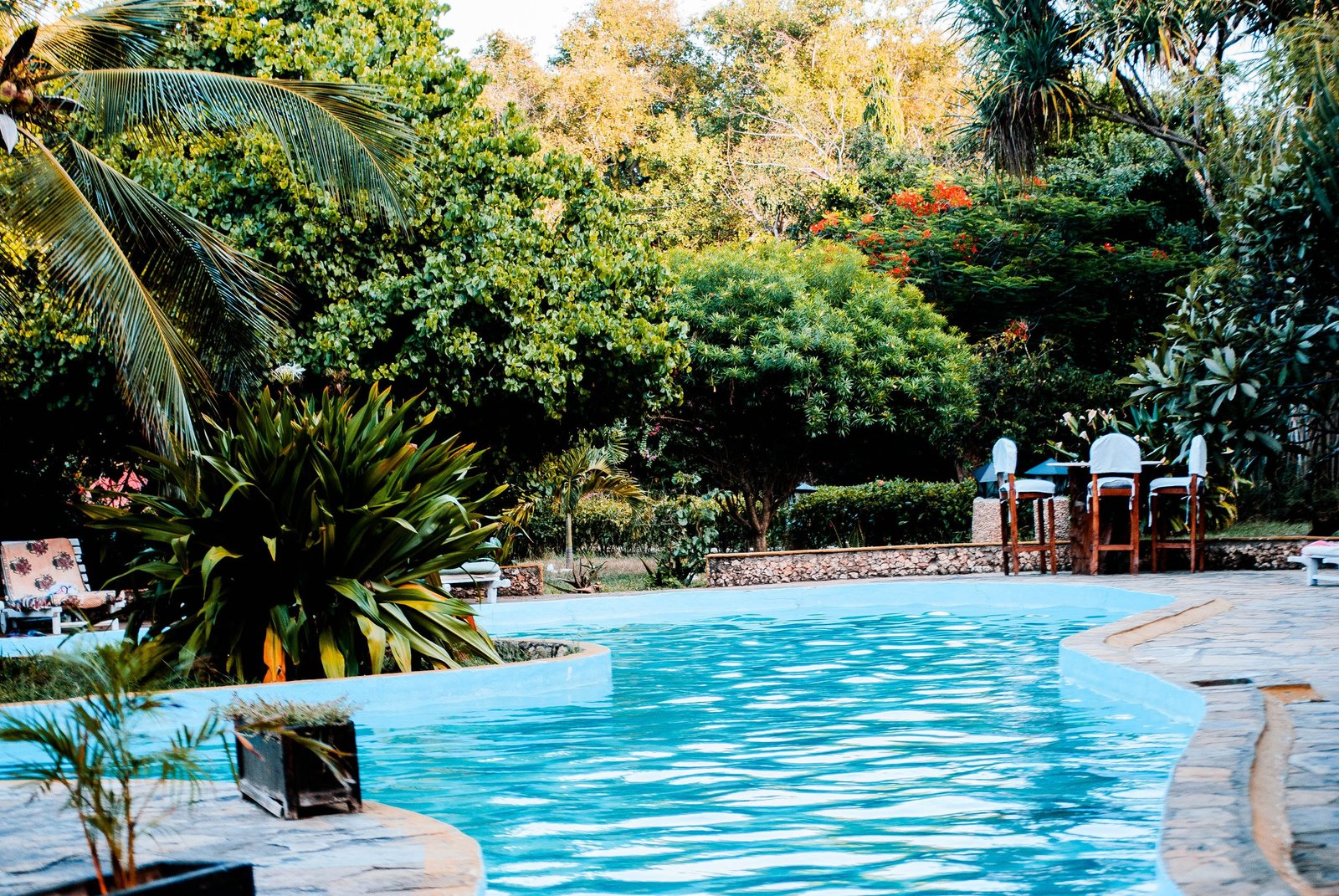
A backyard pool can transform an ordinary outdoor area into a comfortable place for swimming, relaxing, entertaining, and spending time with family. But choosing the right pool design involves more than selecting an attractive shape from a photograph.
The size and layout of your yard, the architecture of your home, your lifestyle, landscaping preferences, and maintenance expectations all affect the final design. A large resort-style pool may look impressive in a spacious backyard but leave little room for seating in a smaller one. A compact plunge pool, on the other hand, can create a relaxing retreat without taking over the entire yard.
The best backyard pool design ideas balance the pool with everything around it. Decking, landscaping, privacy, shade, lighting, seating, and circulation all deserve attention during the planning process.
If you’re comparing ideas for a new pool or backyard renovation, these 15 designs can help you understand different options and choose a direction that fits your outdoor space.
How to Plan Your Backyard Pool Design
Before choosing a pool shape, look at the entire backyard as one connected space.
Start With the Available Space
Measure the usable portion of the yard instead of focusing only on the property’s total size. Existing patios, trees, fences, gardens, sheds, utility areas, and access points can all affect where a pool can be placed.
A pool also needs more than water space. People need room to walk around it, enter and exit safely, use furniture, and access equipment.
The surrounding space matters.
A smaller pool with a comfortable deck can sometimes be more functional than a larger pool surrounded by narrow walkways.
Decide How the Pool Will Be Used
Think about what you actually want from the pool.
Families may prioritize easy entry, visibility, and space for children. Fitness-focused homeowners might prefer a longer rectangular pool. People who mainly want to relax may choose a smaller pool with generous lounging areas.
Here’s the thing: the best design starts with how you plan to use the space.
Match the Pool With Your Home
The architecture of your house can help determine the right pool style.
Clean-lined contemporary homes may pair naturally with rectangular or geometric pools. Homes surrounded by mature gardens may work better with curved shapes and natural landscaping.
The goal is to create a relationship between the house, pool, patio, and landscape rather than making each element look unrelated.
Think About Maintenance and Drainage
Pool placement can influence drainage, landscaping, circulation, and access to equipment.
Consider where leaves and other debris are likely to collect. Think about whether pumps, filters, heaters, and other equipment can be reached without disrupting the main outdoor living area.
A simpler design can also be easier to maintain than one filled with complicated landscape features and hard-to-reach areas.
Plan Privacy and Safety Early
Privacy can come from fencing, planting, screens, pergolas, walls, or the pool’s position within the yard.
Safety should also be considered during the initial design. Barriers, gates, pool covers, and clear sightlines can all contribute to a safer pool environment. Local requirements vary, so homeowners should check applicable regulations before construction.
15 Backyard Pool Design Ideas to Consider
1. Naturalistic Pool With Garden Integration
A naturalistic pool can make the swimming area feel like part of the surrounding landscape.
Instead of surrounding the water with uninterrupted paving, use planting beds, ornamental grasses, trees, stone, and garden paths to create a softer transition.
This approach works particularly well for homeowners who already have a mature garden or prefer an organic outdoor aesthetic.
Natural-looking coping and irregular planting areas can strengthen the connection between the pool and garden.
The trade-off is maintenance. More landscaping near the water can mean more leaves, pruning, and debris to manage.
2. Clean-Lined Rectangular Pool
A rectangular pool remains one of the most versatile options for residential backyards.
Its straight lines work well with contemporary architecture and can make it easier to organize decking, furniture, and surrounding planting.
Rectangular pools can also suit homeowners interested in swimming laps or creating a clearly defined swimming area.
Large-format paving, simple planting, and streamlined furniture can reinforce the clean appearance.
The downside is that the shape can feel formal if the surrounding backyard has a strongly natural or rustic character.
3. Compact Plunge Pool
A plunge pool can be a practical solution when the backyard doesn’t have room for a full-size swimming pool.
Its smaller footprint leaves more space for seating, landscaping, pathways, or an outdoor dining area.
Look — if you’re working with a compact backyard, here’s what actually matters: don’t judge the design by water area alone.
A smaller pool surrounded by useful outdoor space can create a more enjoyable backyard than a larger pool that leaves little room for anything else.
Simple geometry and uncluttered landscaping can also make a compact yard feel more open.
The limitation is swimming space. A plunge pool is generally better suited to cooling off, relaxing, and casual use than extended swimming.
4. Fitness-Focused Lap Pool
For homeowners who view swimming as exercise, a lap pool can make good use of a long, narrow backyard.
The straightforward shape provides a continuous swimming path and can complement modern architecture.
Keep the surrounding deck practical rather than filling it with unnecessary furniture. A clear path around the pool can make entry, exit, and maintenance easier.
A lap pool isn’t ideal for every property, though. The backyard needs enough length to make the design worthwhile.
5. Freeform Pool With Curved Landscaping
Freeform pools replace strict geometric lines with curves and irregular edges.
They can work well with informal gardens, natural stone, mature trees, and landscapes where straight architectural lines would feel out of place.
Curved planting beds and winding pathways can continue the shape of the pool throughout the backyard.
This approach creates a relaxed appearance, but the irregular shape can make furniture placement and deck planning less predictable.
If the yard has several awkward corners, careful planning becomes especially important.
6. Geometric Pool for a Contemporary Home
Geometric pools can create a strong architectural appearance through straight lines, angles, steps, and defined sections.
This design can suit contemporary homes where the pool needs to connect visually with the structure.
Repeating the same geometry in the patio, retaining walls, planting beds, or outdoor furniture can create a more unified appearance.
A geometric pool can also become a strong focal point without requiring elaborate landscaping.
The main consideration is context. A highly structured pool may look disconnected from a backyard designed around dense, informal planting.
7. Pool With a Pergola or Cabana
A pergola, cabana, or other shade structure can turn part of the pool area into a dedicated relaxation zone.
It can provide space for lounge chairs, an outdoor dining table, or a shaded sitting area between swims.
This type of arrangement is especially useful for homeowners who want their backyard to function as an outdoor living room.
Shade can also make the pool area more comfortable during hot weather.
The challenge is fitting the structure into the available space. A large pergola can quickly make a small backyard feel crowded if circulation isn’t planned carefully.
8. Low-Maintenance Pool Layout
Not everyone wants a backyard that requires constant upkeep.
A low-maintenance pool design can use straightforward geometry, durable materials, simple planting, and easy-to-access equipment.
Keep excessive vegetation away from the immediate pool edge when practical. This can help reduce the amount of leaves and organic material entering the water.
Simple landscaping can still look polished. A few well-planned planting areas can have more impact than numerous small garden beds.
Here’s a useful rule of thumb: design for the amount of maintenance you’re realistically willing to handle.
9. Pool With a Water Feature
A waterfall, spillway, bubbler, deck jet, or other water feature can add movement and sound to a pool.
The feature doesn’t have to be enormous. A raised wall with a narrow spillway can become a focal point without dominating the entire backyard.
Water features can also help connect different areas visually. For example, a raised section can separate the pool from an outdoor lounge.
The trade-off is additional equipment and maintenance. Plumbing, pumps, cleaning, and access should all be considered before adding a complex feature.
10. Pool With Integrated Evening Lighting
A thoughtful lighting plan can make the pool area more useful after sunset.
Underwater lights can highlight the water, while landscape fixtures can illuminate paths, steps, planting, walls, and seating areas.
Lighting should serve both visual and practical purposes. You want enough illumination for movement without creating excessive glare.
A layered lighting scheme can also help define different areas of the backyard. Softer lighting around seating and stronger illumination along steps and pathways can make the space feel organized.
The trade-off is added installation and maintenance, particularly when multiple lighting zones and controls are involved.
11. Pool and Hot Tub Combination
Combining a pool with a hot tub creates separate spaces for swimming and relaxation.
The two can sit beside each other, share a deck, or be visually connected through a raised section or spillover feature.
This arrangement can make the backyard more versatile, particularly for households that want different water experiences.
But a pool-and-hot-tub combination requires more equipment, space, and planning than a standalone pool.
Local codes and installation requirements should be checked before construction because regulations vary between states and municipalities.
12. Pool With a Shallow Tanning Ledge
A shallow tanning ledge can create a comfortable transition between the deck and deeper pool water.
It can be used for sitting, relaxing, cooling off, or placing suitable pool furniture designed for shallow water.
The ledge can also become an attractive visual feature in contemporary pool designs.
The key is balance. Making the ledge too large may reduce the amount of space available for deeper swimming.
For families with young children, a shallow ledge should never be treated as a replacement for supervision or proper pool safety measures.
13. Landscape-Focused Pool Retreat
Some of the most inviting backyard swimming pool ideas put as much thought into the landscape as the pool itself.
A landscape-focused retreat might combine trees, privacy planting, ornamental grasses, pathways, stone, lawn, seating, and garden beds.
The result can feel more like a complete outdoor garden than a pool placed in an empty yard.
Plant selection requires careful consideration. Mature size, root systems, maintenance, sunlight, and the amount of debris produced should all be evaluated.
The landscape should also complement the pool rather than compete with it. A balanced combination of planting and open space can make the entire backyard feel more intentional.
14. Pool With an Outdoor Kitchen and Dining Zone
If you regularly entertain, consider making the pool part of a larger outdoor living area.
An outdoor kitchen, grill station, dining table, and lounge area can turn the backyard into a multifunctional space.
The layout should make movement between the house, kitchen, dining area, seating, and pool straightforward.
Avoid placing the busiest cooking or walking route directly through the main swimming area.
The biggest limitation is space. Trying to fit a pool, kitchen, dining area, lounge, and garden into a small yard can result in a cramped layout.
15. Pool With a Fire Feature and Lounge Area
A fire feature can create an evening focal point around the pool.
Depending on the design and local requirements, possibilities may include a fire pit, outdoor fireplace, or another professionally planned fire element.
Place the feature where it can support a lounge area without interfering with pool circulation.
The combination can make the backyard feel inviting after dark, particularly when paired with landscape lighting and comfortable seating.
Fire features require careful planning, appropriate clearances, suitable materials, and attention to local regulations. They should never be positioned in a way that creates unnecessary hazards around wet surfaces.
How to Choose the Right Pool Design for Your Backyard
There isn’t one pool shape that works for every property.
I’ve seen conflicting advice about which pool shape is universally best. The practical answer depends heavily on the yard, intended use, architecture, and surrounding layout.
Start with your property’s dimensions. A small backyard might benefit from a plunge pool, while a long property could accommodate a lap pool. A larger landscape may provide room for a freeform design with substantial planting.
Then consider the architecture.
A contemporary house may look natural with a rectangular or geometric pool. A traditional home surrounded by gardens may work better with softer curves and natural materials.
Think about how the backyard will be used when nobody is swimming.
Will people eat outside? Will children need open areas to play? Do you want a shaded lounge? Is there room for an outdoor kitchen?
Those questions can completely change the design.
Or maybe I should say it this way: the pool should fit your lifestyle, not force your lifestyle to fit the pool.
A larger pool isn’t automatically a better backyard feature. For some homeowners, giving more space to decking and seating creates a more usable outdoor area.
Most people assume the pool itself should dominate the backyard. In many successful outdoor layouts, the surrounding deck, seating, shade, and circulation determine how useful the entire space feels.
Features That Complete a Backyard Pool Area
What many pool-inspiration articles skip is the space around the water. A beautiful pool can still feel awkward if there isn’t enough room to walk, sit, dine, store equipment, or move safely around it.
Decking and Coping
Pool decking creates the transition between water and the rest of the backyard.
Common options include concrete, pavers, natural stone, and other outdoor materials suited to the local climate.
Look at more than appearance. Consider drainage, durability, maintenance, surface characteristics, heat, and how the material will work with your house and landscaping.
The right decking can make the pool area feel like a natural extension of the home’s outdoor living space.
Landscaping and Privacy
Plants can soften hardscape and make the pool feel more connected to the yard.
Privacy can be created with hedges, trees, ornamental grasses, fencing, screens, pergolas, and strategic pool placement.
Avoid choosing plants only because they look good in photographs. Mature size, root behavior, maintenance needs, and debris should all be considered.
Shade and Seating
A pool area needs comfortable places for people who aren’t swimming.
Umbrellas, pergolas, cabanas, shade sails, covered patios, and strategically planted trees can all provide options depending on the property.
Seating should be positioned so people can comfortably watch the pool without blocking important pathways.
A good outdoor layout provides a natural transition between swimming, lounging, dining, and moving through the yard.
Lighting
Use different types of lighting for different purposes.
Pool lights can illuminate the water, path lights can guide movement, and landscape fixtures can highlight plants or architectural features.
A layered approach can create a more natural evening environment than using one bright light source.
Lighting should also be planned around steps, changes in elevation, pathways, and other areas where visibility matters.
Equipment Placement
Pool equipment needs to remain accessible for maintenance and repairs.
At the same time, pumps, filters, heaters, and other components don’t necessarily need to become the visual focus of the backyard.
Screening can help keep equipment out of sight, provided it doesn’t interfere with required access, ventilation, or equipment operation.
U.S. Pool Planning and Safety Considerations
There is no single pool rulebook that applies identically to every U.S. homeowner. State, county, and municipal requirements can differ, so local authorities should be consulted before construction.
Building permits, zoning rules, setbacks, electrical requirements, fencing, gates, and pool barriers may all be relevant depending on the location.
Safety should be considered alongside aesthetics. A beautiful pool layout still needs appropriate barriers and safe access.
For families with children, pool access deserves particular attention. Active supervision, secure barriers, self-closing and self-latching gates, and appropriate safety equipment can all contribute to a safer environment.
Homeowners should also pay attention to pool drains, equipment, electrical systems, diving areas, slippery surfaces, and other potential hazards.
Local requirements should always take priority over general design advice. Before finalizing a pool plan, check with the appropriate building department or permitting authority in your area.
Frequently Asked Questions About Backyard Pool Design
What is the best pool design for a backyard?
The best design depends on the property’s size, layout, architecture, intended use, maintenance preferences, and available outdoor living space. A rectangular pool may work well for structured yards, while freeform and naturalistic designs can suit more organic landscapes.
What are the latest trends in backyard pool design?
Modern backyard designs increasingly treat pools as part of larger outdoor living areas. Shade structures, lounge seating, outdoor kitchens, landscape lighting, integrated landscaping, and multifunctional patios can all be incorporated into a complete pool environment.
What is the best pool shape for a small backyard?
Plunge pools and compact rectangular pools can work well when space is limited. Simple shapes may make it easier to preserve circulation and create room for seating or landscaping.
How can I make my backyard pool look luxurious?
A luxurious appearance doesn’t necessarily require a huge pool. Coordinated materials, attractive landscaping, quality-looking lighting, comfortable furniture, shade structures, water features, and a carefully planned layout can create a polished outdoor environment.
How can I landscape around a swimming pool?
Choose plants based on mature size, sunlight, maintenance requirements, root behavior, and debris. Combine planting beds with pathways, privacy screens, ornamental grasses, trees, and hardscape to connect the pool with the rest of the yard.
What materials work well around a backyard pool?
Concrete, pavers, natural stone, and other purpose-suitable outdoor materials can work around pools. The right choice depends on climate, drainage, maintenance, surface characteristics, appearance, and how the material works with the rest of the property.
How much space should I leave around a backyard pool?
There is no universal amount that works for every property. The design needs enough room for circulation, pool access, seating, equipment maintenance, safety features, and other activities. Local building and zoning requirements should also be checked.
Do I need a permit to install a backyard pool in the U.S.?
Permit requirements vary by state and local jurisdiction. Many communities regulate residential pools through building, zoning, electrical, fencing, or safety requirements. Check with your local building or permitting department before construction.
How can I make a backyard pool easier to maintain?
Use a practical layout, accessible equipment placement, durable materials, and landscaping that doesn’t create excessive debris around the water. Avoid unnecessary complexity if you’re looking for a simpler maintenance routine.
How can I make my pool area safer for children?
Use multiple layers of protection. Secure barriers, appropriate gates, active adult supervision, and safe pool-access practices can help reduce risks. Families should also follow applicable local safety requirements and teach children basic water-safety skills.
Creating a Pool Design That Fits the Whole Backyard
Choosing between different backyard pool design ideas becomes easier when you stop looking at the pool as an isolated feature.
Start with the property. Measure the usable space, study the existing landscape, consider the architecture, and decide how you want to use the backyard.
Then compare pool shapes and features. A rectangular pool may make sense for a modern property or fitness-focused household. A plunge pool can preserve valuable space in a compact yard. A freeform design may work better with an established garden.
Don’t forget everything around the water.
Decking, landscaping, privacy, shade, lighting, seating, dining, and equipment access can determine whether the finished backyard feels comfortable or crowded.
The most successful design isn’t necessarily the biggest or most elaborate. It is the one that makes sensible use of the property while supporting the way the household actually spends time outdoors.
Before construction, review applicable local requirements and discuss site-specific conditions with qualified professionals. That planning can help turn a collection of attractive ideas into a backyard pool design that works in real life.
