

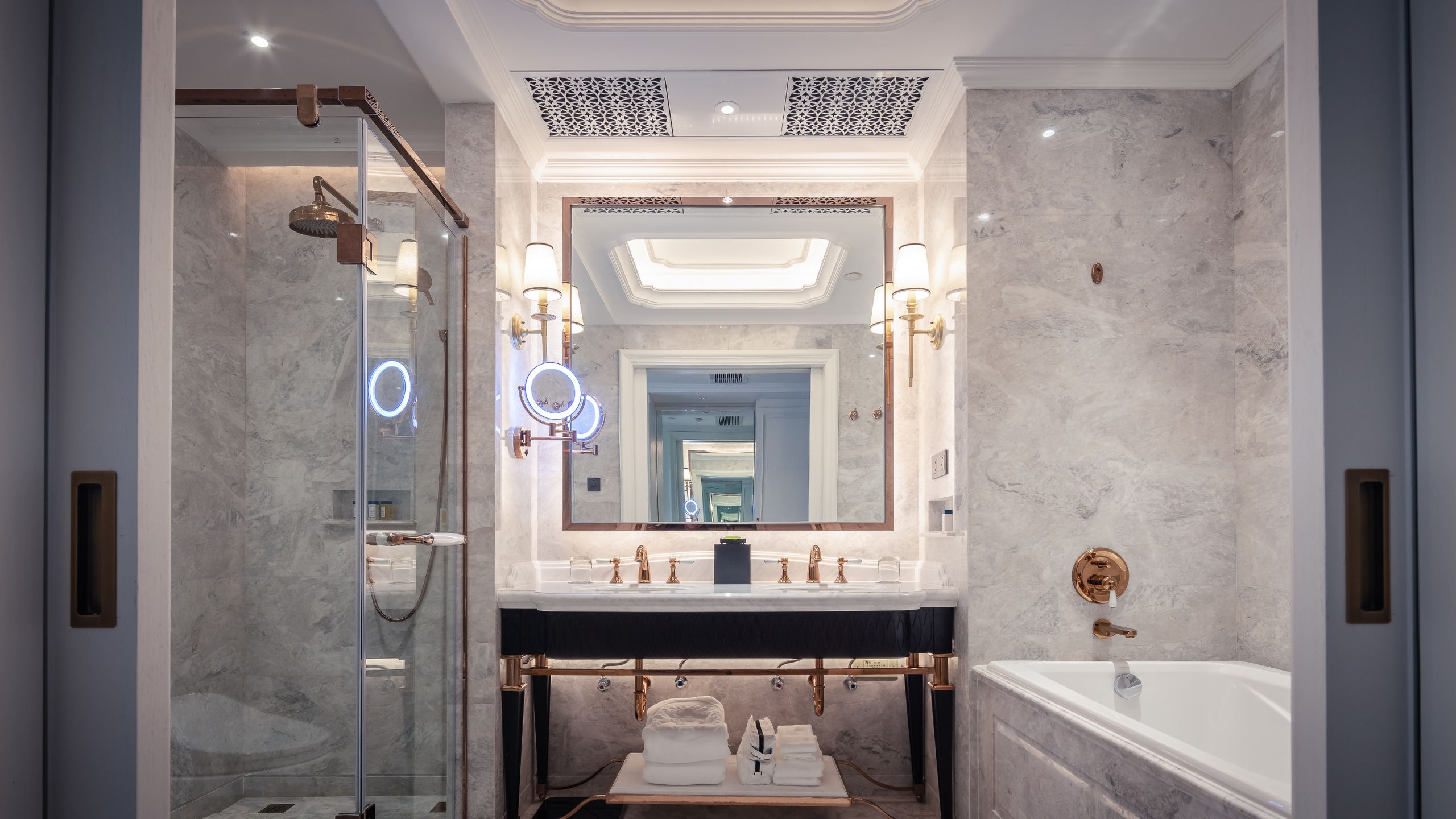
A luxury bathroom does not have to look like a five-star hotel to feel expensive. In many well-designed spaces, the difference comes from quieter details: thoughtful proportions, comfortable lighting, useful storage, quality materials, and fixtures positioned exactly where they make sense.
Modern bathrooms are also becoming more than functional spaces. They are increasingly designed around comfort, relaxation, wellness, and personal routines. That means luxury can come from a spacious shower, a comfortable soaking tub, better lighting, heated floors, natural materials, or simply a layout that makes everyday life easier.
The strongest luxury bathroom ideas combine appearance with practicality. Instead of filling the room with expensive features, the goal is to create a space where each material, fixture, color, and design decision has a clear purpose.
What Makes a Bathroom Feel Truly Luxurious?
Luxury is often associated with expensive materials, but price alone does not create a high-end bathroom. Marble, brass fixtures, large tubs, and designer fittings can contribute to an upscale appearance, but they cannot compensate for an uncomfortable layout or poor lighting.
A genuinely luxurious bathroom usually feels calm, organized, comfortable, and intentional. Everything has a place, movement through the room feels natural, and the materials work together rather than competing for attention.
Luxury Is More Than Expensive Materials
A high price tag does not automatically make a bathroom luxurious.
A beautifully installed porcelain surface can look more refined than poorly installed natural stone. A simple vanity can appear custom when its proportions fit the room perfectly. Even a modest color palette can feel sophisticated when different textures are combined carefully.
Material quality certainly matters, especially in an environment exposed to moisture, cleaning products, and daily use. However, installation quality, proportion, durability, and maintenance should be considered alongside appearance.
The real goal is to create a bathroom that still feels beautiful after the novelty of the renovation has disappeared.
Comfort, Function, and Personalization
A luxury bathroom should fit the people who use it.
For someone who takes long showers every day, a generous walk-in shower may provide more value than a large bathtub. Someone who enjoys relaxing baths may have completely different priorities.
This is where personalization becomes important. A luxury bathroom should respond to actual habits instead of copying a photograph simply because it looks impressive.
Ask yourself what you want the bathroom to do better than it does today. More storage? Better lighting? More privacy? A larger shower? Easier access? A quieter atmosphere?
Those answers can guide the design far better than trends alone.
The Role of Lighting, Storage, and Layout
Lighting, storage, and layout may not be the most glamorous parts of bathroom design, but they strongly influence how luxurious a room feels.
Good lighting can make finishes look richer while improving grooming and visibility. Well-planned storage keeps everyday products out of sight. A thoughtful layout prevents the room from feeling crowded.
The result is a space that feels organized without requiring constant effort.
21 Luxury Bathroom Ideas for Your Next Renovation
1. Create a Spa-Inspired Retreat
One of the easiest ways to establish a luxury direction is to think of the bathroom as a personal retreat rather than simply a functional room.
A spa-inspired design can use calming colors, natural textures, warm lighting, comfortable towels, and a spacious shower. A built-in bench can provide a place to sit, while recessed shelving keeps products organized.
The key is restraint. You do not need every possible spa feature. Choose the elements that genuinely improve your routine.
A calm palette combined with soft lighting and natural materials can often create more atmosphere than a room filled with expensive accessories.
2. Make a Freestanding Tub the Focal Point
A freestanding tub can become the centerpiece of a spacious bathroom.
Its sculptural shape naturally draws attention, making it useful as a visual anchor. Positioning the tub near a window, feature wall, or carefully planned lighting can make the entire bathing area feel more intentional.
However, a freestanding tub requires sufficient floor space. It should not interfere with circulation or make cleaning difficult.
Think about how often the tub will actually be used. If bathing is an important part of your routine, it can be a worthwhile luxury feature. If you rarely take baths, that same space may be more useful for a larger shower or additional storage.
3. Design an Oversized Walk-In Shower
A spacious walk-in shower can dramatically change the feeling of a bathroom.
Frameless glass, a rainfall showerhead, handheld controls, a recessed niche, and an integrated bench can create a comfortable spa-like experience.
A larger shower also provides greater flexibility. It can accommodate multiple shower functions without making the user feel surrounded by fixtures.
The practical side matters just as much. Drainage, waterproofing, floor slope, ventilation, and access should all be considered before construction begins.
4. Add a Double Vanity
A double vanity can make a shared bathroom considerably more functional.
Two sinks reduce congestion during busy mornings, while separate drawers and cabinets can give each person dedicated storage.
For a more refined appearance, consider the relationship between the vanity, countertop, mirrors, lighting, and hardware. These elements should feel like parts of the same design rather than separate purchases.
A floating vanity can also create a lighter appearance by revealing more of the floor beneath it.
5. Use Large-Format Marble or Stone
Large-format stone and stone-look surfaces can create a clean and sophisticated appearance.
One advantage is the reduction of visible grout lines. Fewer interruptions can make walls and floors feel more continuous, especially in larger bathrooms.
Marble remains a classic option, while porcelain and engineered materials can provide different combinations of appearance, durability, and maintenance requirements.
The important thing is not to cover every surface with the strongest possible pattern. A dramatic stone can have greater impact when it is balanced with quieter materials.
6. Layer the Bathroom Lighting
A luxury bathroom should not depend on a single ceiling fixture.
Layered lighting allows different parts of the room to serve different purposes.
Ambient lighting provides general illumination. Task lighting supports activities such as shaving, applying makeup, or grooming. Accent lighting can highlight architectural details or decorative surfaces. Softer nighttime lighting can make late-night trips through the bathroom more comfortable.
Lighting should be considered early in the renovation rather than added after the finishes have been selected.
The position of mirrors, cabinets, showers, and architectural features can all affect where fixtures should go.
7. Install a Statement Vanity
Because the vanity often occupies a large visual area, it can establish the personality of the entire bathroom.
Natural wood, furniture-style cabinetry, stone countertops, minimalist floating cabinets, and custom storage can all create a distinctive appearance.
A statement vanity does not necessarily have to be dramatic. Even simple cabinetry can feel luxurious when the proportions, materials, hardware, and countertop have been carefully selected.
Make sure appearance does not come at the expense of storage. A beautiful vanity that cannot accommodate everyday products quickly becomes frustrating.
8. Introduce Warm Metallic Finishes
Metal finishes can add warmth and depth to a bathroom without requiring major decorative changes.
Brushed brass, bronze, brushed nickel, and other softer finishes can complement stone, wood, neutral tile, and painted surfaces.
You do not have to match every metal perfectly. A dominant finish can establish consistency while a secondary finish can be introduced in smaller quantities.
The goal is visual balance rather than collecting as many finishes as possible.
9. Create a Dramatic Feature Wall
A feature wall gives the room a clear focal point without requiring every surface to make a statement.
Possible approaches include patterned tile, natural stone, textured surfaces, suitable decorative wall coverings, or a contrasting color.
The most effective location is usually somewhere the eye naturally lands, such as behind the vanity or around a freestanding tub.
A feature wall works best when the rest of the room supports it with quieter colors and materials.
10. Install Heated Bathroom Floors
Few things feel more comfortable on a cold morning than a warm bathroom floor.
Radiant floor heating can add an understated form of luxury, particularly in bathrooms with stone or tile floors.
This feature needs to be planned before installation because it can affect the floor assembly and electrical requirements.
It is also worth considering whether heated floors will provide meaningful comfort in your climate and household routine.
Luxury is most useful when it solves an actual problem.
11. Add a Steam Shower
A steam shower can turn an ordinary showering area into a wellness-focused space.
Unlike a standard shower upgrade, a steam system requires careful planning. The enclosure, waterproofing, ventilation, electrical work, controls, and equipment all need to work together.
A larger shower can make this type of feature easier to incorporate while also providing room for seating and storage.
Steam features are best treated as part of the overall bathroom infrastructure rather than as an accessory added near the end of the renovation.
12. Choose a Sculptural Statement Sink
The sink does not always have to disappear into the vanity.
A distinctive vessel, integrated, stone, or unusually shaped basin can become a small architectural feature.
This approach works particularly well when the rest of the bathroom is relatively restrained.
Proportion is important. A sculptural sink should suit the vanity and room rather than overwhelming them.
13. Bring Natural Materials Indoors
Natural materials can make a bathroom feel warmer and more connected to the surrounding home.
Wood, stone, natural textures, earthy colors, and organic shapes can create a relaxed atmosphere without making the room look rustic.
A warm wood vanity can work beautifully with pale stone and contemporary fixtures. Similarly, natural stone can provide texture while a simple cabinet keeps the overall design modern.
Always consider moisture exposure and maintenance requirements when selecting natural materials.
14. Add Smart Bathroom Technology
Technology can add luxury when it makes everyday routines easier.
Depending on the renovation, smart features may include digital shower controls, programmable lighting, heated floors, smart mirrors, integrated charging, or connected bathroom fixtures.
The best technology is usually the kind that solves a real problem.
For example, precise shower controls can improve comfort, while programmable lighting can make it easier to move between bright morning illumination and softer evening light.
Avoid adding technology simply because it is available. Every feature should have a reason for being there.
15. Use a Floor-to-Ceiling Design
Extending tile or another suitable wall finish from the floor toward the ceiling can create a strong sense of continuity.
This approach can make the walls feel taller and reduce visual interruptions.
Large-format surfaces can be particularly effective because they reduce the number of grout lines.
You do not have to use exactly the same finish throughout the entire room. A consistent primary material combined with a contrasting vanity wall can provide variation while keeping the design cohesive.
16. Make the Ceiling Part of the Design
The ceiling is often ignored during bathroom renovations.
Yet it is another surface that can influence the character of the room.
Depending on the space and the materials being used, the ceiling can incorporate a subtle color, carefully planned lighting, architectural detailing, or a continuation of the wall treatment.
The objective is not to make the ceiling the main attraction. Instead, it should feel like a natural part of the overall composition.
17. Create a Dedicated Towel and Storage Zone
Storage is one of the most practical forms of bathroom luxury.
A beautiful bathroom can quickly look messy if towels, toiletries, cleaning products, and grooming tools have nowhere to go.
Plan storage around the items you actually use. Drawers are useful for smaller products, while deeper cabinets can hold towels and larger supplies.
Open shelving can work for attractive items, but concealed storage is generally more effective for reducing visual clutter.
When everything has a designated place, the bathroom becomes easier to maintain.
18. Incorporate a Curbless Shower
A curbless shower can create a smooth transition between the shower and the rest of the bathroom floor.
Visually, it can make the space feel more open. It can also support accessibility by reducing the need to step over a raised threshold.
However, this feature requires careful technical planning. Drainage, waterproofing, floor slope, and the transition between wet and dry areas all need to be addressed properly.
A clean-looking curbless shower depends heavily on what happens beneath the finished surface.
19. Mix Modern and Traditional Elements
A bathroom does not have to belong entirely to one design period.
Modern fixtures can work with traditional cabinetry. Classic stone can complement minimalist hardware. A vintage-inspired mirror can soften a contemporary tile installation.
The key is creating relationships between the different elements.
Repeated colors, similar materials, related shapes, or consistent proportions can prevent the combination from feeling random.
This approach can also produce a more personal bathroom because the room does not look like it came directly from a single showroom collection.
20. Design Around a Calming Color Palette
Color has a powerful effect on atmosphere.
Soft whites, warm neutrals, muted greens, earthy browns, natural stone shades, and gentle gray tones can create a calm environment.
That does not mean luxury bathrooms must be pale. Dark colors can also work when balanced with suitable lighting and lighter materials.
The important factor is cohesion.
Instead of selecting every color independently, establish a primary palette and then choose supporting tones that work within it.
21. Add One Memorable Signature Feature
A bathroom does not need ten dramatic features to feel luxurious.
One carefully selected signature element can be enough.
This might be a sculptural tub, distinctive stone, unusual mirror, custom vanity, architectural lighting feature, handmade tile, or beautifully detailed shower niche.
Once you have chosen the main focal point, let the rest of the room support it.
That restraint can make the finished bathroom feel more sophisticated than a space where every surface competes for attention.
How to Choose the Right Luxury Bathroom Ideas for Your Space
Collecting ideas is easy. Deciding which ones belong in your bathroom is the more important step.
Before choosing fixtures and finishes, consider the existing layout, plumbing locations, windows, doors, storage needs, circulation space, and the way the room is actually used.
Start With Your Bathroom Layout
Layout should come before decoration.
A beautiful vanity can become frustrating if it blocks movement. A large tub can consume valuable floor space. A shower may look impressive but leave insufficient room for storage.
Create several layout possibilities before choosing final fixtures.
Think about how people enter the room, where they stand when using each fixture, how doors open, and whether two people can move through the bathroom comfortably.
Decide What Deserves the Budget
Not every element needs the same level of spending.
Some parts of a renovation are much harder to change later than others. Plumbing changes, electrical work, waterproofing, ventilation, drainage, and structural modifications deserve careful planning and appropriate investment.
Decorative accessories and some finishes can be changed more easily.
A sensible budget should therefore protect the technical foundation of the bathroom before allocating money to purely decorative upgrades.
Separate Must-Haves From Nice-to-Haves
Make two lists before construction begins.
The first should contain features that genuinely improve your daily routine. The second can include features you would like if the space and budget allow.
This distinction helps prevent a common renovation problem: spending heavily on visible features while compromising storage, lighting, ventilation, or usability.
Prioritize Daily Comfort
Think about what frustrates you about your current bathroom.
Maybe the shower is too small. Perhaps there is insufficient storage. Maybe the lighting makes grooming difficult, or two people cannot comfortably use the room at the same time.
Those problems should influence your priorities.
A renovation becomes more valuable when it solves real problems rather than simply changing the appearance.
Plan for Long-Term Accessibility
Accessibility does not have to make a bathroom look clinical.
Curbless showers, wider openings, comfortable seating, good lighting, easy-to-use controls, and appropriate reinforcement can be integrated into an elegant design.
Planning for accessibility can also make the bathroom easier to use over time as household needs change.
Luxury Bathroom Renovation Mistakes to Avoid
A bathroom can contain expensive products and still feel poorly designed.
Choosing Looks Over Function
A design that photographs well may not work well in everyday life.
Consider cleaning, storage, circulation, maintenance, and accessibility before committing to a visually impressive feature.
Underestimating Storage
Insufficient storage is one of the fastest ways to make a luxury bathroom look cluttered.
Plan storage for towels, toiletries, cleaning supplies, grooming tools, and other everyday items.
Ignoring Ventilation and Moisture
Bathrooms naturally produce moisture.
Poor ventilation can affect finishes, cabinetry, paint, and overall indoor conditions. A sophisticated bathroom needs appropriate ventilation as part of the underlying design.
Poorly Planned Lighting
Decorative lighting alone is not enough.
A bathroom needs sufficient illumination for practical tasks while also allowing a softer atmosphere when desired.
Mirror placement and fixture positions should be considered together.
Using Too Many Materials
A room can become visually confusing when too many stone patterns, metals, tile styles, colors, and textures are introduced.
Choose a primary material family and use supporting finishes carefully.
Forgetting Maintenance
A material can look beautiful while requiring more maintenance than you are willing to provide.
Before selecting a surface, understand how it responds to moisture, stains, cleaning products, scratches, and everyday wear.
Making Layout Changes Without Professional Planning
Moving a fixture can involve plumbing, electrical work, drainage, ventilation, waterproofing, or structural changes.
Major modifications should be planned with qualified professionals and according to applicable local requirements.
How to Make a Bathroom Feel Luxurious Without Overdoing It
Luxury is not about adding something expensive to every corner.
In fact, restraint often creates a more sophisticated result.
Choose Fewer, Stronger Focal Points
If the tub, vanity, wall, floor, lighting, and shower are all competing for attention, the room can feel chaotic.
Choose one or two features to emphasize and allow the remaining elements to support them.
Repeat Materials Strategically
Repeating a material or color can make a bathroom feel cohesive.
For example, a stone used on the vanity could be echoed in a shower niche or a smaller architectural detail.
The repetition does not need to be exact. Similar undertones, textures, and shapes can create enough connection.
Keep Everyday Clutter Hidden
Luxury is difficult to maintain when every surface is covered with bottles and personal items.
Use drawers, cabinets, niches, organizers, and dedicated storage areas to give everyday objects a home.
A visually calm room usually feels more expensive than a cluttered one, regardless of the price of the fixtures.
Use Texture Instead of Excess Decoration
Texture can create richness without making the room visually crowded.
Smooth stone, warm wood, brushed metal, textured tile, soft towels, and ribbed glass can create depth while maintaining a controlled color palette.
The result can feel detailed without feeling busy.
Frequently Asked Questions About Luxury Bathrooms
What makes a bathroom look luxurious?
A luxury bathroom usually combines good proportions, quality materials, thoughtful lighting, practical storage, comfortable fixtures, and a cohesive color and material palette. Expensive products can contribute, but they are not enough by themselves.
What are the most popular luxury bathroom features?
Popular options include spacious walk-in showers, freestanding tubs, double vanities, layered lighting, natural stone, heated flooring, smart fixtures, dedicated storage, curbless showers, and spa-inspired shower features.
Is a freestanding tub worth adding to a luxury bathroom?
A freestanding tub can be worthwhile when the household regularly uses a bathtub and the room has enough space for comfortable circulation. If bathing is rare, the same floor area may be more useful for a larger shower or additional storage.
What materials are best for a high-end bathroom?
Natural stone, porcelain, quality ceramic tile, engineered surfaces, suitable wood finishes, and durable composite materials can all work well. The right choice depends on appearance, moisture exposure, maintenance, durability, installation, and budget.
How can I make a small bathroom feel luxurious?
Focus on simplicity, good lighting, concealed storage, well-proportioned fixtures, consistent materials, and carefully selected finishes. A small bathroom does not need every luxury feature to feel sophisticated.
Are walk-in showers better than bathtubs for luxury bathrooms?
Neither option is automatically better. A large walk-in shower may be more practical for daily use, accessibility, and spa-style features. A bathtub can be more valuable for households that regularly enjoy soaking.
What type of lighting is best for a luxury bathroom?
Layered lighting is generally the most flexible approach. Combine ambient illumination with task lighting around the vanity and softer accent or nighttime lighting where appropriate.
How can I make my bathroom feel like a spa?
Focus on comfort, atmosphere, and simplicity. A spacious shower, warm lighting, natural materials, uncluttered storage, calming colors, comfortable textures, and suitable wellness features can all contribute to a spa-like environment.
What smart features can be added to a luxury bathroom?
Depending on the renovation, options can include digital shower controls, programmable lighting, heated floors, smart mirrors, integrated charging, and connected fixtures. The most useful features are those that improve an actual part of your daily routine.
What should I prioritize during a major bathroom renovation?
Start with the layout, plumbing, waterproofing, ventilation, electrical planning, lighting, and storage. Once those fundamentals are established, move on to fixtures, surfaces, colors, and decorative features.
Final Thoughts
The best luxury bathroom ideas are not necessarily the ones with the largest price tags. They are the ideas that make the room more comfortable, practical, beautiful, and personal.
A spacious shower may provide more value than a bathtub that rarely gets used. Excellent lighting can have a greater daily impact than another expensive finish. Well-designed storage can keep the entire room looking refined. A carefully selected material can create more character than covering every surface with decorative details.
Luxury ultimately comes from making thoughtful decisions.
Start with the way you use your bathroom. Consider the space available, identify your genuine priorities, protect the technical foundation of the renovation, and then choose the materials and features that support those decisions.
A successful high-end bathroom should not simply look impressive on the day it is finished. It should continue to feel comfortable, organized, functional, and beautiful long after the renovation is complete.
