
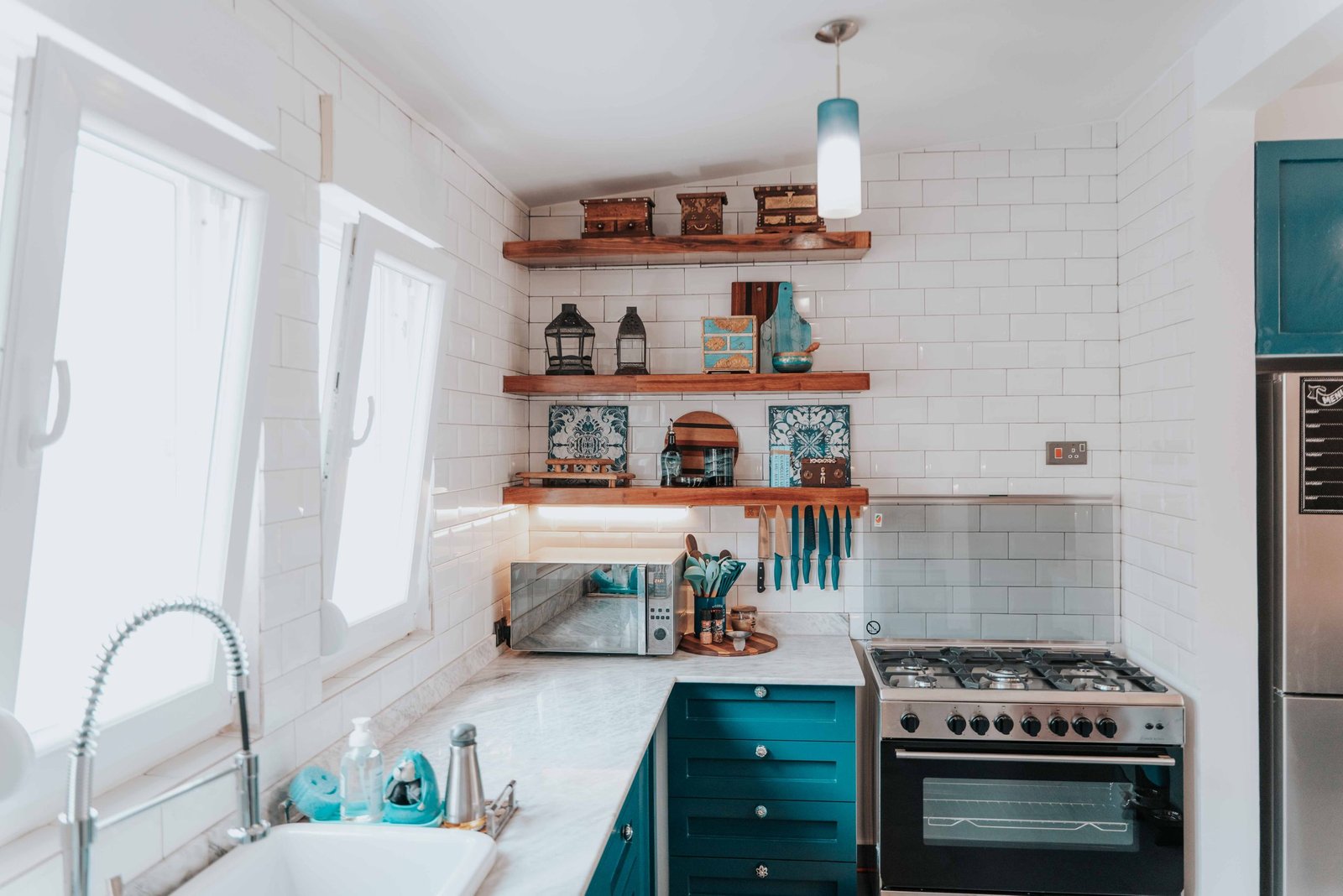
Kitchen counters have a funny way of becoming the busiest surfaces in the house. One day there’s a coffee maker and a fruit bowl. A few days later, mail, utensils, appliances, and random items have joined them. Even a well-designed kitchen can start looking crowded.
The good news is that refreshing your countertops doesn’t require new cabinets or an expensive renovation. A few thoughtful changes can make the space feel warmer, more organized, and more personal.
The best kitchen counter decor ideas aren’t about filling every empty spot. They’re about choosing pieces that fit the room, grouping them intentionally, and leaving enough open surface for everyday cooking.
How to Decorate Kitchen Counters Without Creating Clutter
Before adding anything new, take a good look at what is already sitting on the counter. Decorating becomes much easier when you’re starting with a clean surface.
Put away appliances you rarely use, remove miscellaneous objects, and decide which everyday items genuinely need to stay accessible. Once the counter is cleared, you can see where decoration will actually improve the space.
Here’s the thing: empty counter space isn’t necessarily a decorating problem. In a kitchen, it can be one of the most useful design features.
Clear the Counter Before You Style It
Start by removing anything that doesn’t belong there. This might include unopened mail, unused appliances, excess utensils, or decorative pieces that no longer suit the room.
You don’t need to hide everything. If you use a coffee maker every morning, for example, keeping it on the counter makes sense. The goal is to distinguish between useful items and things that simply accumulated there.
Decide What Each Counter Zone Is For
Different parts of the kitchen can have different purposes. One section might be your coffee area, while another is used for food preparation.
Think about these zones:
- Prep area for chopping and cooking
- Coffee or beverage station
- Cooking area near the stove
- Serving area near the dining space
- Small decorative area that doesn’t interfere with work
Once you know what each area needs to do, choosing decor becomes much easier.
Use the “Less but Better” Principle
A counter covered with small decorations can look busier than a counter with one or two substantial pieces.
Try combining different heights and textures instead. A wooden cutting board beside a ceramic bowl and a small plant can create more visual interest than six tiny accessories scattered across the surface.
10 Kitchen Counter Decor Ideas to Try
There isn’t one correct way to style a kitchen counter. The right arrangement depends on your kitchen’s size, colors, layout, and how you actually use the space.
These ideas can be adapted to modern apartments, traditional kitchens, large family kitchens, and everything in between.
1. Create a Decorative Tray Arrangement
A tray is one of the easiest ways to make several small countertop items look intentional.
Instead of placing a vase, bowl, candle, and other accessories separately, group them together on a decorative tray. The tray creates a visual boundary and makes the arrangement feel like one composition rather than a collection of unrelated objects.
For example, try a small ceramic vase, a bowl, and salt and pepper mills on a wooden tray.
Pay attention to scale. A very small tray can look lost on a large kitchen island, while an oversized tray can consume valuable workspace on a narrow counter.
Choose a material that complements the rest of the kitchen. Wood adds warmth, ceramic can create a softer look, and metal can work well in a contemporary space.
2. Add a Bowl of Fresh Fruit or Produce
A fruit bowl is a classic countertop accessory because it combines decoration with an everyday purpose.
Fresh apples, oranges, lemons, pears, or seasonal produce can introduce natural color without requiring additional decorative objects. The bowl itself also becomes part of the design.
Wooden bowls work especially well in kitchens that already feature natural materials. Ceramic or stoneware bowls can suit more traditional or contemporary spaces, while a simple metal bowl may complement an industrial kitchen.
Keep the arrangement relatively simple. A bowl overflowing with several different colors can look busy, while a smaller selection of coordinated produce often feels more intentional.
3. Display Cutting Boards Against the Backsplash
Cutting boards don’t always need to disappear into a cabinet.
A few attractive wooden boards can be leaned vertically against the backsplash to introduce warmth, texture, and height. They can also be picked up easily when you actually need them.
Try combining boards of slightly different sizes rather than displaying a large collection. A large board at the back with one smaller board in front creates a simple layered effect.
This approach works particularly well when the kitchen contains white cabinets, neutral countertops, or other cool surfaces that could benefit from the warmth of natural wood.
Just remember that displayed cutting boards still need proper cleaning and drying. If a board is heavily used, it may be more practical to store it separately.
4. Add Greenery, Herbs, or Fresh Flowers
Plants and flowers can make a kitchen feel less hard and utilitarian.
A small pot of basil, rosemary, mint, or another kitchen-friendly herb can bring greenery into the room while remaining useful for cooking. Fresh flowers offer a similar effect when you want a more decorative touch.
You don’t need a large arrangement. A single vase or a small group of plants can be enough to soften a countertop.
Think about placement, too. Keep greenery away from areas where it could interfere with cooking, splashing water, or food preparation.
For a cohesive look, repeat a color already present elsewhere in the kitchen. Green leaves against neutral cabinetry, for instance, can provide a simple natural contrast.
5. Build a Compact Coffee Station
If coffee is part of your daily routine, turn that everyday habit into an organized design feature.
Choose a small section of the counter for the coffee maker, mugs, coffee container, and other frequently used accessories. A tray can help keep smaller pieces together.
You could place a few mugs beneath or beside the machine, add a simple canister for coffee, and keep everything within easy reach.
The important part is containment. Without a defined area, coffee accessories can gradually spread across the counter.
A coffee station can also become a subtle focal point. Choose pieces that share a similar material or color so the collection feels coordinated rather than accidental.
6. Use Attractive Canisters for Everyday Ingredients
Kitchen canisters are practical, but they don’t have to look purely utilitarian.
Matching or coordinated containers can hold coffee, tea, sugar, flour, baking ingredients, or other staples that you reach for regularly. Instead of hiding every container inside a cabinet, you can make selected ones part of the countertop arrangement.
Consistency is the key. Using several completely different containers can make the area look disorganized, while a coordinated set creates a cleaner visual rhythm.
You don’t necessarily need matching labels either. Simple containers with subtle markings can work particularly well in minimalist kitchens.
If your counter is small, limit the display to ingredients you use frequently. Store occasional baking supplies elsewhere so the arrangement doesn’t become another source of clutter.
7. Add a Small Countertop Shelf
When horizontal space is limited, look upward.
A compact countertop shelf can create another level for mugs, bowls, small plants, cookbooks, or frequently used kitchen items. This can be especially helpful in apartments and smaller kitchens where every inch of counter space matters.
Choose a shelf that is proportionate to the counter. A bulky unit can make a small kitchen feel even more crowded.
The shelf should also support the kitchen’s existing style. A simple wood shelf can add warmth to a neutral space, while a clean metal design may work better with contemporary cabinetry.
Don’t fill every level. Leaving some empty space between objects keeps the shelf from looking like a storage rack.
8. Display One or Two Favorite Cookbooks
Cookbooks can add personality without looking like traditional decor.
Rather than stacking a large pile, choose one or two books with attractive covers and place them near a coffee station, cooking area, or backsplash. A simple cookbook stand can make the display more functional and easier to access.
Color matters here. A book with a muted cover may blend naturally into a neutral kitchen, while a brighter cover can introduce a small accent color.
You can also pair a cookbook with another object, such as a small bowl or plant. This creates a simple arrangement without requiring a large collection.
Or maybe I should say it this way: the cookbook shouldn’t look like it was placed there only for decoration. If you actually enjoy using it, even better.
9. Introduce Handmade Ceramics or Natural Texture
A kitchen can sometimes feel visually flat when every surface is smooth and every accessory has the same finish.
Ceramic vases, stoneware bowls, handmade pottery, wooden accessories, and woven pieces can introduce texture without adding a lot of color.
This is particularly useful in kitchens dominated by white, gray, or other neutral shades. A textured ceramic piece can add interest without changing the entire color scheme.
Try combining materials rather than collecting multiple objects made from the same material. For example, a wooden cutting board, ceramic bowl, and woven basket can create a layered arrangement with only three pieces.
The trick is restraint. Texture should add depth, not make the counter feel crowded.
10. Create a Small Seasonal Display
You don’t need to completely redecorate your kitchen whenever the season changes.
Instead, replace one or two countertop pieces. Fresh flowers can work in spring, seasonal fruit can add color during summer, warm-toned ceramics can suit autumn, and simple greenery can work during winter.
Seasonal decorating is most effective when it complements the kitchen rather than taking it over.
A small bowl, vase, or decorative object can be enough. Once the season changes, rotate that piece and keep the rest of the countertop arrangement intact.
This approach gives the kitchen a refreshed feeling without requiring new decor every few months.
How to Style Kitchen Counters in a Small Space
Small kitchens require a slightly different approach to countertop decorating. When workspace is limited, every decorative object has to justify the amount of surface it occupies.
That doesn’t mean a small kitchen needs to feel plain. It simply means that function should play a larger role in your decorating choices.
Use Vertical Space
Countertop shelves, open shelving, wall-mounted storage, and other vertical solutions can help move items upward instead of taking over the work surface.
For example, a small shelf can hold mugs above the counter while leaving the area underneath available for preparation.
Vertical displays also create height, which can make a compact kitchen feel more visually interesting without requiring a larger footprint.
Choose Decor That Has a Job
Functional decor is especially valuable in a small kitchen.
Consider keeping these items visible:
- Wooden cutting boards
- Fruit bowls
- Coordinated canisters
- Attractive utensil holders
- Coffee equipment
- Frequently used serving pieces
Each item contributes something useful while also adding to the overall appearance of the room.
Keep the Main Prep Area Clear
This is where restraint matters most.
If you regularly prepare meals on a particular section of the counter, don’t sacrifice that area for decorative objects. A beautiful arrangement isn’t helpful if you have to move everything before making dinner.
Keep decorative pieces toward the edges or in areas that aren’t needed for regular food preparation.
Match Your Counter Decor to Your Kitchen Style
The same decorating idea can look completely different depending on the surrounding kitchen. A wooden cutting board and ceramic vase might feel cozy in one room and minimalist in another.
Modern Kitchen
Modern kitchens generally benefit from simple forms and fewer accessories.
Try clean-lined trays, neutral ceramics, simple bowls, and limited decorative pieces. Black, white, gray, natural wood, or carefully chosen accent colors can keep the arrangement controlled.
Avoid filling the counter with numerous unrelated objects.
Farmhouse Kitchen
Farmhouse kitchens can handle more warmth and texture.
Natural wood cutting boards, woven baskets, ceramic containers, vintage-inspired pieces, and simple greenery can complement the relaxed character of the style.
The goal isn’t to make everything look old-fashioned. A few natural materials are often enough to create the desired feeling.
Contemporary Kitchen
Contemporary spaces can work well with sculptural accessories and mixed materials.
Try combining smooth ceramics with wood, glass, or metal. A single unusual vase or carefully shaped bowl can become a focal point without requiring several decorative objects.
Keep the color palette controlled so the arrangement doesn’t compete with the kitchen’s architecture.
Traditional Kitchen
Traditional kitchens can accommodate classic ceramics, wooden accessories, decorative trays, cookbooks, and timeless colors.
Look for pieces that complement existing cabinet hardware, backsplash colors, and countertop materials.
Instead of trying to create a completely separate decorative display, connect the countertop accessories to details already present in the room.
Kitchen Counter Decorating Mistakes to Avoid
Sometimes the easiest way to improve countertop styling is to remove something.
A few common mistakes can make even carefully selected decor look messy.
Filling Every Empty Spot
An empty section of counter doesn’t automatically need decoration.
Negative space gives the eye somewhere to rest and makes the pieces you do display more noticeable. It also provides valuable room for cooking and serving.
Leaving Rarely Used Appliances Out
Large appliances can quickly dominate a kitchen counter.
If you use an appliance every day, keeping it accessible may make sense. If you use it once every few weeks, consider storing it elsewhere when possible.
This simple distinction can make a surprisingly large difference.
Using Too Many Small Decorative Objects
A collection of tiny objects can create visual noise.
Instead, try one larger anchor piece with one or two smaller companions. This creates hierarchy and makes the arrangement easier to understand at a glance.
Ignoring Scale
Decor needs to match the size of the surface.
A tiny vase may disappear on a large island, while an oversized decorative bowl can overwhelm a narrow counter.
Before buying anything, consider the available surface area and the height of nearby cabinets, shelves, and appliances.
Choosing Decor That Is Difficult to Clean
Kitchen counters deal with crumbs, moisture, food splashes, and occasional grease.
Decorative pieces should therefore be reasonably easy to wipe down. Highly complicated displays may look attractive initially but become frustrating when cleaning day arrives.
Copying a Display Without Considering Your Own Kitchen
A styling arrangement from a large kitchen may not translate directly to a small apartment.
Look at the principle behind the arrangement instead. If the inspiration uses three objects on a six-foot island, you might achieve a similar effect with two smaller pieces on your own counter.
How to Keep Your Kitchen Counter Decor Looking Tidy
Good styling isn’t finished once the objects are placed.
Countertops naturally collect things throughout the day, so maintaining the arrangement requires a simple routine.
Start by returning items to their designated zones. If mail, keys, or miscellaneous objects repeatedly land on the counter, consider giving them a separate home.
Wipe around decorative objects regularly and remove pieces that become difficult to maintain. A seasonal display can also be rotated rather than allowed to grow indefinitely.
Most importantly, pay attention when the counter starts feeling crowded.
That’s usually a sign that something needs to be removed, relocated, or grouped differently.
Frequently Asked Questions About Kitchen Counter Decor
What should I put on my kitchen counter for decoration?
A few intentional pieces can work well, including decorative trays, fruit bowls, wooden cutting boards, greenery, coordinated canisters, ceramics, and cookbooks. Choose pieces that fit the kitchen’s size and style while leaving enough open space for everyday cooking and preparation.
How do I make my kitchen counters look nice?
Start by removing unnecessary clutter, then add a small number of coordinated pieces. Combining different heights, natural textures, and repeated colors can create visual balance without covering the entire countertop.
How can I decorate kitchen counters without clutter?
Group smaller objects on a tray, choose functional decor when possible, and leave clear areas for food preparation. If something isn’t useful and doesn’t contribute meaningful visual value, it probably doesn’t need to remain on the counter.
What looks good on a kitchen island?
A decorative tray, large cutting board, fruit bowl, flowers, cookbooks, or simple centerpiece can work well on a kitchen island. The best choice depends on the island’s size and whether the surface is also used for dining or food preparation.
How do you decorate a small kitchen counter?
Prioritize dual-purpose items and use vertical space when possible. A compact shelf, small tray, attractive canisters, or a few leaning cutting boards can add personality without consuming too much workspace.
Should kitchen counters be completely clear?
No. A completely clear counter is one decorating preference, not a universal rule. Frequently used appliances and kitchen tools can remain visible when they are organized and don’t interfere with cooking, cleaning, or preparation.
How many decorative items should I put on a kitchen counter?
There isn’t a universal number. The right amount depends on the size of the counter, the objects themselves, and how much workspace you need. A few well-grouped pieces will often have more impact than many scattered accessories.
Final Thoughts
Decorating a kitchen counter is less about buying more things and more about making better choices with the space you already have.
Start by clearing away items that don’t need to be there. Then choose a few pieces that either serve a purpose, add texture, introduce color, or create a focal point. Group related objects together and leave enough open space for the kitchen to function normally.
A fruit bowl, wooden cutting board, small plant, coffee station, or favorite cookbook can make a noticeable difference when it has a clear place in the overall arrangement.
The best kitchen counter decor ideas don’t compete with the kitchen. They make the space feel more intentional while allowing you to use it exactly as you need to.
