
When summer starts to fade, lawn care can easily slip down the priority list. Cooler mornings and shorter days may make it seem like the grass is no longer growing, but fall can actually be an important season for maintaining a healthy lawn.
For many cool-season grasses, fall provides favorable conditions for root growth, overseeding, aeration, and other maintenance tasks. It is also a useful time to repair damage caused by summer heat, foot traffic, drought, weeds, and compacted soil.
Good fall lawn care does not mean applying every treatment available. The goal is to understand what your lawn needs and complete the right tasks while growing conditions are still suitable.
Here are 10 essential jobs to consider before colder weather arrives.
Why Fall Lawn Care Matters
Fall gives homeowners an opportunity to address problems that may have developed during the warmer months. Grass can still be actively growing while cooler temperatures reduce some of the stress associated with summer heat.
For cool-season turf, this period can be especially useful. Roots may continue developing even as above-ground growth begins to slow, allowing the lawn to recover from summer damage and build stronger growth before winter.
Fall is also a practical time to deal with soil compaction, thin patches, weeds, fallen leaves, and nutrient issues. Taking care of these problems before winter can leave the lawn in better condition when spring arrives.
Here’s the thing: not every lawn needs the same treatment. Grass species, climate, soil conditions, rainfall, and local temperatures all influence the right timing.
The Best Time Depends on Your Grass and Climate
There is no single date that marks the beginning of fall lawn maintenance everywhere. A cool-season lawn in a northern climate may follow a very different schedule from a warm-season lawn in a warmer region.
Watch the lawn itself as well as the calendar. When temperatures begin to moderate and grass is still actively growing, several fall maintenance tasks may be appropriate.
Soil moisture matters, too. For example, aeration is most useful when soil conditions allow equipment to remove plugs without excessive damage or compaction.
10 Essential Fall Lawn Care Tasks
1. Seed or Overseed Thin Areas
Fall can be an excellent opportunity to improve a lawn that has become thin or patchy, particularly when cool-season grass is involved.
Start by identifying areas where grass coverage is noticeably weak. Bare spots can result from summer heat, drought, foot traffic, pests, disease, or poor soil conditions.
Before spreading seed, prepare the area so the seed can make good contact with the soil. Lightly loosen the surface if necessary, distribute suitable seed, and keep the area consistently moist while the new grass establishes.
The type of grass seed matters. Choose a variety that is appropriate for your climate, soil, sunlight conditions, and existing turf.
Do not simply throw seed onto a layer of leaves or compacted soil and expect strong results. Good seed-to-soil contact and suitable moisture are important parts of successful establishment.
2. Test Your Soil
Healthy grass depends on more than water and sunlight. Soil conditions influence how effectively roots can access nutrients and water.
A soil test can provide useful information about pH and nutrient levels. This is particularly valuable if your lawn repeatedly struggles despite receiving ordinary maintenance.
Testing also prevents unnecessary guesswork. Instead of automatically adding fertilizer or soil amendments, you can make decisions based on what the soil actually needs.
Or maybe I should say it this way: a soil test does not magically fix a lawn, but it gives you better information before you spend time and money trying to correct a problem.
If the soil has an unsuitable pH or lacks certain nutrients, the appropriate correction can be considered according to local recommendations.
3. Fertilize Based on Lawn Needs
Fall fertilization can be useful for appropriate turf, especially cool-season grasses, but more fertilizer is not automatically better.
The goal is to provide nutrients when the lawn can use them without creating excessive growth or other problems. Soil-test results can help determine whether additional nutrients are actually needed.
If you use a commercial fertilizer, follow the product’s application directions carefully. Applying more than recommended does not necessarily produce a healthier lawn.
Timing also matters. Fertilization should be coordinated with grass growth, local weather, and the type of turf you have.
A healthy fertilization plan is therefore less about following a universal calendar and more about understanding your lawn’s actual requirements.
4. Watch for Lawn Diseases
Cooler weather does not eliminate the possibility of lawn disease. Moisture, poor air circulation, excessive thatch, and layers of leaves can create conditions that encourage certain fungal problems.
Look for unusual discoloration, circular patches, thinning areas, or other changes that do not match ordinary seasonal growth.
The important point is to identify the likely cause before applying a treatment. Brown or thinning grass does not automatically mean a fungal disease is present.
Keeping leaves and other debris under control can also improve air movement and reduce prolonged moisture around the grass.
Fungicides should not be treated as a routine part of every homeowner’s fall lawn routine. If disease is suspected, identification and appropriate local guidance are more useful than guessing.
5. Check for Lawn Pests
Insects can also contribute to damaged or thinning turf. If sections of grass suddenly deteriorate, look for signs that may indicate an insect problem rather than assuming the lawn simply needs more water or fertilizer.
The pattern of damage can provide clues. However, several different lawn problems can produce similar symptoms, so identification matters.
If a pest is confirmed, choose a control method appropriate for that particular problem and follow all product instructions if a treatment is used.
There is little value in treating an entire lawn for an insect that is not actually present. Targeted lawn care is usually more sensible than applying treatments simply because the season has changed.
6. Deal With Moss and Poor Drainage
Moss can be a sign that the growing conditions are not ideal for grass. Persistent shade, excess moisture, poor drainage, and compacted soil can all contribute to conditions where moss becomes established.
Removing visible moss may improve the appearance temporarily, but it does not necessarily solve the underlying issue.
Look at the area where moss appears. Does water remain there after rainfall? Is the location heavily shaded? Does the soil feel hard and compacted?
If poor drainage or compaction is contributing to the problem, addressing those conditions can be more useful than repeatedly removing the moss.
Grass needs suitable growing conditions to compete effectively. Improving the environment around the turf can therefore be an important part of long-term fall lawn maintenance.
7. Repair Brown or Damaged Patches
Brown patches are not always caused by the same problem. Summer heat, drought, foot traffic, pets, pests, disease, and soil issues can all produce damaged areas.
Before reseeding a brown patch, try to determine why the grass failed there in the first place.
For example, a heavily used pathway may need a different solution from an area that remains wet after rain. Similarly, a recurring patch may require investigation for disease or pests rather than simply receiving more seed.
Once the cause is understood, repair the area according to its condition. This may involve loosening compacted soil, improving drainage, correcting watering habits, or reseeding when conditions are suitable.
Fall is useful for this work because it may provide enough time for new grass to establish before winter, depending on the climate and grass type.
8. Aerate Compacted Soil
Compacted soil can restrict the movement of air, water, and nutrients around grass roots. It can also make it harder for new seed to establish properly.
Core aeration addresses this problem by removing small plugs of soil from the lawn. These openings create pathways through the compacted surface and can improve the movement of water and air into the root zone.
Fall can be a suitable time for aerating cool-season lawns because grass may still be actively growing.
But timing matters. Soil that is extremely dry can be difficult to aerate, while soil that is excessively wet may become more compacted during the process.
You can often spot compaction in areas that receive heavy foot traffic. If water runs off instead of soaking into the soil, or if the ground feels unusually hard, compaction may be worth investigating.
9. Keep Mowing and Manage Fallen Leaves
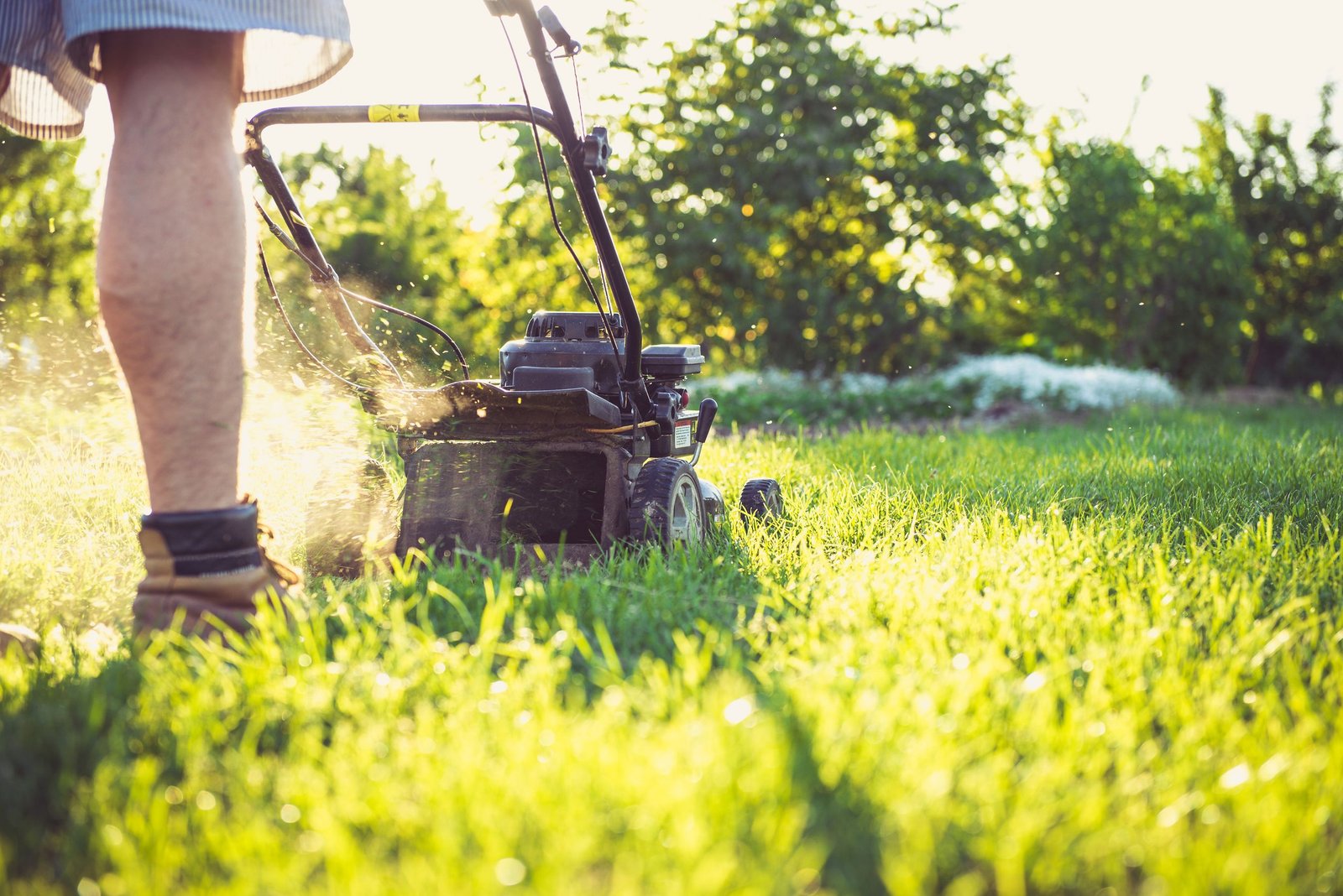
Don’t assume that the first cool days mean mowing is finished.
Continue mowing while the grass is actively growing. The final mowing should be appropriate for your grass type and local conditions rather than based on an arbitrary date.
Avoid allowing grass to become excessively tall before winter. At the same time, cutting the lawn extremely short is not a good substitute for proper seasonal preparation.
Leaves deserve attention as well. A thick layer can block light and airflow from reaching the grass underneath.
You can remove leaves or mulch suitable amounts into smaller pieces, depending on your mower, lawn condition, and local recommendations. Newly seeded areas deserve particular attention because heavy leaf cover can interfere with young grass.
Regular leaf management is one of the simplest fall lawn care tips, but it is also one of the easiest to postpone.
10. Continue Watering When Necessary
Cooler temperatures may reduce the lawn’s water needs, but they do not automatically mean watering should stop immediately.
Instead, pay attention to rainfall, soil moisture, grass condition, and the needs of newly seeded areas.
Newly established grass may require more consistent moisture than mature turf. At the same time, keeping already moist soil constantly wet can create other problems.
The right approach is to adjust watering as conditions change.
As the lawn approaches dormancy, its water requirements will generally change. Local weather and grass type should guide the final decision rather than a fixed watering schedule.
Common Fall Lawn Care Mistakes to Avoid
Even a well-planned fall routine can go wrong if basic mistakes are made.
Mowing Too Short
Cutting grass extremely short before winter may seem like a way to reduce future mowing, but it can place unnecessary stress on the turf. Follow a suitable mowing height for your grass type instead.
Overwatering
Cooler weather can reduce evaporation. Continuing a summer watering schedule without considering rainfall and soil moisture may leave the lawn unnecessarily wet.
Fertilizing Without Considering Soil Needs
Fertilizer should provide nutrients the lawn can actually use. Applying excessive amounts can create problems rather than automatically producing healthier grass.
Aerating at the Wrong Time
Avoid aerating extremely dry or waterlogged soil. The right moisture level makes the process more effective and helps prevent additional compaction.
Overseeding Too Late
Grass seed needs suitable temperatures, moisture, and enough time to establish. Waiting until conditions are already becoming unfavorable can reduce the chances of successful establishment.
Leaving Heavy Leaf Cover
A few leaves are not necessarily a problem, but thick layers can interfere with light and airflow. Keep the lawn reasonably clear as leaf fall increases.
When Should You Start Fall Lawn Care?
The best time to begin lawn care in fall depends on your grass type and local climate.
For many cool-season lawns, early fall can be an important window for overseeding, aeration, soil testing, fertilization, and repairing damaged areas. Mid- and late-fall maintenance then shifts toward mowing, leaf management, watering when necessary, and preparing the lawn for dormancy.
Early Fall
Early fall can be suitable for:
- Overseeding thin areas
- Aerating compacted soil
- Testing the soil
- Addressing nutrient needs
- Repairing damaged turf
- Managing certain weeds
Mid to Late Fall
As temperatures continue to fall, focus on:
- Continuing to mow while grass grows
- Managing fallen leaves
- Monitoring moisture
- Watching for disease or pest problems
- Completing final lawn maintenance before dormancy
There is some regional variation here, and that’s important. A schedule that works well in one climate may be too early or too late somewhere else.
Quick Fall Lawn Care Checklist
Use this fall lawn care checklist as a simple reference:
| Task | When to Consider It | Main Benefit |
| Seed or overseed | Early fall in suitable conditions | Repairs thin or bare areas |
| Test soil | Before major fertilization | Identifies nutrient or pH issues |
| Fertilize | During appropriate fall growth | Supports turf nutrition |
| Monitor disease | Throughout fall | Helps identify problems early |
| Check for pests | When damage appears | Addresses specific pest issues |
| Manage moss | When shade or moisture is a concern | Improves growing conditions |
| Repair damaged patches | While conditions remain suitable | Restores weak areas |
| Aerate | When soil is suitably moist | Relieves compaction |
| Mow and manage leaves | During active growth and leaf fall | Protects the turf |
| Water | When rainfall is insufficient | Supports grass and new seed |
Frequently Asked Questions About Fall Lawn Care
What should I do to my lawn in the fall?
Start by assessing the lawn for thin areas, compacted soil, weeds, damaged patches, excessive leaves, and moisture problems. Depending on what you find, useful tasks can include overseeding, soil testing, aeration, appropriate fertilization, mowing, leaf management, and watering.
When should I stop mowing my lawn in fall?
Stop mowing when the grass has stopped actively growing rather than simply following a particular date. Continue mowing while growth continues, and make the final cut at a suitable height for your grass type and local conditions.
Is fall a good time to overseed a lawn?
Fall can be a favorable time to overseed many cool-season lawns because temperatures and moisture conditions can support seed establishment. However, timing varies by region, and the seed needs enough suitable growing conditions to establish before winter.
Should I aerate my lawn in the fall?
Aeration can be useful in fall when soil is compacted and conditions are appropriate. Core aeration removes small plugs of soil and can improve the movement of air and water through compacted areas.
Should I fertilize my lawn before winter?
Fall fertilization can benefit suitable lawns, particularly cool-season turf, but fertilizer should be selected and applied according to the lawn’s needs, soil conditions, grass type, and product instructions.
Should I remove leaves from my lawn in fall?
Heavy layers of leaves should generally be removed or managed because they can block light and airflow. Suitable amounts of leaves can sometimes be finely mulched into the lawn, provided they do not form a thick layer.
How do I prepare my lawn for winter?
Prepare the lawn by addressing thin or damaged areas, managing leaves, continuing to mow while grass is growing, aerating compacted soil when appropriate, addressing nutrient needs, and adjusting watering as temperatures and rainfall change.
Final Thoughts on Fall Lawn Care
Effective fall lawn care is less about completing every possible treatment and more about identifying what your lawn actually needs.
A thin lawn may benefit from overseeding. Compacted soil may call for aeration. A nutrient problem may justify fertilization after testing, while a leaf-covered lawn may simply need regular cleanup.
You do not need to turn fall lawn maintenance into an endless list of treatments. Pay attention to the grass, soil, weather, and local growing conditions, then prioritize the jobs that address real problems.
A little preparation before winter can put your lawn in a much better position when the next growing season begins.
