
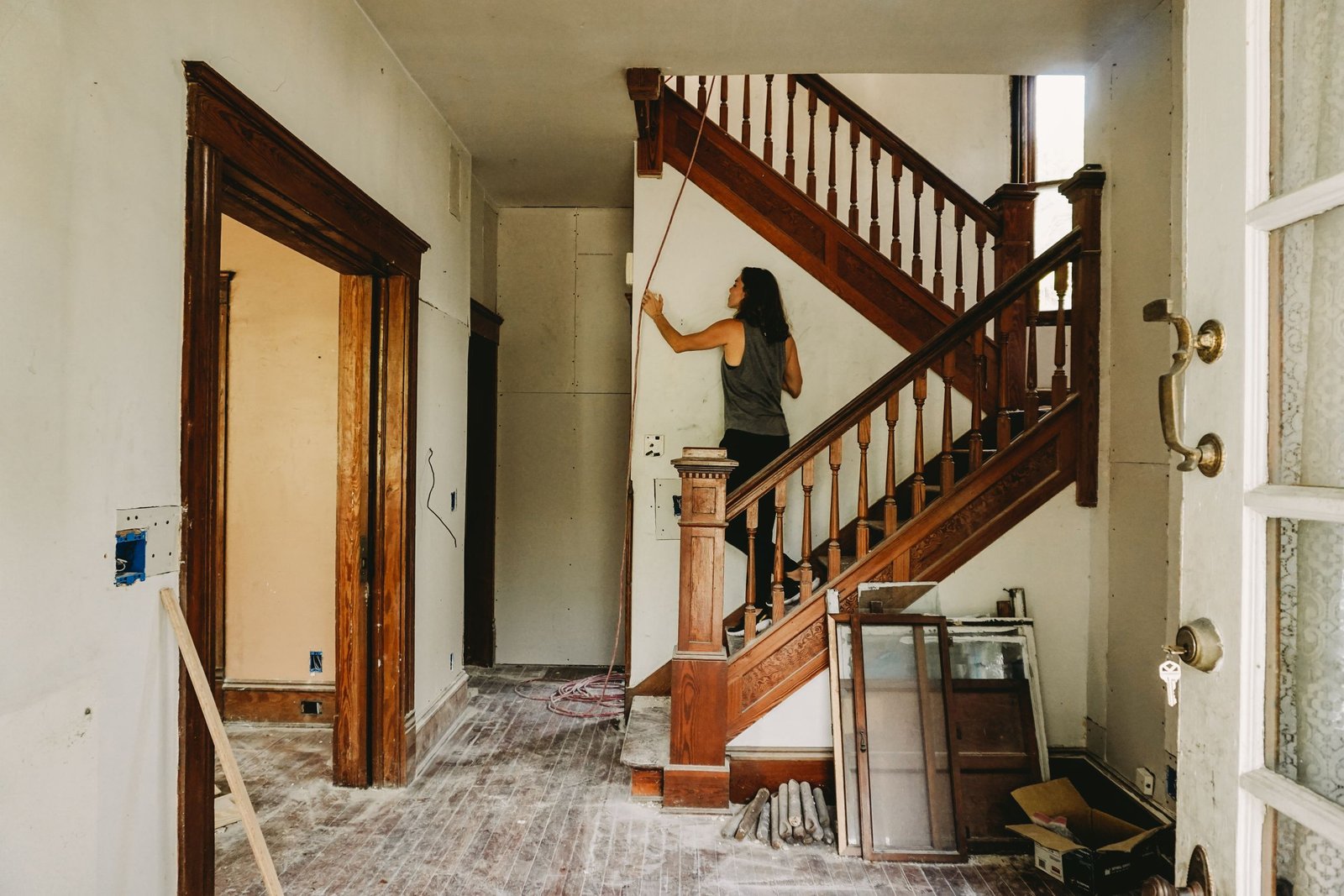
A staircase can be one of the first things you notice when you walk into a home. Yet it is often one of the last features homeowners think about renovating.
That is partly because stairs seem permanent. How to Replace an Old Staircase They are built into the house, after all. But an existing staircase does not necessarily need to be ripped out and replaced to feel fresh again. Sometimes the answer is a new carpet or runner. Sometimes a tired balustrade is the main problem. In other homes, a coat of durable paint or careful timber restoration can completely change the atmosphere of the hallway.
The trick is knowing what you are actually working with before choosing a finish.
A staircase renovation can range from a simple cosmetic refresh to a substantial redesign. How to Replace an Old Staircase The right route depends on the condition of the stairs, the materials used, the home’s architectural style, your budget and, most importantly, safety.
Before You Renovate Your Staircase, Check Its Condition
Before choosing colours, carpet samples or new spindles, take a close look at the staircase itself.
A staircase that looks dated may simply need a cosmetic update. Another that looks similar could have loose components, damaged treads or persistent movement that needs professional attention.
Is the Staircase Structurally Sound?
Start with the basics.
Look for loose handrails, damaged treads, cracked or deteriorated components, unusual movement and persistent creaking. How to Replace an Old Staircase A little noise does not automatically mean that a staircase is unsafe, but persistent creaking or movement should not simply be hidden beneath new carpet.
The same applies to damaged timber. Surface wear is one thing; deterioration affecting important components is another.
If you are unsure whether a problem is cosmetic or structural, have the staircase assessed before beginning the decorative work. How to Replace an Old Staircase It is much easier to deal with a problem before installing a new runner or refinishing every tread.
What Material Are the Stairs Made From?
The existing material will influence what you can realistically do.
A solid hardwood staircase may respond well to careful restoration. Oak can become a feature in its own right when its natural grain is revealed and given an appropriate finish.
Pine is different. It can look attractive, but softer timber may show dents and wear more readily in a busy household.
Then there are painted stairs and stairs made using engineered or sheet materials such as MDF. How to Replace an Old Staircase These should not automatically be treated as though they were unfinished hardwood waiting to be sanded and stained.
The finish should suit the material.
Are the Treads, Risers, and Handrail in Good Condition?
The treads are the horizontal surfaces you step on. The risers are the vertical sections between them. How to Replace an Old Staircase The handrail provides support as people move up and down the stairs.
These components can look tired for different reasons.
Treads usually experience the most direct wear. How to Replace an Old Staircase Risers may suffer from scuffs, while a handrail can become marked simply through constant contact.
Look at the staircase as a complete system rather than focusing on the most obvious surface.
Do You Need a Cosmetic Refresh or a Bigger Change?
A useful way to think about staircase renovation is:
Refresh → Refurbishment → Partial Replacement → Full Redesign
A refresh might involve paint, minor repairs or a new carpet.
Refurbishment could include timber restoration, new finishes or several updated components.
Partial replacement might mean changing a balustrade, selected stair components or adding suitable cladding.
A full redesign is something else entirely. How to Replace an Old Staircase It could involve changing the staircase’s direction, layout or position.
Knowing which category your project falls into can prevent you from choosing a solution that is unnecessarily complicated.
8 Brilliant Ways to Renovate a Staircase
Once you know the staircase is suitable for renovation, the possibilities become much more interesting.
The best choice is not necessarily the most dramatic. How to Replace an Old Staircase It is the one that solves the problem you actually have.
1. Repair Creaks and Minor Damage
Sometimes the smartest staircase makeover begins with maintenance rather than decoration.
Creaking, loose components, worn surfaces and small areas of damage can make an otherwise sound staircase feel old. How to Replace an Old Staircase Dealing with those issues first gives you a better foundation for whatever finish comes next.
A structurally sound staircase that simply looks tired may need surprisingly little work.
Minor cosmetic repairs and straightforward preparation can sometimes be suitable for an experienced DIYer. How to Replace an Old Staircase The difficulty depends entirely on the cause of the problem, though.
If a stair continues to move, feels unstable or has a persistent structural issue, do not treat it as a quick DIY repair.
Best for: Sound staircases that mainly need maintenance.
Main benefit: Improves the condition before decorative work begins.
Potential drawback: Repairs alone may not create a major visual transformation.
Complexity: Low to medium, depending on the problem.
Professional help: Appropriate when the cause of movement, damage or persistent creaking is unclear.
Here’s the thing: fixing the underlying problem first can make every later renovation decision easier.
2. Replace or Refresh the Stair Carpet
Carpet remains a practical option for homeowners who want a softer, quieter staircase.
It can also dramatically alter the appearance of a hallway without changing the staircase itself. How to Replace an Old Staircase A neutral carpet can make a space feel restrained, while a pattern can introduce more personality.
Think beyond colour.
The carpet needs to cope with repeated foot traffic, so durability matters. How to Replace an Old Staircase Underlay also deserves attention because the finished result is not simply about what happens on the visible surface.
Consider the relationship between the stairs and landing, too. A staircase that leads directly into another carpeted area usually looks more intentional when the materials work together.
Carpet can be particularly useful in busy family homes where comfort and noise reduction matter.
Best for: Homes where comfort, softness and quieter movement are priorities.
Main benefit: Creates a practical, comfortable finish while hiding worn timber.
Potential drawback: It conceals the original staircase material.
Complexity: Medium.
Professional help: A carpet fitter is usually the sensible choice for a precise, secure installation.
3. Add a Stylish Stair Runner
A stair runner offers a middle ground between full carpet and exposed stairs.
Instead of covering the entire width, How to Replace an Old Staircase a runner follows the central section of the staircase, leaving some of the outer stair surface visible.
That creates plenty of design opportunities.
The exposed edges could be painted, for example, while the runner introduces pattern or texture. Traditional homes may suit a classic runner with stair rods, while a simpler runner can work in a contemporary hallway.
The important part is the installation.
A runner needs to sit securely and work with the shape and condition of the existing stairs. Loose or poorly fitted flooring is not a decorative detail worth compromising on.
Best for: Homeowners who want character while retaining some of the existing staircase.
Main benefit: Adds texture and definition without completely covering the stairs.
Potential drawback: Accurate fitting matters, and the visible edges still need to be in reasonable condition.
Complexity: Medium.
Professional help: Recommended when fitting is complicated or the staircase requires preparation first.
Look — if you’re trying to decide whether your staircase needs a makeover or a rebuild, here’s what actually matters: start with its condition, How to Replace an Old Staircase then decide how much of the original staircase you actually want to see.
4. Paint the Stairs for a Dramatic Change
Paint can be one of the most noticeable ways to change a staircase without rebuilding it.
You could use one colour across the stairs and risers, create a two-tone effect, contrast the risers with the treads, or connect the staircase to the colour scheme already used in the hallway.
The balustrade can become part of the design, too.
However, preparation is where much of the result is decided. Existing finishes may need careful preparation before a suitable durable coating is applied. High-traffic stair surfaces also need a finish appropriate for repeated use.
Paint can behave differently from carpet. It may make footsteps more noticeable and can be less forgiving of marks and wear. How to Replace an Old Staircase The finish also needs to provide an appropriate walking surface rather than simply looking attractive.
Best for: Homeowners seeking a strong visual change and greater freedom with colour.
Main benefit: Offers extensive colour and design possibilities.
Potential drawback: Painted surfaces can show wear and may provide a different feel and acoustic experience from carpet.
Complexity: Medium.
Professional help: Useful where extensive preparation is needed or the existing surface is unsuitable.
5. Restore and Highlight Existing Timber
If you have attractive timber beneath an old finish, restoration can reveal a staircase’s original character.
Sanding, staining or refinishing may help bring out the grain. How to Replace an Old Staircase Oak can work particularly well with natural or deeper finishes, while a period property may benefit from preserving rather than disguising its existing timber details.
But do not assume every wooden staircase should be stripped back.
Some stairs were not designed to function as a fully exposed finished surface. How to Replace an Old Staircase Softer timber can show wear quickly, while MDF and other manufactured materials require a completely different approach.
I’ve seen conflicting advice here — some renovation advice favours exposing timber wherever possible, while other approaches make more sense when the existing stairs were never designed to be a finished surface. The condition and construction of the staircase should decide.
Best for: Suitable timber staircases with attractive or restorable surfaces.
Main benefit: Preserves and highlights natural character.
Potential drawback: The existing material may not be suitable for exposed use.
Complexity: Medium.
Professional help: Worth considering for valuable period timber, extensive restoration or uncertain surface conditions.
6. Refresh the Balustrade, Spindles, or Handrail
Sometimes the stairs themselves are fine. The problem is the balustrade.
An outdated combination of spindles, How to Replace an Old Staircase handrails and newel posts can make an otherwise attractive staircase feel stuck in another era.
Changing selected components can therefore have a bigger effect than expected.
You might paint the existing spindles, introduce a contrasting handrail, replace dated elements or combine timber with a simpler contemporary treatment. How to Replace an Old Staircase Period homes may benefit from retaining traditional profiles, while modern interiors often suit cleaner lines.
A balustrade is the protective structure alongside the stairs and may include components such as balusters or spindles, newel posts and handrails.
Because these elements are connected to staircase safety, replacement is not simply a matter of choosing something that looks good.
Best for: Staircases where the overall structure works but the detailing looks dated.
Main benefit: Can dramatically change the character of the staircase.
Potential drawback: More complex replacements require accurate joinery and attention to safety.
Complexity: Medium to high.
Professional help: Recommended for substantial replacement or alterations to protective components.
7. Add Stair Cladding or New Tread Finishes
Stair cladding can be useful when the existing treads are worn but the underlying staircase is otherwise suitable for renovation.
Depending on the system, overlays or new tread finishes can provide a refreshed appearance without replacing the entire staircase.
Oak-effect or timber finishes can create a more substantial look, while matching risers can help the staircase feel like a cohesive design.
But compatibility matters.
The existing dimensions, condition and construction need to be considered before adding material over the stairs. How to Replace an Old Staircase Adding layers without understanding how they affect the finished staircase can create problems rather than solve them.
This is one area where a product’s suitability should be assessed against the actual staircase rather than chosen from a photograph.
Best for: Worn stairs where the underlying structure is suitable for an overlay or new finish.
Main benefit: Gives tired treads a refreshed appearance.
Potential drawback: Not every staircase is compatible with every cladding system.
Complexity: Medium to high.
Professional help: Sensible where fitting requires precise measurements or the existing staircase needs modification.
8. Consider a Full Staircase Redesign
Sometimes a new finish is not enough.
If the staircase interrupts circulation, occupies awkward space or no longer works for the way the house is used, a larger redesign may make sense.
This could involve changing the direction of the staircase, altering the bottom section, How to Replace an Old Staircase reworking the balustrade or substantially changing the arrangement.
That is no longer a simple staircase makeover.
Changing stair geometry, position or structure can affect how people move between floors and may involve structural and regulatory considerations. How to Replace an Old Staircase In England, Building Regulations Part K includes requirements for stairs to be designed, constructed and installed so that they are safe for people moving between different levels.
Best for: Homes where the staircase itself is creating a layout or circulation problem.
Main benefit: Can transform both the staircase and how the space functions.
Potential drawback: Highest complexity, disruption and likely cost.
Complexity: High.
Professional help: Essential for substantial redesigns.
Which Staircase Renovation Style Suits Your Home?
A staircase should not look as though it has been dropped into the house from somewhere else.
The strongest results usually come when the staircase connects visually with the hallway, landing and surrounding architecture.
Traditional and Period Homes
Period properties often have details worth preserving.
Original timber, decorative newel posts, traditional spindles and classic runners can work particularly well. Paint can also update a period staircase without removing all of its character.
That does not mean every period home needs a traditional treatment.
A contemporary colour scheme can work beautifully when the proportions and original details are respected.
Modern and Contemporary Homes
Modern staircases tend to work well with cleaner lines and restrained finishes.
A simple balustrade, neutral paint, understated runner or carefully selected timber treatment can keep the staircase connected to a minimalist interior.
The goal is not to remove every detail. It is to avoid visual clutter.
Minimalist Interiors
In a minimalist hallway, the staircase does not necessarily need to become the main attraction.
A limited colour palette, simple finish and consistent materials can make the whole area feel calmer.
Think carefully about how the staircase interacts with the flooring and walls. How to Replace an Old Staircase Too many competing finishes can make even a well-renovated staircase look busy.
Characterful or Eclectic Homes
This is where pattern and colour can have more freedom.
A statement runner, contrasting risers, painted balustrade or unusual combination of timber and colour can give the staircase personality.
Even then, some repetition helps.
A colour picked up from the hallway, How to Replace an Old Staircase a similar timber tone elsewhere or a pattern that relates to nearby furnishings can make the result feel deliberate rather than random.
Should You Paint, Carpet, or Add a Stair Runner?
There is no universal winner.
The best option depends on what the staircase is made from, how heavily it is used and the atmosphere you want to create.
| Renovation Method | Best For | Complexity | Main Benefit | Main Drawback |
| Repair and refresh | Sound but tired stairs | Low–Medium | Improves condition | Won’t transform major design issues |
| Carpet | Comfort-focused homes | Medium | Softer and quieter | Hides timber |
| Runner | Characterful interiors | Medium | Stylish compromise | Needs accurate fitting |
| Paint | Dramatic makeover | Medium | Strong visual impact | Can show wear and be less forgiving |
| Timber restoration | Suitable wooden stairs | Medium | Highlights natural material | Existing timber must be suitable |
| Balustrade update | Dated staircase design | Medium–High | Changes overall character | Complex work may need a professional |
| Stair cladding | Worn treads | Medium–High | Freshens existing stairs | Compatibility varies |
| Full redesign | Poor layout or major renovation | High | Can transform circulation | Highest cost and complexity |
Carpet
Choose carpet when comfort, softness and reduced footfall noise are priorities.
It is particularly practical for busy households and can disguise timber that is unattractive or too worn to restore.
Runner
A runner is useful when you want some of the character of the staircase to remain visible.
It can also become a strong design feature.
Paint
Paint gives you the greatest freedom with colour and can make a dated staircase look completely different.
Preparation and finish selection matter, particularly on heavily used treads.
Exposed Timber
This is worth considering when the existing timber is genuinely suitable for exposure and has enough character to justify restoration.
Do not sand simply because there happens to be wood underneath another finish.
Cladding
Cladding may be useful where treads need a new appearance but the existing staircase can accommodate an appropriate overlay system.
The existing construction needs to be checked first.
How Much Does It Cost to Renovate a Staircase?
There is no useful universal price for staircase renovation.
A small painted staircase with sound surfaces is a very different project from a staircase requiring new carpet, balustrade work, extensive joinery or structural changes.
Cost can be influenced by:
- Number of stairs
- Staircase size
- Existing condition
- Carpet type
- Runner material
- Timber condition
- Preparation required
- Paint and finish
- Number of components replaced
- Balustrade complexity
- Joinery
- Labour
- Location
- Structural alterations
Low-Cost Cosmetic Refresh
This category could include minor repairs, preparation, painting or small decorative changes.
The biggest potential saving is avoiding unnecessary structural work.
Mid-Range Staircase Update
A new carpet, runner, timber refinishing or selected balustrade improvements can move the project into a more involved category.
Material choices and installation requirements will affect the final figure.
Major Staircase Renovation
Extensive balustrade replacement, cladding, major joinery, changes to the staircase layout or a full redesign require a much larger budget.
Get project-specific quotations rather than relying on a generic figure found online.
Or maybe I should say it this way… the condition of the staircase should determine the budget before the finish determines the budget.
DIY or Professional? Know Where to Draw the Line
A staircase renovation can contain several jobs with very different levels of risk and complexity.
Projects You May Be Able to DIY
Depending on your experience and the existing staircase, some cosmetic work may be manageable.
This could include:
- Painting
- Basic surface preparation
- Some decorative updates
- Certain straightforward finishing work
Preparation is still important. A staircase is a high-use part of the home, so rushing through surface preparation can produce a finish that wears badly.
Jobs Better Left to Professionals
Professional help is the sensible choice for:
- Structural alterations
- Moving the staircase
- Major changes to stair geometry
- Complex joinery
- Significant balustrade replacement
- Work affecting safety
- Projects where compliance requirements are unclear
A joiner may be appropriate for complex timber work. How to Replace an Old Staircase A carpet fitter can handle precise flooring installation. Larger structural changes may require additional professional input.
The point is not to make every renovation sound complicated.
It is to know where decoration ends and construction begins.
Staircase Safety and Building Regulations
A staircase is more than a decorative feature. It is part of the route people use to move between levels.
UK Building Regulations Part K covers protection from falling, collision and impact. How to Replace an Old Staircase Its requirements include stairs, ladders and ramps, with the central principle that these should be designed, constructed and installed to be safe for people moving between different levels.
For substantial alterations, safety considerations can include stair geometry, handrails, headroom, guarding and the protection of people from falls. How to Replace an Old Staircase Approved Document K provides guidance around these areas.
That does not mean every coat of paint or carpet replacement automatically requires building-regulations approval.
GOV.UK explains that most repairs, replacements and maintenance work is generally exempt from approval, while some alteration projects may require approval. How to Replace an Old Staircase If you cannot establish whether your particular work is covered, the government advises checking with a building control body.
For a major redesign, get the regulatory position clarified before work starts rather than trying to work it out afterwards.
How to Make a Staircase Renovation Look Intentional
A renovated staircase can still feel disconnected from the rest of the home if every decision is made in isolation.
Repeat Colours From the Hallway
If the hallway already has a strong colour, consider repeating it subtly on the stairs, risers or balustrade.
You do not need an exact match.
A related tone can be enough to create visual continuity.
Match Timber Tones Carefully
Different wood tones can fight with one another.
If the staircase features exposed timber, look at nearby flooring, doors and furniture before choosing a stain or finish.
Balance Pattern With Plain Surfaces
A patterned runner can become the focal point.
If it does, keep surrounding finishes relatively restrained.
The reverse can work too: a simple runner gives you more freedom elsewhere.
Use the Balustrade as a Design Feature
Spindles, newel posts and handrails occupy a large visual area.
Painting selected components or carefully changing the finish can give an old staircase a completely different personality.
Think About the Staircase From Both Directions
Do not judge the staircase only from the bottom.
Look at it from the entrance hallway, halfway up, from the landing and from the adjoining rooms.
A finish that looks good from one angle may dominate another space.
The staircase should feel connected to the hallway, flooring, walls, lighting, doors and surrounding furniture.
FAQs About Staircase Renovation
What is the easiest way to renovate a staircase?
For a structurally sound staircase, painting, replacing carpet, adding a runner or refreshing suitable timber can create a noticeable change without rebuilding the entire staircase.
Can you paint an old staircase?
Yes, provided the existing surface is suitable and properly prepared. How to Replace an Old Staircase Choose a durable finish appropriate for a heavily used stair surface and consider how the finished surface will perform in everyday use.
Is it better to carpet or paint stairs?
Neither is automatically better. Carpet can offer softness and help reduce noise, while paint gives greater freedom with colour and visual design. How to Replace an Old Staircase The staircase material, household use and desired style should guide the decision.
Can I put a runner on an existing staircase?
Yes, provided the staircase is suitable and the runner can be fitted securely. Check the condition of the treads, risers and edges before installation rather than covering existing problems.
Can old wooden stairs be restored?
Sometimes. Suitable timber can potentially be sanded, stained or refinished, but not every wooden staircase was intended to be used as an exposed finished surface. The material and condition should be assessed first.
Can I renovate a staircase myself?
Some cosmetic work may be suitable for an experienced DIYer, particularly painting and straightforward preparation. Structural changes, complex joinery and significant alterations should be handled by appropriately qualified professionals.
How do I modernise an old staircase?
Start by deciding what looks dated. You might update the carpet, add a runner, paint suitable surfaces, restore timber or refresh the balustrade. How to Replace an Old Staircase The best choice depends on the existing staircase and the style of the home.
How much does it cost to renovate a staircase?
Costs vary considerably according to the staircase’s size, condition, materials, finish, labour and whether components or the structure need changing. A cosmetic update can be very different from a full redesign, so project-specific quotations are more useful than generic prices.
Do I need building regulations approval to alter a staircase?
It depends on the work. Many routine repairs and maintenance tasks do not require approval, while some alterations may. GOV.UK recommends checking with a building control body if you are unsure whether your proposed work requires approval.
When should I hire a professional?
Bring in professional help for structural alterations, significant changes to stair geometry, complicated joinery, major balustrade work, staircase relocation or projects where safety and regulatory requirements are uncertain.
A Simple Way to Choose Your Renovation Route
If you are still undecided, work through the staircase in this order.
First, assess the structure.
If there are significant problems, deal with those before worrying about decoration.
Next, assess the material.
Is there attractive hardwood underneath the existing finish, or would covering the stairs make more sense?
Then decide how much change you actually need.
A tired staircase does not automatically need a complete makeover. How to Replace an Old Staircase Sometimes a new runner and refreshed handrail will do more than expected.
After that, consider your home style.
A period staircase may benefit from traditional details, while a contemporary hallway might suit cleaner finishes.
Finally, decide where your DIY boundary lies.
If the work is decorative and you understand the preparation required, you may be able to handle some of it yourself. If the staircase’s structure, geometry or safety components are changing, professional advice is the safer route.
A practical staircase renovation can be more successful than a dramatic one if the existing structure is sound and the changes improve how the space actually works.
The Final Step: Refresh, Refurbish or Redesign?
There is no prize for choosing the biggest staircase project.
If the structure is sound, a refresh may be enough. Paint, carpet, a runner or minor repairs can change the atmosphere quickly.
If the staircase needs more attention, refurbishment could involve timber restoration, new finishes or several updated components.
A partial replacement makes sense when particular elements, such as a balustrade or selected finishes, are holding the design back.
And if the staircase itself creates a genuine layout problem, full redesign may be justified.
The important distinction is knowing why you are choosing each level of intervention.
Before reaching for the paintbrush or ordering a new runner, take a close look at what your staircase actually needs. How to Replace an Old Staircase A simple repair or finish change may be enough—or it may be the right time to rethink the whole design. Start with the structure, choose the style second, and let the staircase work with the rest of your home.
Which staircase renovation would make the biggest difference in your home?

1 Comment
Pingback: How to Clean Hardwood Floors So They Shine Without Leaving Streaks