
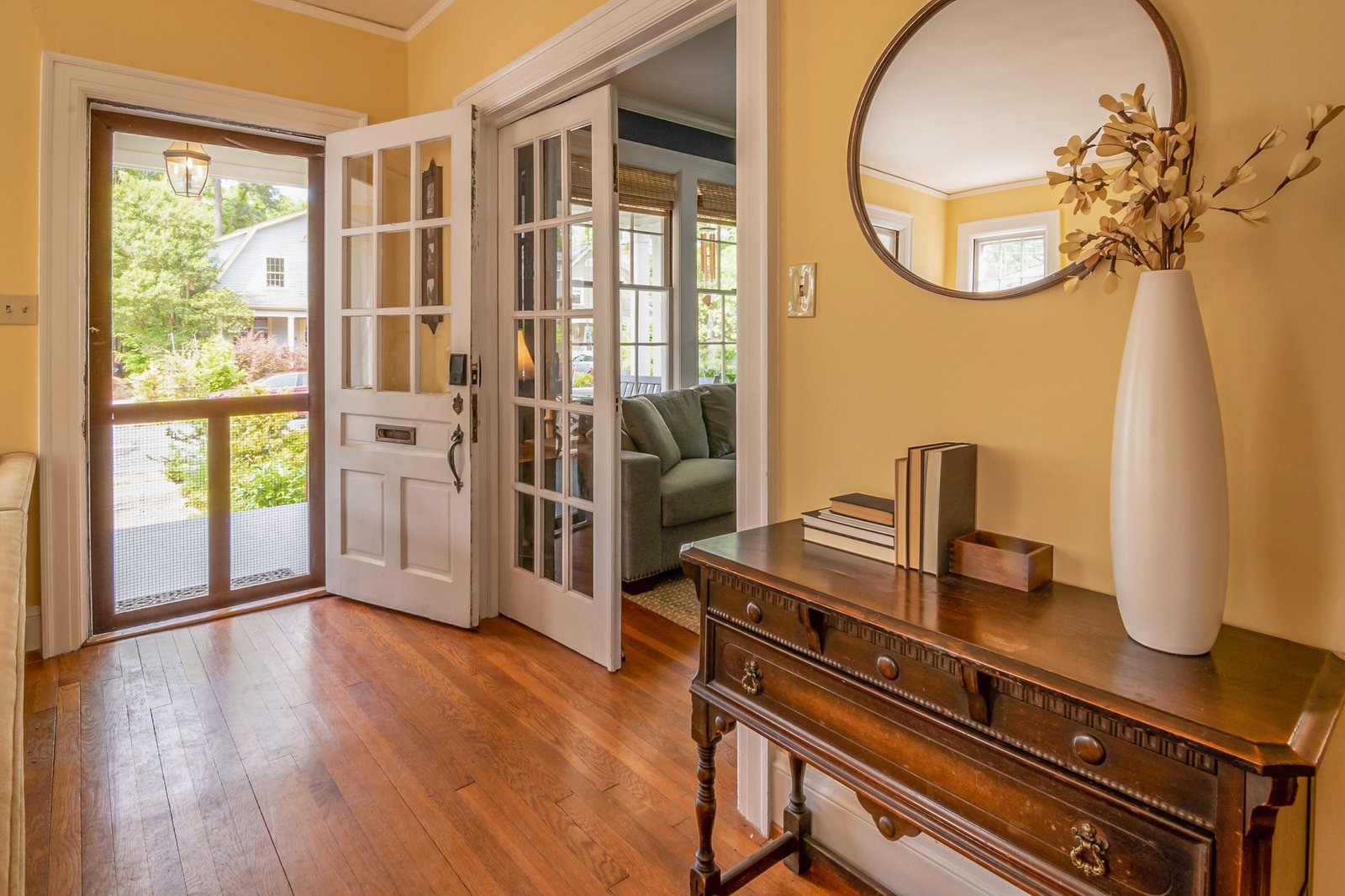
A foyer is the first transition between your home’s exterior and interior, so even a small entrance can influence how the rest of the home feels. The right furniture, lighting, colors, storage, and decorative details can turn an ordinary entrance into a space that feels organized and welcoming.
The good news is that you don’t need a huge hallway or an expensive renovation. These foyer ideas include solutions for apartments, narrow entrances, traditional homes, modern interiors, large foyers, and open-plan spaces.
This works best for homeowners and renters who want to improve an existing entrance without changing the home’s major structure. It won’t replace professional advice for electrical, structural, or building-code work.
What Are Foyer Ideas?
Foyer ideas are decorating and layout approaches for making a home’s entrance attractive, welcoming, and functional. They can include furniture, lighting, mirrors, rugs, storage, wall treatments, artwork, and decorative accessories suited to the available space.
To create a welcoming foyer:
- Measure the available entry space.
- Keep the main walking path clear.
- Choose furniture that fits the scale.
- Add practical storage where needed.
- Introduce a mirror, rug, art, or lighting.
- Coordinate the entrance with nearby rooms.
A foyer can be formal and spacious or barely more than a small entrance zone. The most successful design is usually the one that works with the way the household actually uses the space.
Small Foyer Ideas That Maximize Space
Small entrances require careful choices because every piece of furniture competes with the walking area. Focus on vertical surfaces, slim furniture, and items that serve more than one purpose.
1. Use a Slim Console Table
A narrow console table can give a small foyer a finished appearance without taking up the floor area required by a deep cabinet. Look for a design with a shallow profile and enough room underneath to maintain an open feeling.
A console can hold a small lamp, bowl for keys, framed artwork, or a few decorative objects. In a narrow hallway, choose a model that leaves comfortable clearance for people entering and leaving.
Best for: Narrow foyers, apartments, and compact hallways.
Styling tip: Keep the tabletop edited. Two or three well-chosen objects usually look more intentional than a crowded collection.
2. Install a Floating Entryway Shelf
A floating shelf is useful when there isn’t enough floor space for a conventional console. Mounted at a practical height, it creates a small landing spot for keys, mail, or decorative pieces while leaving the floor completely open.
This approach works particularly well in apartments and rental homes where a full furniture arrangement may feel oversized.
Best for: Very small entrances and narrow walls.
Styling tip: Pair the shelf with a mirror or small artwork above it to create a compact focal point.
3. Add a Large Mirror to Reflect Light
A large mirror can give an entrance more visual depth while providing a practical place for a final appearance check before leaving home. Its effect depends on what it reflects, so placement matters.
Position it where it can catch natural or artificial light without creating an awkward reflection of clutter.
Best for: Dark entrances, small foyers, and apartments.
Styling tip: Choose a frame that relates to the finishes already used in nearby rooms.
4. Choose a Storage Bench
A storage bench combines seating with organization. It can provide a convenient place to put on shoes while the compartment beneath stores footwear, bags, or seasonal accessories.
For a small foyer, choose a compact bench rather than an oversized upholstered piece.
Best for: Family homes and entrances where shoes are removed regularly.
Styling tip: Use baskets underneath an open bench to keep smaller items contained.
5. Decorate With Vertical Wall Elements
When floor space is limited, look upward. Tall artwork, vertical paneling, stacked frames, wall hooks, or a narrow mirror can add visual interest without reducing the walking area.
Vertical elements can also help an entrance feel more deliberately designed instead of like an unused strip of hallway.
Best for: Narrow foyers and apartments.
Styling tip: Keep the arrangement vertically balanced rather than covering the entire wall with small objects.
6. Use a Narrow Runner Rug
A runner can visually define a long entrance and add warmth underfoot. Choose a rug that works with the width and shape of the space while leaving appropriate clearance around doors and furniture.
Patterned runners can also disguise everyday dirt more effectively than very pale, solid surfaces.
Best for: Long hallways and narrow foyers.
Styling tip: Pick a durable, easy-care material when the entrance receives heavy foot traffic.
7. Create a Minimalist Entryway
Minimalism can be particularly effective in a small foyer because fewer objects leave more visual breathing room. Start with one functional furniture piece, one focal element, and only the accessories you genuinely need.
Here’s the thing: an entrance doesn’t need to be filled to feel complete.
Best for: Small apartments, modern homes, and low-clutter households.
Styling tip: Repeat one or two materials, such as wood and metal, to create cohesion without adding more decoration.
Modern and Contemporary Foyer Ideas
Modern foyers generally benefit from clean lines, restrained accessories, strong proportions, and a mix of practical and decorative materials.
8. Add a Sculptural Console Table
A sculptural console can function as furniture and artwork at the same time. Look for unusual curves, asymmetrical legs, textured finishes, or an interesting silhouette.
Because the table itself becomes a focal point, additional accessories can remain simple.
Best for: Contemporary homes and medium-sized foyers.
Styling tip: Let the console breathe. Avoid placing so many objects on it that its shape becomes difficult to see.
9. Choose a Geometric Mirror
A round, oval, arched, or unusually shaped mirror can soften the straight lines commonly found in modern furniture. It also creates a clear visual anchor above a console or shelf.
The mirror doesn’t have to match the furniture exactly. A contrasting shape can make the arrangement more interesting.
Best for: Modern and transitional foyers.
Styling tip: Use one strong geometric shape rather than combining several competing patterns.
10. Incorporate Sleek Black Accents
Black accents can provide definition in a neutral entryway. Consider black-framed artwork, a console base, lighting, door hardware, or a mirror frame.
The goal isn’t to make everything black. Small repeated accents can create continuity.
Best for: Contemporary, industrial, and minimalist interiors.
Styling tip: Repeat the black detail at least twice so it feels connected to the overall room.
11. Use a Neutral Contemporary Color Palette
Soft beige, warm white, gray, taupe, and natural wood can create a calm modern foyer. A neutral palette also gives you flexibility when the rooms surrounding the entrance use different colors.
Or maybe I should say it this way: neutral doesn’t have to mean plain.
Best for: Modern homes, apartments, and transitional interiors.
Styling tip: Add interest through texture rather than relying on many colors.
12. Install Modern Pendant Lighting
A contemporary pendant can become the focal point of a foyer while providing useful illumination. Its size should relate to the ceiling height and floor area rather than being selected solely for appearance.
For lower ceilings, a compact or semi-flush design may be more practical.
Best for: Medium and large foyers with suitable ceiling height.
Styling tip: Choose a fixture whose material connects with another finish in the entrance.
13. Add a Statement Art Piece
One large artwork can have more impact than a wall filled with small decorations. Choose something that introduces a color, shape, or texture found elsewhere in the home.
A statement piece is especially useful when the foyer has little room for furniture.
Best for: Empty walls and open entrances.
Styling tip: Allow some empty wall space around the artwork so it remains the visual focus.
14. Combine Clean Lines With Natural Textures
A modern entryway doesn’t have to feel cold. Add natural wood, woven materials, stone-like finishes, or greenery alongside streamlined furniture.
The contrast creates warmth without abandoning a contemporary aesthetic.
Best for: Contemporary and transitional homes.
Styling tip: Limit the natural materials to a few repeated elements for a coordinated appearance.
Elegant and Traditional Foyer Designs
Traditional foyers often rely on symmetry, classic furniture shapes, decorative moldings, and materials that feel timeless.
15. Style an Antique Console Table
An antique or vintage-inspired console can immediately establish character. It works particularly well in homes with traditional architecture, but it can also create an interesting contrast in a newer property.
The furniture should still provide enough clearance for comfortable movement.
Best for: Traditional, transitional, and character-filled homes.
Styling tip: Pair an older-looking console with contemporary lighting or simple artwork for balance.
16. Hang an Ornate Framed Mirror
An ornate mirror can act as a decorative focal point above a console table. Gold, bronze, carved wood, and other detailed frames can introduce a classic feel.
Keep the surrounding accessories restrained so the mirror remains prominent.
Best for: Traditional and elegant foyers.
Styling tip: Use a simple lamp or vase rather than several decorative objects competing with the frame.
17. Add Classic Wall Paneling
Wall paneling can give a foyer architectural character. Raised panels, molding, or other decorative treatments can make an otherwise plain entrance feel connected to the home’s structure.
Because installation methods vary, permanent treatments should be planned carefully.
Best for: Traditional and transitional homes.
Styling tip: Paint the paneling and wall in the same color for a subtle effect, or use contrasting tones for stronger definition.
18. Install a Statement Chandelier
A chandelier can create a dramatic focal point in a traditional foyer, particularly when the ceiling provides enough height and visual space.
Scale matters. A fixture that is too large can overwhelm the entrance, while one that is too small may disappear visually.
Best for: Large foyers and homes with high ceilings.
Styling tip: Consider the chandelier from both the entrance and nearby rooms because it may be visible from several angles.
19. Decorate With Timeless Artwork
Classic landscapes, botanical prints, architectural artwork, or restrained abstract pieces can work well in a traditional entrance.
Choose artwork that complements the home’s wider palette rather than treating the foyer as a completely separate room.
Best for: Traditional and transitional homes.
Styling tip: Use a consistent frame finish when displaying several pieces together.
20. Introduce Symmetrical Decor
Symmetry can make a foyer feel organized and formal. A console centered below a mirror with matching lamps or balanced accessories is a simple example.
The arrangement doesn’t need to be perfectly identical. Visual balance is more important than strict duplication.
Best for: Formal entrances and traditional interiors.
Styling tip: Center the main furniture piece with the architectural feature or wall rather than forcing symmetry where the room doesn’t support it.
Foyer Lighting Ideas That Create Ambiance
Lighting affects both functionality and atmosphere. A good foyer may combine general illumination with smaller sources that create warmth after dark.
21. Make a Chandelier the Focal Point
In a spacious foyer, a chandelier can define the entire entrance. Choose its scale based on the room rather than treating it as an isolated decoration.
High ceilings offer more flexibility, while compact entrances generally need smaller fixtures.
Best for: Large or double-height foyers.
Styling tip: Keep other decorative elements relatively quiet so the lighting remains the primary feature.
22. Add Wall Sconces
Wall sconces provide light without requiring valuable floor or tabletop space. They can frame a mirror, artwork, doorway, or architectural feature.
Their placement should be planned around the wall structure and existing electrical arrangements.
Best for: Narrow hallways and medium-sized foyers.
Styling tip: Use matching sconces on either side of a focal element when the wall width allows it.
23. Use a Table Lamp on the Console
A table lamp adds a softer layer of light and can make an entrance feel more lived-in. It also provides a chance to introduce color, texture, or shape.
A compact lamp is usually more suitable for a narrow console.
Best for: Homes with console tables.
Styling tip: Place the lamp toward one side and balance it with a smaller object rather than creating a crowded tabletop.
24. Layer Ambient and Accent Lighting
One light source rarely needs to do everything. General ceiling lighting can handle movement, while lamps or accent lights create a warmer atmosphere.
Layering also gives homeowners more flexibility throughout the day.
Best for: Medium and large entrances.
Styling tip: Use different light sources at different heights to make the space feel more dimensional.
25. Highlight Architectural Details With Light
Lighting can draw attention to paneling, artwork, a staircase, textured walls, or other architectural elements.
The purpose is selective emphasis rather than illuminating every surface equally.
Best for: Character homes and large foyers.
Styling tip: Highlight one or two features instead of lighting the entire room with the same intensity.
Color, Wallpaper, and Accent Wall Ideas
Color can connect the entrance with adjoining rooms or establish a distinct mood. The best choice depends on natural light, architecture, and the colors already visible from the foyer.
26. Paint the Foyer in Warm Neutrals
Warm white, cream, beige, taupe, and soft greige can create a welcoming backdrop without competing with furniture or artwork.
This approach is particularly useful when the foyer connects directly to several differently decorated rooms.
Best for: Traditional, modern, transitional, and rental-friendly spaces.
Styling tip: Test paint samples under both daylight and artificial lighting before committing to a color.
27. Create a Bold Accent Wall
A single bold wall can give an otherwise simple foyer personality. Deep green, blue, charcoal, terracotta, or another strong shade can work when balanced with quieter furnishings.
The color should relate to at least one nearby room or decorative element.
Best for: Medium and large foyers.
Styling tip: Keep the furniture relatively simple if the wall color is visually strong.
28. Introduce Patterned Wallpaper
Wallpaper can add pattern and personality without requiring multiple decorative objects. Botanical, geometric, textured, and traditional patterns can all work depending on the home’s style.
Renters can explore removable options where appropriate.
Best for: Accent walls, powder-room-style entrances, and compact foyers.
Styling tip: Choose furniture in quieter finishes so the wallpaper remains easy to appreciate.
29. Try a Deep, Dramatic Color Palette
A darker foyer can feel intimate and sophisticated when balanced with suitable lighting. Navy, forest green, charcoal, brown, or other rich shades can provide a strong backdrop for artwork and metallic accents.
Natural and artificial light should be considered before choosing a very dark color.
Best for: Well-lit entrances and homes with dramatic interiors.
Styling tip: Introduce lighter or reflective elements to keep the space visually balanced.
30. Use Two-Tone Walls
Two-tone walls can separate the lower and upper portions of a foyer visually. Paint, paneling, molding, or wallpaper can be combined to create the effect.
This approach works particularly well in homes with architectural details.
Best for: Traditional and transitional interiors.
Styling tip: Use colors with similar undertones so the combination feels intentional.
31. Add Natural Wood Paneling
Wood paneling introduces warmth and texture while providing a strong architectural backdrop. It can range from traditional raised panels to cleaner contemporary slats.
Because permanent wall treatments require more planning, renters may prefer removable alternatives.
Best for: Medium and large foyers.
Styling tip: Coordinate the wood tone with flooring or nearby furniture rather than matching every wood surface exactly.
32. Coordinate the Front Door With the Decor
The front door is naturally part of the entry experience. Its color or finish can connect with the interior palette, creating a stronger transition between outside and inside.
A painted door can also become a focal feature without adding furniture.
Best for: Homes where the front door is visible from the foyer.
Styling tip: Repeat a small amount of the door color in artwork, textiles, or accessories inside.
Functional Foyer Storage and Organization Ideas
A beautiful entrance becomes difficult to enjoy when shoes, bags, coats, and mail accumulate without designated storage.
33. Install a Built-In Storage Unit
Built-in cabinets can use wall space efficiently while hiding everyday clutter. A combination of closed cabinets, drawers, hooks, and open shelves can accommodate different household needs.
Built-ins require more planning and investment than freestanding furniture.
Best for: Busy family homes and larger entrances.
Styling tip: Keep frequently used items within easy reach while storing seasonal belongings higher or behind closed doors.
34. Add Decorative Baskets
Baskets can organize shoes, scarves, umbrellas, pet accessories, or other small items while contributing texture to the room.
They work particularly well under consoles and benches.
Best for: Open shelving, benches, and casual foyers.
Styling tip: Use a consistent basket material or color to make multiple storage containers look coordinated.
35. Use a Closed Shoe Cabinet
A closed shoe cabinet keeps footwear visually contained and can create a cleaner appearance than open shelving.
Before buying one, measure the available wall and consider door clearance.
Best for: Apartments and family entrances.
Styling tip: Add a mirror or artwork above the cabinet to make the storage piece feel like intentional furniture.
36. Create a Coat and Bag Station
Hooks, shelves, baskets, and a bench can combine into a practical arrival station. This gives coats, bags, hats, and shoes designated locations.
Families may benefit from assigning a specific section to each household member.
Best for: Busy households and mudroom-style entrances.
Styling tip: Keep only frequently used items visible and move seasonal pieces into separate storage.
37. Style a Hall Tree
A hall tree can combine seating, hooks, shelves, and storage in one unit. It is particularly useful when the foyer has enough depth for a larger furniture piece.
Choose a scale that doesn’t dominate the doorway.
Best for: Family homes and larger entryways.
Styling tip: Use the bench area for shoes and the upper hooks for daily coats and bags.
38. Organize Everyday Essentials in a Drop Zone
A small drop zone can include a tray for keys, a mail holder, hooks for bags, and a designated place for shoes. The goal is to prevent everyday objects from spreading throughout the house.
Look — if you’re working with a narrow entrance, here’s what actually works: assign a place to the items that arrive with you every day.
Best for: Small homes, apartments, and busy households.
Styling tip: Keep the drop zone close to the door but visually contained so it doesn’t become another source of clutter.
Natural, Rustic, and Relaxed Foyer Ideas
Natural materials and relaxed styling can make an entrance feel comfortable rather than overly formal.
39. Bring in Greenery and Indoor Plants
Plants can add color and organic shapes to an entrance. Choose varieties based on the available natural light and the amount of care the household can provide.
Not every foyer is suitable for plants, particularly if it has little daylight.
Best for: Naturally lit entrances.
Styling tip: Use one appropriately sized plant instead of filling every available corner.
40. Use Rustic Wood Furniture
Reclaimed-looking, distressed, or naturally finished wood can add warmth and character. A rustic console or bench can be paired with simpler modern accessories for a more updated look.
Best for: Farmhouse, rustic, transitional, and casual interiors.
Styling tip: Balance heavy wood with lighter textiles, artwork, or painted walls.
41. Decorate With Woven Baskets and Natural Fibers
Woven baskets, jute-style rugs, cane details, and other natural textures can give the entrance a relaxed appearance.
They are especially useful when combined with simple wood furniture.
Best for: Casual and natural interiors.
Styling tip: Repeat the same natural material in two or three places rather than introducing too many different textures.
42. Create a Farmhouse-Inspired Entryway
A farmhouse-style entrance can combine practical storage with wood finishes, simple textiles, hooks, baskets, and understated artwork.
The design works best when function remains central rather than turning the foyer into a collection of themed accessories.
Best for: Country homes and relaxed interiors.
Styling tip: Choose a few authentic-looking materials instead of using farmhouse motifs everywhere.
43. Try a Coastal-Inspired Foyer
Coastal styling can use light colors, natural textures, blue accents, woven materials, and relaxed furniture shapes.
The goal is to create an airy feeling without relying on obvious nautical decorations.
Best for: Bright homes and casual interiors.
Styling tip: Combine soft blue or green accents with warm wood and neutral textiles.
44. Embrace Scandinavian Simplicity
Scandinavian-inspired foyers often emphasize functionality, natural materials, simple silhouettes, and restrained color palettes.
The result can feel calm without appearing empty.
Best for: Apartments, modern homes, and smaller entrances.
Styling tip: Prioritize useful pieces and let natural materials provide most of the visual interest.
Personal and Decorative Foyer Ideas
The entrance is also an opportunity to introduce personality. A few carefully selected objects can tell visitors something about the people who live there.
45. Design a Gallery Wall
A gallery wall can display artwork, family photographs, illustrations, or collected prints. It works particularly well on a long empty wall.
Before hanging anything, arrange the pieces on the floor to test spacing and composition.
Best for: Long walls and medium-to-large foyers.
Styling tip: Repeat one frame color or visual element to keep a varied collection cohesive.
46. Display a Decorative Vase or Floral Arrangement
A vase can provide a simple focal point on a console, shelf, or cabinet. Fresh flowers, dried stems, or greenery can change the appearance seasonally.
The arrangement should be scaled to the furniture beneath it.
Best for: Console tables and open shelves.
Styling tip: Choose a vase color that connects with another small detail in the room.
47. Add a Distinctive Sculpture
A sculpture can introduce shape and personality without requiring a large collection of accessories.
Choose a piece with enough visual weight to stand on its own.
Best for: Modern and artistic interiors.
Styling tip: Give the sculpture negative space around it so its form remains visible.
48. Style the Space With Books and Collectibles
Books, small travel finds, ceramics, or meaningful objects can make a foyer feel personal. The collection should be edited rather than displayed all at once.
A foyer is a transition zone, so visual simplicity often works better than an overloaded arrangement.
Best for: Console tables and larger foyers.
Styling tip: Combine objects of different heights to create a more natural arrangement.
49. Layer Textures for a Cozy Welcome
Texture can make a foyer feel inviting without adding many colors. Combine a rug, wood, woven materials, soft upholstery, ceramic pieces, or textured artwork.
More furniture doesn’t automatically make a large foyer feel more finished; in some homes, leaving breathing room creates a stronger visual effect.
Best for: Traditional, modern, rustic, and transitional homes.
Styling tip: Mix textures with different visual weights while keeping the color palette controlled.
Statement Foyer Ideas for Large and Open Entryways
Large entrances offer more possibilities, but they can also be difficult to balance. Oversized spaces need appropriately scaled furniture and focal points.
50. Highlight a Double-Height Foyer
A double-height entrance can support large-scale lighting, tall artwork, architectural details, and furniture that would overwhelm a smaller room.
A statement fixture can visually connect the lower and upper portions of the space.
Best for: Large homes with high or double-height ceilings.
Styling tip: Think vertically. Artwork and lighting should have enough scale to remain visible from the lower level.
51. Use a Bold Staircase as a Design Feature
When a staircase is visible from the entrance, it can become a major design element. Railings, wall color, artwork, lighting, or the staircase’s surrounding architecture can influence the entire foyer.
Changes to the staircase itself may involve structural or safety considerations, so major modifications should be professionally assessed.
Best for: Multi-level homes.
Styling tip: Coordinate the staircase finish with the foyer rather than treating the two areas as unrelated zones.
52. Create a Defined Entryway in an Open-Plan Home
Not every home has a separate foyer. In an open-plan layout, a rug, console, bench, mirror, lighting fixture, or carefully positioned furniture can visually establish an entrance zone.
This approach gives the entry its own identity without constructing a new wall.
Best for: Open-plan homes, apartments, and lofts.
Styling tip: Choose finishes that connect with the living area so the defined entry feels intentional rather than visually disconnected.
How to Choose the Right Foyer Design for Your Home
With so many possibilities, the easiest way to narrow down your choices is to start with the physical space and everyday routine.
Consider Your Available Space and Layout
Measure the foyer before choosing furniture. A long entrance, compact apartment hallway, open-plan room, and double-height foyer require very different solutions.
Houzz’s 2025 entryway guidance indicates that a long foyer generally needs around 42 inches of width for comfortable circulation, while 48–54 inches can provide a more generous passage. The exact furniture arrangement should still be based on the home’s dimensions and how people actually move through it.
Balance Style With Everyday Functionality
Ask what happens when someone enters the house. Do they need somewhere to remove shoes? Where do coats go? Is there a place for keys and mail?
I’ve seen conflicting advice around how much furniture a foyer needs; the better approach is to start with circulation and daily use, then add decorative pieces.
Coordinate Colors, Materials, and Lighting
The foyer is often visible from other rooms, so its design should relate to the home’s wider style. This doesn’t mean everything needs to match.
A modern console can work with traditional artwork, while a rustic bench can fit into a contemporary room when its proportions and colors are carefully selected.
The same principle applies to lighting. Consider how daylight changes throughout the day and whether the entrance needs general, task, or accent illumination.
Five Quick Questions About Foyer Design
What’s the best way to decorate a small foyer?
Start with one slim functional piece, such as a narrow console or floating shelf, then add a mirror, appropriate lighting, and limited accessories without obstructing the walking path.
How do I make an entryway feel welcoming?
Combine warm lighting, a suitable rug, one focal point, practical storage, and decor that connects visually with the rooms beyond the entrance.
Should I put a mirror in the foyer?
A mirror can be useful for checking your appearance and reflecting available light, but its placement should work with the room’s layout and existing light sources.
Why does my foyer look cluttered?
Too many small accessories, oversized furniture, or insufficient storage can make an entrance feel crowded. Start by clearing the walking route and assigning everyday items a designated place.
When should I use a chandelier in a foyer?
A chandelier works well when the foyer has enough ceiling height and floor area to accommodate the fixture without making the entrance feel visually crowded.
Frequently Asked Questions About Foyer Ideas
1. How do you decorate a foyer?
Start with the available floor space and the main walking route. Add appropriately sized furniture, then introduce a mirror, rug, lighting, artwork, or storage according to what the household needs. A foyer should look attractive without making it difficult to enter, turn, remove shoes, or carry bags.
2. How can I make a small foyer look stylish?
Use slim furniture, floating shelves, mirrors, vertical artwork, and carefully chosen lighting. Avoid filling every surface with accessories. A smaller number of coordinated pieces can make the space feel more intentional while preserving valuable floor area.
3. What should you put in a foyer?
Common choices include a console table, mirror, entry rug, lighting, artwork, hooks, baskets, a bench, or shoe storage. The right combination depends on the size of the entrance and how the household uses it.
4. What furniture works best in a small entryway?
Narrow console tables, floating shelves, compact benches, closed shoe cabinets, and multifunctional furniture are useful options. Measure both the furniture and the remaining walking area before making a decision.
5. How do you make an entryway look more expensive?
Focus on proportion, coordination, lighting, and restraint rather than price. A cohesive color palette, well-framed artwork, carefully selected hardware, quality-looking finishes, and appropriately sized furniture can create a polished appearance without requiring expensive purchases.
6. What colors work well in a foyer?
Warm whites, beige, soft gray, muted greens, blues, earthy shades, and deeper accent colors can all work. The best choice depends on natural light, artificial lighting, the foyer’s size, and the colors visible in adjoining rooms.
7. How do you decorate an entryway without a foyer?
Use a rug, console, bench, mirror, wall hooks, lighting, or furniture placement to visually define the entrance. In an open-plan home, repeating materials or colors from the nearby living area can help the entry feel like part of the overall design.
8. What type of lighting is best for a foyer?
The best fixture depends on the ceiling height, room size, and existing electrical arrangement. Chandeliers and pendants can suit larger spaces, while flush mounts and sconces can work well in compact entrances. A table lamp can provide another layer when a console is available.
9. How can I keep my foyer organized?
Create a designated place for frequently used items such as shoes, coats, bags, keys, and mail. Closed cabinets can hide clutter, while baskets and hooks make everyday storage accessible. Regularly removing items that don’t belong in the entrance also helps maintain order.
10. How do you decorate a foyer on a budget?
Start by rearranging furniture you already own, repainting a wall or door, using secondhand furniture, adding affordable artwork, or changing textiles. A thrifted mirror or refinished console can also create a noticeable update without requiring a complete makeover.
11. What is the difference between a foyer and an entryway?
A foyer usually refers to a more defined entrance area, sometimes large enough to function as a separate room. Entryway is a broader term that can describe a hallway, doorway area, or smaller entrance zone. Terminology can vary between homes and regions.
12. How do you decorate a large foyer with high ceilings?
Use appropriately scaled lighting, large artwork, architectural details, and furniture that relates to the room’s proportions. A central table can work when there is enough space around it, while tall artwork and a substantial light fixture can help connect the lower and upper portions of the room.
Final Thoughts
The most useful foyer ideas are the ones that make the entrance work for real life while giving it a clear visual identity. A slim console may be enough for a small apartment, while a family home may benefit more from closed shoe storage, hooks, and a bench.
Start with circulation, storage needs, natural light, and the architecture of the space. Then build the look with furniture, color, lighting, mirrors, rugs, artwork, and personal details.
You don’t need to use all 52 ideas. Choose the few that solve your home’s actual needs and fit naturally with the rooms around them.
Ready to refresh your entryway? Choose a foyer idea that fits your space, combine a few complementary elements, and create an entrance that feels welcoming while still working for everyday life.

2 Comments
Pingback: How to Replace an Old Staircase: What to Check Before You Spend a Penny
Pingback: 8 Types of Glass for Front Doors: Privacy, Security & Style