
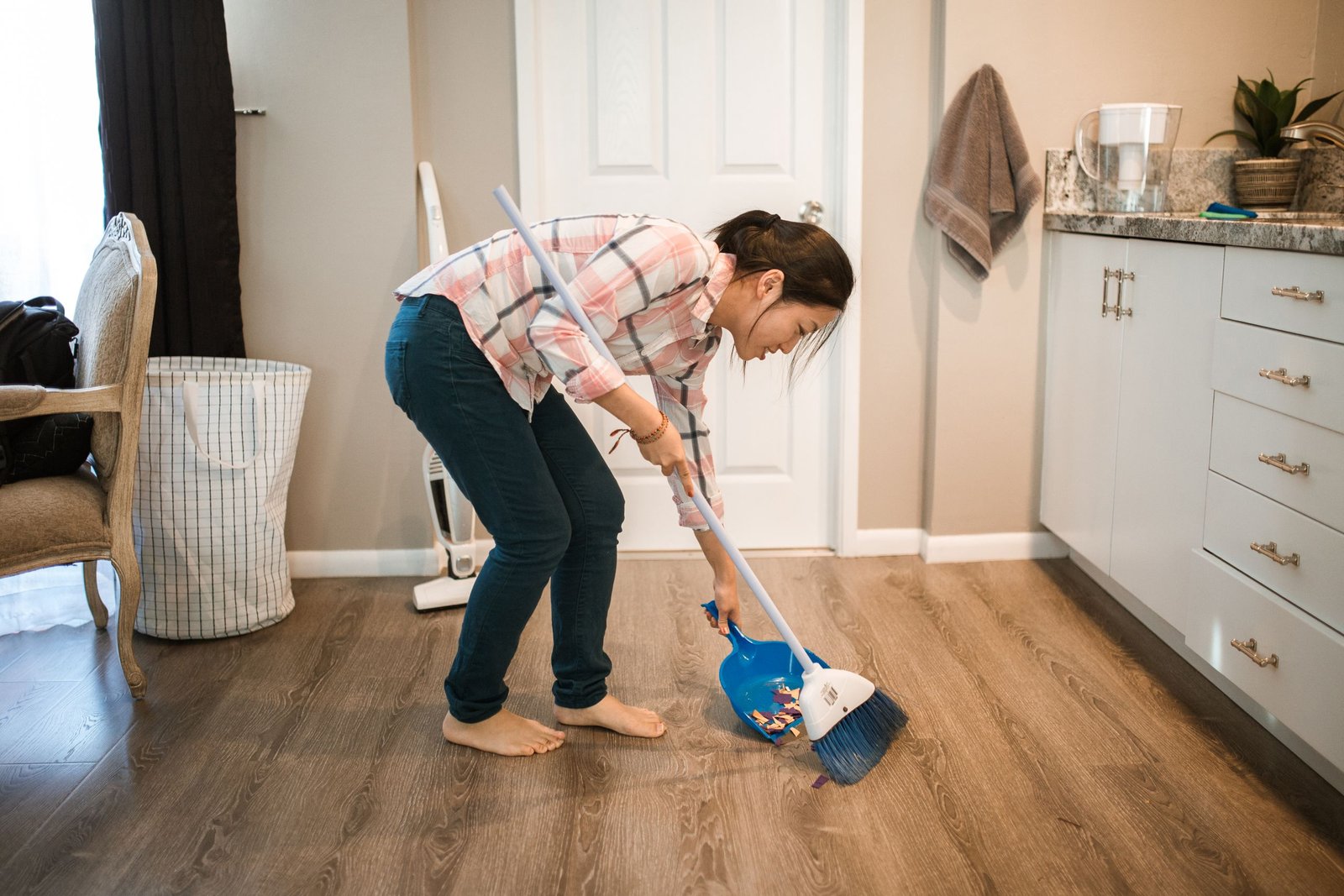
Hardwood floors can make a room feel warm, elegant, and inviting, but streaks, cloudy patches, and footprints can quickly spoil their appearance. Even after sweeping and mopping, you may notice dull areas that seem to attract dirt almost immediately. The problem isn’t always a lack of cleaning. Sometimes, the cleaner, the amount of water, or the condition of the mop is responsible.
The good news is that learning how to clean hardwood floors properly doesn’t require a cabinet full of products. The right tools, a suitable wood-floor cleaner, and a controlled amount of moisture can help remove everyday dirt while protecting the floor’s finish.
The key is to clean the surface without leaving excess liquid or detergent behind. You also need to understand the difference between removable residue and a finish that has become worn or damaged. These problems can look similar, but they require different solutions.
This guide explains how to clean hardwood floors without streaks, choose appropriate cleaning products, remove cloudy film, maintain a natural shine, and avoid common mistakes that can damage wood flooring.
What Is the Best Way to Clean Hardwood Floors Without Streaks?
The best way to clean hardwood floors without streaks is to remove loose dirt first, use a cleaner approved for your flooring’s finish, and mop with a clean microfiber pad using minimal moisture. Work in manageable sections, follow the cleaner’s directions, and wipe away excess liquid promptly.
For routine maintenance, dry dusting or vacuuming is often enough. how to clean hardwood floors A deeper clean is only necessary when dirt, sticky spots, or visible marks remain.
According to the National Wood Flooring Association (NWFA), routine wood-floor care should include sweeping, dust mopping, or vacuuming with a suitable bare-floor setting. It also recommends wiping up spills promptly and avoiding wet mops and steam mops that can damage flooring over time.
The most effective approach is simple: remove grit, clean gently, control moisture, and let the floor dry quickly.
Why hardwood floors become streaky
Several problems can leave visible marks after cleaning:
- Cleaner residue: Using too much product or a cleaner that isn’t suitable for the finish can leave a film.
- Dirty mop pads: A pad loaded with dust and grease may spread contamination instead of removing it.
- Excess water: Water that sits on the surface or enters the seams can affect the finish and wood.
- Hard-water deposits: Minerals in water may leave visible spots as moisture evaporates.
- Incompatible polish or wax: Some products leave a coating that becomes cloudy, sticky, or uneven.
- Worn finish: Scratches and areas of finish deterioration can make the floor appear dull even when clean.
Understanding the cause matters. Repeatedly mopping a floor that already has a product buildup may make the problem worse rather than solve it.
What You Need to Clean Hardwood Floors Properly
Before you start, gather a few basic supplies. The goal is to lift dirt without scratching the surface or leaving cleaning solution behind.
1. A microfiber mop
A microfiber mop is useful because its soft pad can collect fine dust and everyday dirt without the rough contact associated with abrasive tools. Choose a mop designed for hard flooring, preferably one that allows you to control how much cleaning solution reaches the surface.
Keep spare pads nearby. Once a pad becomes visibly dirty, replace it instead of continuing to spread the same grime across the room.
2. A suitable hardwood floor cleaner
Use a cleaning product specifically approved for your floor’s finish. Check the flooring manufacturer’s care instructions before selecting a product, particularly if the floor is engineered, waxed, oiled, or older.
A pH-balanced or otherwise manufacturer-approved wood-floor cleaner is generally a sensible starting point. However, the label and flooring instructions matter more than a generic claim that a product is suitable for every type of wood.
Avoid assuming that a cleaner designed for tile, vinyl, or laminate is automatically safe for hardwood.
3. A vacuum or soft dust mop
Loose grit can scratch a floor when it gets trapped beneath a mop pad or rubbed across the finish. Remove it before using liquid cleaner.
Use a vacuum with a suitable hard-floor setting or attachment. If your vacuum has a rotating beater bar, turn it off when cleaning hardwood unless the flooring manufacturer specifically permits its use.
A soft dust mop is another practical option for everyday maintenance.
4. Clean, absorbent cloths
Keep a few soft microfiber cloths available for spills, footprints, and small sticky spots. They let you clean isolated marks without wetting the entire floor.
5. A small amount of cleaning solution
More cleaner does not necessarily mean a cleaner floor. Follow the product label carefully, and don’t increase the concentration to tackle stubborn marks unless the manufacturer instructs you to do so.
How to Clean Hardwood Floors Step by Step
Follow this process whenever your floor needs more than a quick dusting. Adjust the method to your flooring manufacturer’s instructions, how to clean hardwood floors since not every hardwood finish responds to the same products.
Step 1: Identify your floor’s finish
Start by checking the flooring documentation, product information, or advice provided by your installer. You may have a sealed floor with a polyurethane-type finish, a waxed floor, an oiled surface, or engineered hardwood with a factory-applied coating.
These distinctions matter because the visible wood surface isn’t always the layer that should be cleaned or treated.
A sealed floor generally has a protective surface coating. Waxed and oil-finished floors may require different care products and maintenance methods. how to clean hardwood floors Engineered hardwood also needs appropriate moisture control, even when its top layer is designed to resist everyday wear.
If you don’t know which finish you have, avoid experimenting with vinegar, wax, polish, or strong cleaning chemicals. Check the manufacturer’s recommendations first.
Step 2: Remove loose dirt and dust
Sweep or dust-mop the entire area before wet cleaning. Pay particular attention to corners, spaces beneath furniture, doorways, and areas where people regularly walk.
Fine sand and grit can act like abrasives when they move across a finished floor. If you mop before removing them, you may drag those particles across the surface and create additional wear.
For a more thorough dry clean, vacuum with a suitable attachment. how to clean hardwood floors Make sure the wheels and underside of the vacuum are clean enough not to leave marks.
Don’t rush this step. It often determines whether the finished floor looks clean or develops faint lines after mopping.
Step 3: Treat spills and sticky spots individually
Look for food residue, dried drink spills, pet-related messes, or sticky marks. Clean these areas with a soft cloth and a small amount of an approved wood-floor cleaner,how to clean hardwood floors following the label directions.
Blot liquid spills promptly instead of letting them sit. For dried residue, allow the recommended cleaner to loosen the mark before wiping it away gently.
Avoid scraping with a knife, scouring pad, or abrasive sponge. These tools can damage the finish and leave a permanent dull spot.
If a stain doesn’t respond to gentle cleaning, don’t automatically reach for a stronger chemical. The stain may have penetrated the finish or wood, how to clean hardwood floors which requires a different treatment.
Step 4: Prepare the mop and cleaner
Attach a clean microfiber pad and prepare the cleaner exactly as directed on its label. If it is a ready-to-use product, don’t dilute it unless the instructions say to do so. If dilution is required, measure it carefully.
Use only the amount of liquid needed for the job. Some products are designed to be sprayed lightly onto the floor, how to clean hardwood floors while others should be applied to a mop pad or cloth.
Don’t pour a bucket of water across the floor or use a soaking-wet mop. how to clean hardwood floors Standing water can enter joints and seams, increasing the risk of swelling, cupping, or other moisture-related damage.
Step 5: Mop in small sections
Work across one manageable section at a time. Move the mop smoothly, following the direction of the wood grain when practical, and avoid repeatedly pushing dirty liquid from one area into another.
Use gentle, even strokes. Excessive pressure isn’t necessary for normal dust and surface grime, how to clean hardwood floors and aggressive scrubbing can harm delicate finishes.
Check the pad as you go. If it becomes gray, greasy, or heavily soiled, replace it with a clean one. A fresh pad helps lift dirt instead of redistributing it.
For large rooms, changing pads during the job may make a noticeable difference in the final result.
Step 6: Remove excess moisture
After cleaning a section, check for visible wet patches, puddles, or cleaner collecting around the edges of boards. Wipe away excess liquid promptly with a clean, absorbent cloth or follow the cleaning product’s specific directions.
The floor should not remain wet while you move on to other household tasks. how to clean hardwood floors Allow it to dry as directed by the product manufacturer.
Don’t use a fan heater or high heat to force drying. Normal ventilation is generally sufficient when the correct amount of cleaner has been used.
Step 7: Inspect the floor in natural light
Once the floor has dried, look at it from different angles. Light from a window or overhead fixture can reveal streaks that aren’t obvious when viewed straight down.
If the floor looks clean and even, stop there. how to clean hardwood floors Don’t automatically apply polish to make it shinier.
If streaks remain, investigate their cause before repeating the entire process. A dirty pad, excessive cleaner, incompatible product, or worn finish may require a different solution.
Quick Comparison: Which Hardwood Floor Cleaning Method Is Best?
| Cleaning method | Best for | Key benefit | Limitation |
| Dry dust mop | Everyday dust and grit | Removes loose debris without moisture | Won’t remove sticky residue |
| Bare-floor vacuuming | Fine dirt, hair, and crumbs | Collects debris before wet cleaning | Requires a suitable attachment or setting |
| Approved wood-floor cleaner with microfiber mop | Routine deeper cleaning | Removes everyday grime with controlled moisture | Product must suit the floor’s finish |
| Soft cloth and approved spot cleaner | Small spills and isolated marks | Treats the problem without cleaning the whole room | May not remove stains that have penetrated the finish |
| Professional floor maintenance | Persistent dullness, worn finish, or deeper damage | Addresses problems ordinary cleaning cannot fix | Requires assessment and may involve additional cost |
The best method is usually the least aggressive one that solves the problem. Routine dirt rarely requires polishing, sanding, or strong chemicals.
How to Remove Cloudy Film and Streaks From Hardwood Floors
Cloudy hardwood floors can be frustrating because they may look dirty even after cleaning. Before applying another product, determine whether you’re dealing with residue, moisture-related damage, scratches, or finish deterioration.
When cleaner residue is the problem
If the floor looks hazy shortly after mopping, excessive cleaner or an incompatible product may be responsible. how to clean hardwood floors Some cleaning products leave a visible film when applied too heavily or used on a surface for which they weren’t designed.
Start by checking the cleaner’s instructions. If the product requires a particular application method, drying process, or maintenance routine, follow it precisely.
For a suspected buildup, consult the flooring manufacturer’s advice on removing residue. Don’t repeatedly wash the floor with stronger detergent or use an unapproved stripping agent. That can damage the finish or make the film more difficult to remove.
When water spots are the problem
Water spots may appear where droplets have dried. Wipe up fresh spills promptly with a soft, dry or slightly damp cloth, as appropriate for your floor’s care instructions.
If a mark remains after the surface has dried, inspect it before treating it. A surface deposit may respond to a suitable cleaner, how to clean hardwood floors but a white mark beneath the finish or a darkened area in the wood can indicate moisture damage.
Avoid soaking the spot in water to remove it. Adding more moisture can worsen the underlying problem.
When footprints keep returning
Footprints may become noticeable when skin oils, dust, or cleaner residue remain on the surface. They can also stand out under strong lighting on certain finishes.
First, remove loose dust. Then use a clean microfiber pad and a compatible floor cleaner according to its instructions. Replace the pad if it starts to spread smudges instead of lifting them.
If the marks return immediately despite appropriate cleaning, check whether an old polish, wax, or cleaning product has left a coating. You may need guidance from the flooring manufacturer or a floor-care professional to remove it safely.
When the floor remains dull
A floor that looks dull everywhere may have a worn protective coating, fine scratches, or areas of finish deterioration. Cleaning can remove dirt, but it cannot recreate a damaged finish.
Try not to confuse a lack of gloss with a lack of cleanliness. Some hardwood finishes are designed to look matte or satin rather than highly reflective.
If the floor is clean but remains uneven or cloudy, stop experimenting with household remedies. A flooring professional can determine whether the surface needs routine maintenance, recoating, or more extensive refinishing.
Can You Use Vinegar, Dish Soap, or Steam on Hardwood Floors?
Home cleaning advice often recommends inexpensive household mixtures. They may be suitable for some surfaces, but hardwood floors need more careful treatment because both the wood and its finish can be affected by moisture and chemicals.
Vinegar and water
Vinegar is acidic. Repeated use may dull or damage certain wood-floor finishes, and it isn’t a universal hardwood cleaner.
Although vinegar-and-water mixtures are widely shared as a natural cleaning solution, they shouldn’t be treated as safe for every floor. Use a product approved for your particular finish instead.
Dish soap
Dish soap can leave a film if it isn’t formulated for flooring or is used in excessive quantities. The residue may attract dirt or make the floor look streaky.
Don’t add a squirt of dish soap to a bucket of water unless your flooring manufacturer specifically recommends that method. A cleaner designed for the floor is a more reliable choice.
Steam mops
Avoid steam mops unless the flooring manufacturer explicitly states that the exact flooring product is suitable for steam cleaning. Many wood-floor care recommendations advise against steam because it introduces heat and moisture that may damage the finish or affect the wood over time.
The same caution applies to soaking wet string mops. how to clean hardwood floors They can leave more water on the floor than is appropriate.
Wax, polish, and oil soaps
Don’t assume that a product labeled “shine,” “restore,” or “renew” is suitable for your floor. Some coatings can leave a slippery or cloudy layer, and certain products may interfere with future maintenance or refinishing.
Modern factory-finished floors often have specific care requirements. Check those instructions before applying anything intended to add gloss.
How to Make Hardwood Floors Shine Naturally
The best way to maintain the natural appearance of hardwood is to preserve the finish rather than continually add layers of product.
Keep dust and grit under control
Fine debris can make a floor appear dull even before the surface is visibly dirty. Sweep or dust-mop frequently, especially in hallways, kitchens, entryways, and rooms where pets spend time.
Vacuuming with an appropriate hard-floor setting can help collect particles that a broom might miss.
Use the correct cleaning product
A compatible wood-floor cleaner removes ordinary grime without requiring excessive scrubbing. how to clean hardwood floors Follow the product directions and avoid mixing cleaning solutions.
If a floor is intended to have a matte finish, don’t expect it to look like polished glass. A clean, even appearance is a better goal than maximum gloss.
Protect the finish from scratches
Place suitable protective pads beneath furniture legs. Lift heavy furniture when moving it rather than dragging it across the floor.
Use entrance mats to reduce the amount of dirt brought indoors, and choose rugs that are compatible with the flooring manufacturer’s recommendations. Some rug backings can discolor or react with certain finishes, so check before placing a new mat on the floor.
Manage moisture in the home
Wood responds to changes in humidity. Depending on the conditions, boards can expand, shrink, or develop visible gaps. Follow the flooring manufacturer’s guidance for indoor humidity and temperature.
Wipe up spills quickly and investigate persistent dampness around appliances, sinks, and pet water bowls. Preventing moisture problems is easier than correcting damaged boards later.
How Often Should You Clean Hardwood Floors?
The right cleaning schedule depends on household activity, pets, foot traffic, and the amount of dust entering the home. A busy kitchen may need attention every day, while a guest room may remain clean for much longer.
Use the following routine as a starting point, then adjust it to your floor’s condition and care instructions.
- Daily or as needed: Sweep or dust-mop high-traffic areas and remove visible dirt.
- Immediately after spills: Blot up liquid with an appropriate cloth and dry the area promptly.
- Weekly or as needed: Vacuum using a suitable hard-floor setting, particularly around furniture and in areas where grit accumulates.
- Periodically: Use a compatible wood-floor cleaner when ordinary dry cleaning is no longer enough. The NWFA has recommended monthly cleaning with a suitable product in its general maintenance guidance, but your floor’s manufacturer may specify a different schedule.
- When a problem appears: Address sticky spots, residue, or unusual marks promptly rather than applying more cleaner to the entire floor.
Overcleaning with liquid products can create unnecessary moisture exposure and product buildup. A consistent dry-cleaning routine usually reduces the need for frequent wet cleaning.
Common Hardwood Floor Cleaning Mistakes to Avoid
Even a well-intentioned cleaning routine can leave streaks if the technique or product is unsuitable.
Using too much cleaner
A larger amount of cleaner won’t necessarily remove more dirt. Excess product may leave residue, especially if it isn’t designed to be rinsed or used heavily.
Measure or apply the amount specified on the label. how to clean hardwood floors If the floor repeatedly looks cloudy after cleaning, reassess the product and technique rather than increasing the dose.
Mopping before vacuuming
Mopping over sand, grit, and crumbs can move abrasive particles across the finish. Remove loose debris first to reduce unnecessary wear.
Reusing a dirty mop pad
A saturated or dirty pad can spread oils and dust throughout the room. Change pads whenever they become visibly soiled and use a clean cloth for individual spills.
Leaving the floor wet
Water can enter seams and edges, particularly when it remains on the surface. Use minimal moisture, wipe up excess liquid, and never leave standing water to dry on its own.
Mixing cleaning products
Combining different cleaners can create unpredictable results and may damage the finish. It can also create chemical hazards, depending on the products involved.
Use one suitable product at a time and follow its instructions.
Applying polish to every dull spot
Polish isn’t a universal solution for dull hardwood. It may create an uneven appearance or complicate future maintenance if it isn’t compatible with the existing finish.
Determine whether the problem is dirt, residue, scratches, or finish wear before deciding whether any restorative product is appropriate.
Cleaning Hardwood Floors Versus Restoring Their Finish
Cleaning and restoring a floor are different tasks. Understanding the distinction helps prevent unnecessary work and reduces the risk of damage.
Cleaning removes surface dust, spills, and everyday grime. It should leave the existing finish intact.
Recoating generally involves preparing the existing finish and applying another compatible layer. The process depends on the floor’s condition and the finish system, so it may require a qualified professional.
Refinishing is more extensive and may involve sanding the surface and applying a new finish. Whether this is possible depends on the floor construction, the depth of damage, and the thickness of the usable wood layer.
Engineered hardwood, for example, has a real-wood surface layer over a constructed core. The thickness of that layer varies, so not every engineered floor can be sanded and refinished in the same way.
If cleaning no longer improves the appearance, seek advice from a qualified flooring professional before attempting a repair. The correct solution may be much simpler than a full refinishing project, but it depends on what has happened to the surface.
Frequently Asked Questions
What’s the best cleaner for hardwood floors?
The best cleaner is one approved by the flooring manufacturer for the finish on your floor. Choose a product intended for wood flooring, follow its instructions, and avoid assuming that an all-purpose cleaner is suitable.
How do I clean hardwood floors without leaving streaks?
Remove dust and grit first, use a clean microfiber pad, apply an appropriate cleaner sparingly, and work in small sections. Wipe away excess moisture and let the surface dry according to the product directions.
Should I mop hardwood floors with water?
Avoid soaking hardwood floors or using a wet mop that leaves standing water. If your flooring manufacturer permits damp mopping, how to clean hardwood floors use minimal moisture and dry the surface promptly. Some floors require specific cleaning methods.
Why do my hardwood floors look cloudy after mopping?
Cloudiness can result from cleaner residue, incompatible polish, hard-water deposits, scratches, or a worn finish. Check the cleaning product and floor-care instructions before trying to remove the film. Persistent cloudiness may require professional assessment.
Can I use vinegar to clean wood floors naturally?
Vinegar is acidic and may damage or dull some wood-floor finishes, especially with repeated use. It isn’t a universal hardwood cleaner. Choose a product approved for your particular floor instead.
How often should hardwood floors be mopped?
Mop only as often as needed to remove dirt that dry cleaning cannot handle. Traffic, pets, spills, and household conditions all affect the schedule. how to clean hardwood floors Follow your flooring manufacturer’s recommendations and avoid unnecessary moisture.
How can I remove footprints from hardwood floors?
First remove loose dust, then treat the marks with a clean microfiber cloth and an approved wood-floor cleaner. If footprints return quickly, investigate residue or an incompatible surface product rather than repeatedly wet-mopping the whole room.
Can I use a steam cleaner on hardwood floors?
Steam cleaning is not recommended for many hardwood floors because heat and moisture may damage the finish or wood. Only consider it if the manufacturer explicitly approves the method for your exact flooring product.
How do I restore shine to dull hardwood floors?
Start by cleaning the floor properly and checking for residue. If the surface remains dull, scratched, or uneven, the finish may be worn. A suitable maintenance treatment or professional refinishing may be needed, depending on the flooring type and condition.
Is a microfiber mop better than a traditional mop?
A microfiber mop can make it easier to collect fine debris and control moisture. A traditional mop may leave too much liquid behind if it is not wrung out carefully. The best choice is one that cleans effectively while meeting the flooring manufacturer’s moisture guidelines.
Keep Your Hardwood Floors Clean, Clear, and Protected
Learning how to clean hardwood floors without streaks comes down to a few dependable habits: remove loose dirt before mopping, use a cleaner suited to the finish, choose a clean microfiber pad, and keep moisture under control.
Avoid relying on vinegar mixtures, excess detergent, steam, or shine-enhancing products unless the flooring manufacturer specifically recommends them. These shortcuts may create more problems than they solve.
If cloudy patches or dull areas remain after appropriate cleaning, consider whether residue, scratches, or finish wear is responsible. More cleaning won’t repair a damaged protective coating, and the wrong restorative product can complicate future maintenance.
A gentle, consistent routine is the best place to start. Clean only as needed, address spills promptly, protect the floor from grit and furniture scratches, and follow the care instructions for your particular flooring. With those habits in place, hardwood floors can maintain an attractive, even appearance without unnecessary products or aggressive cleaning.
