
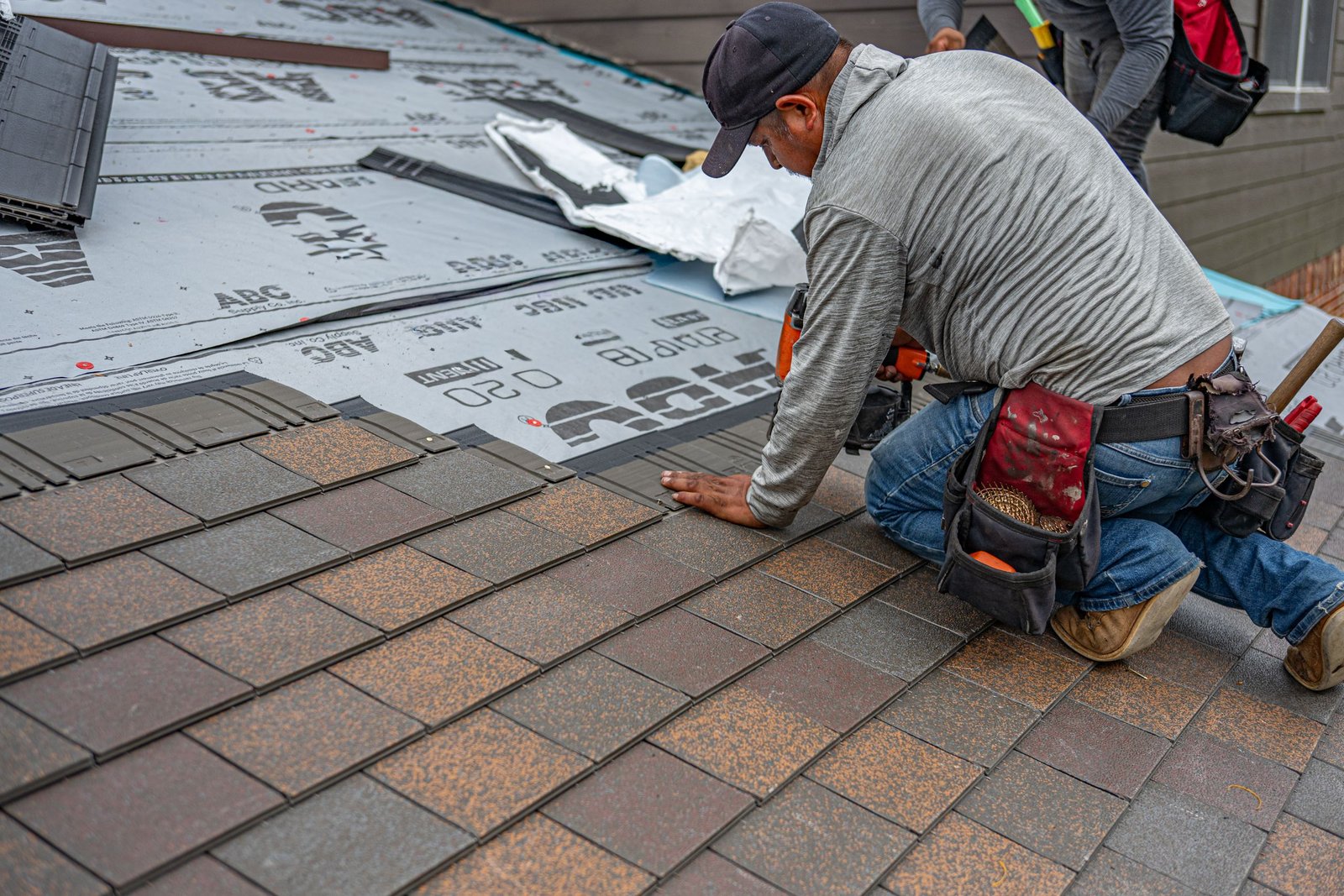
A leaking flat roof can quickly become a frustrating problem. You may notice a ceiling stain, damp insulation, or standing water outside, yet the actual point where water enters can be somewhere else entirely. Unlike steeply sloped roofs, flat and low-slope roofing systems can allow water to travel across or beneath roofing materials before it becomes visible inside.
Learning how to fix a flat roof leak starts with more than finding a hole and covering it. The roofing system, source of the leak, condition of the membrane, drainage, flashing, and underlying roof structure all matter. A small, clearly identified defect may be repairable, while repeated leaks or widespread deterioration can require professional assessment.
The safest approach is simple: diagnose the problem first, then choose a repair method that matches the roofing system.
Can You Fix a Flat Roof Yourself?
Some localized flat roof problems can be addressed with basic repair methods, but DIY work is not appropriate for every situation. The first question is not simply whether you can reach the damaged area. It is whether you can safely access the roof and accurately identify what has failed.
A small puncture in an otherwise sound membrane is very different from widespread deterioration, wet insulation, or damaged roof decking. Applying sealant to the visible area may temporarily reduce water entry without solving the underlying problem.
Minor Problems That May Be Repairable
Limited damage may be suitable for a basic repair when the roof is safely accessible and the underlying structure appears sound. Examples include:
- Small, clearly identifiable punctures
- Localized membrane damage
- Minor cracks or splits
- Deteriorated sealant
- Limited flashing defects
- Small isolated areas of damage
Even with a minor defect, the repair material needs to be compatible with the existing roofing system. EPDM, TPO, PVC, modified bitumen, and built-up roofing are not interchangeable systems.
Here’s the thing: a repair that works well on one roof can be completely inappropriate for another.
Problems That Need Professional Attention
Professional evaluation is a better choice when the cause or extent of the damage is uncertain. This is especially true when you notice:
- Repeated leaks after previous repairs
- Widespread membrane deterioration
- Wet or damaged insulation
- Soft or damaged decking
- Structural concerns
- Extensive ponding water
- Large areas of damaged flashing
- Multiple unrelated leak locations
- A leak that cannot be traced confidently
A professional can also determine whether the roof needs a localized repair, broader restoration, or replacement.
What Causes Flat Roof Leaks?
Flat roofs are designed to resist water, but the waterproofing system can eventually develop weak points. Weather, movement, aging materials, poor drainage, foot traffic, installation defects, and damage around penetrations can all contribute to leaks.
Cracked or Punctured Roofing Membranes
The membrane is the waterproof layer that protects the roof assembly from water intrusion. A puncture, crack, split, or tear can compromise that protection.
Damage may result from maintenance work, falling objects, foot traffic, weather exposure, or normal deterioration. Small damage is not always obvious from ground level, particularly when the membrane has a textured surface or is covered by other roofing components.
Failed Seams and Joints
Many flat roofing systems depend on seams or joints to connect sections of membrane. These areas can become vulnerable when materials deteriorate, separate, or lose their original bond.
A leak around a seam should not automatically be treated like a hole in the middle of a membrane. The repair method needs to address the actual failure and remain compatible with the roofing system.
Damaged Flashing
Flashing helps direct water away from vulnerable transitions, such as roof edges, walls, vents, pipes, skylights, and other penetrations.
When flashing becomes loose, cracked, deteriorated, or improperly sealed, water can enter around the transition. These areas deserve particular attention when a roof leak appears near a wall or roof penetration.
Ponding Water and Poor Drainage
Ponding water refers to water that remains on the roof instead of draining away properly.
A blocked drain or scupper can cause water to accumulate. In other cases, the problem may involve inadequate drainage or areas where the roof does not shed water effectively.
Repeatedly sealing the membrane without addressing the drainage problem can leave the main cause untouched.
Aging Roofing Materials
Roofing materials change as they age. Repeated exposure to sunlight, temperature changes, moisture, wind, and other environmental conditions can contribute to cracking, splitting, loss of flexibility, and general deterioration.
When damage appears across a large portion of the roof, repairing individual spots may no longer be the most practical solution.
How to Find the Source of a Flat Roof Leak
Finding the source is often the hardest part of flat roof repair. The place where water becomes visible inside the building is not necessarily the place where it entered the roof.
Water can move through roofing layers, insulation, decking, or other building components before appearing as an interior stain.
Start Inside the Building
Begin by documenting where the moisture is appearing.
Look for:
- Ceiling stains
- Damp areas
- Peeling paint
- Damp insulation
- Moisture around ceiling penetrations
- Signs near vents or other openings
If the leak appears during or after rainfall, note the location and timing. That information can help connect the interior evidence with conditions on the roof.
Do not assume the stain directly below a roof defect identifies the entry point.
Trace the Leak Toward the Roof
Once you know where water is appearing indoors, examine the roof area above and around that location if it can be accessed safely.
Water can travel sideways before reaching the ceiling. This means searching only for damage directly above a stain can lead to the wrong repair.
Look for multiple possible sources rather than stopping at the first suspicious spot.
Inspect Flashing and Roof Penetrations
Roof penetrations are areas where pipes, vents, skylights, HVAC equipment, or other components pass through the roofing system.
These locations deserve careful inspection because they create transitions in the roof assembly.
Also check roof-wall intersections, parapets, edges, and areas where different materials meet.
Look for:
- Loose or damaged flashing
- Cracked sealant
- Open seams
- Membrane damage
- Gaps around penetrations
- Deteriorated transition areas
Check Drains and Scuppers
Drainage should be part of every flat roof leak investigation.
Check whether drains and scuppers are blocked by leaves, dirt, debris, or other material. Look for standing water and areas where water repeatedly collects.
A recurring leak near a drainage area may be a drainage problem as much as a membrane problem.
Understand Your Flat Roofing System Before Repairing It
Before choosing a repair material, identify the type of roofing system installed on the building.
Different systems use different materials and repair techniques. Using a generic product without knowing what is already on the roof can create an incompatible repair.
EPDM Roofing
EPDM is a synthetic rubber roofing membrane commonly used on low-slope and flat roofs.
Repairs to EPDM generally require materials designed to work with the membrane. The repair area may need appropriate cleaning and preparation before the compatible repair system is installed.
The key point is compatibility.
TPO Roofing
TPO is a thermoplastic roofing membrane. Its seams and repair methods differ from those used for EPDM.
A repair should follow the requirements of the particular roofing system rather than relying on a generic roofing sealant simply because it claims to be waterproof.
PVC Roofing
PVC is another thermoplastic membrane used for flat and low-slope roofs.
Like TPO, PVC has its own system-specific repair requirements. The existing membrane should be identified before selecting a patching or sealing method.
Modified Bitumen
Modified bitumen roofing is a bituminous membrane system designed for low-slope applications.
Common problems can include cracks, splits, deteriorated seams, and surface damage. Repairs should be appropriate for the specific modified bitumen system rather than treated as if it were a single-layer rubber membrane.
Built-Up Roofing
Built-up roofing, often called BUR, consists of multiple layers.
Its layered construction can make leak diagnosis more complicated. Water may travel between layers before appearing inside the building, so repeated surface patching may not resolve a concealed problem.
What You Need for a Flat Roof Repair
There is no universal flat roof repair kit because materials and tools depend on the roofing system.
Depending on the repair, a suitable system may require:
- Compatible membrane repair material
- Manufacturer-approved patching material
- Compatible sealant
- Primer where required
- Cleaning supplies
- Utility knife
- Seam roller where appropriate
- Protective gloves
- Eye protection
- Other manufacturer-specified tools
The most important item is not necessarily a particular brand or tool. It is knowing what roofing system you are repairing.
A product designed for EPDM should not automatically be used on TPO or PVC. Likewise, a repair approach intended for a membrane roof may not be appropriate for a built-up roofing system.
How to Fix a Flat Roof Leak Step by Step
The exact repair procedure varies by roofing system and damage. The following process provides a general framework for understanding a localized flat roof repair.
Step 1: Control Immediate Water Intrusion
If water is entering the building, focus first on protecting the interior.
Move vulnerable belongings away from the affected area and address immediate water damage where possible. If electrical equipment or wiring is exposed to water, treat the situation as a potential electrical hazard and seek appropriate professional help.
Do not climb onto a roof during active rain, strong winds, or other unsafe conditions simply because the building is leaking.
Temporary measures may limit further damage while you arrange a proper inspection.
Step 2: Identify the Roofing System
Determine whether the roof uses EPDM, TPO, PVC, modified bitumen, built-up roofing, or another system.
If you cannot confidently identify the material, avoid choosing a repair product based only on appearance.
Manufacturer documentation, previous roofing records, or professional inspection may help identify the system.
Step 3: Inspect the Suspected Damage
Once the roof can be safely accessed, inspect the suspected area and its surroundings.
Look for:
- Punctures
- Cracks
- Open seams
- Blisters
- Loose membrane
- Failed flashing
- Damaged penetrations
- Deteriorated sealant
- Areas of ponding
Do not assume the most obvious defect is the only defect.
Look around it.
Step 4: Clean and Prepare the Repair Area
A repair surface generally needs appropriate preparation before a compatible repair material is applied.
Dirt, moisture, debris, loose material, or incompatible previous repairs can interfere with adhesion or sealing.
The exact preparation method depends on the roofing system and repair product. Follow the applicable manufacturer’s instructions rather than treating every roof as though it were identical.
Step 5: Use a Compatible Repair Method
The basic principle is:
Roofing system → compatible repair material → approved repair method.
For a localized membrane defect, this may involve an appropriate patch or repair system. Other defects may require seam treatment, flashing repair, or another system-specific solution.
Avoid simply spreading generic sealant over a damaged area when the underlying defect requires a different repair method.
Step 6: Address Seams, Flashing, and Penetrations
If the inspection identifies a failed seam, damaged flashing, or penetration problem, repair that specific component.
This matters because the visible membrane damage may not be the actual source of the leak.
For example, water appearing near a pipe could be entering through damaged flashing around the penetration rather than through the membrane several inches away.
Step 7: Check Drainage
After identifying the leak, examine whether drainage contributed to the problem.
Clear appropriate debris from drains and scuppers when this can be done safely. More serious drainage problems may require professional correction.
Don’t treat ponding as a cosmetic issue. If water repeatedly accumulates in the same area, the repair should address why it happens.
Step 8: Monitor the Repair
A repair should not be considered successful simply because the roof looks dry immediately afterward.
Monitor the area following subsequent rainfall. Check the original interior location for renewed moisture and watch for signs that water is still entering elsewhere.
If the leak returns, stop assuming that another layer of sealant is the answer. The source may have been misidentified, or there may be multiple defects.
How to Fix Common Flat Roof Problems
Different forms of damage call for different approaches. Understanding the problem helps prevent unnecessary or ineffective repairs.
Small Punctures
A small puncture in an otherwise serviceable membrane may be suitable for a compatible localized patching system.
The surrounding material should be inspected as well. If the membrane around the puncture is brittle, loose, or deteriorating, the problem may extend beyond the visible hole.
Cracks and Splits
Cracks and splits can develop as roofing materials age or experience repeated movement and weather exposure.
Covering the visible crack without considering the surrounding membrane may provide only short-term protection.
If cracking is widespread, it can be a sign that the roofing system is approaching the end of its useful serviceability.
Failed Seams
Open or deteriorated seams can allow water beneath the membrane.
The correct treatment depends on the membrane system. Avoid assuming that a seam can be permanently fixed with ordinary household caulk or an unrelated waterproofing product.
Damaged Flashing
Flashing defects require attention to the transition between roofing materials and the adjacent structure.
A small gap around a penetration can allow significant water intrusion during rainfall. The repair needs to restore the water-shedding function of the affected transition.
Ponding Water
Ponding water is often a drainage issue rather than a simple hole that needs sealing.
If water repeatedly collects in one location, investigate the drain, scupper, slope, or other drainage condition. Simply applying more roofing material to the area does not necessarily correct the reason water remains there.
Blisters and Bubbles
Blisters or bubbles can develop within some roofing systems for different reasons.
Do not automatically cut into a blister just because it is visible. Disturbing the roofing material without understanding its construction and the cause of the blister can make the situation worse.
A professional assessment is appropriate when blistering is extensive or accompanied by other signs of deterioration.
Temporary vs. Permanent Flat Roof Repairs
Temporary and permanent repairs serve different purposes.
| Temporary Repair | Permanent Repair |
| Limits immediate water intrusion | Addresses the underlying defect |
| May provide short-term protection | Uses compatible system-specific materials |
| Useful while arranging assessment | May correct flashing or drainage problems |
| Does not necessarily solve the original cause | Designed to restore the affected roofing system |
| Requires follow-up | Should be inspected and monitored |
A temporary measure can be useful when immediate protection is necessary, but it should not create a false sense of security.
If water continues to enter the building, the temporary repair has not solved the underlying problem.
When Should You Repair or Replace a Flat Roof?
Not every leaking flat roof needs to be replaced. Likewise, repeatedly repairing a severely deteriorated roof may not make sense.
The decision depends on the extent of damage and the condition of the overall roof assembly.
Signs a Repair May Be Enough
A localized repair may make sense when the roof has:
- Limited damage
- One identifiable leak source
- A generally serviceable membrane
- A sound roof deck
- No widespread moisture damage
- Limited deterioration around the affected area
In this situation, repairing the specific defect may extend the useful service of the existing roof.
Signs Replacement May Be More Appropriate
A broader solution may be warranted when there is:
- Widespread membrane deterioration
- Repeated leakage
- Extensive wet insulation
- Significant membrane failure
- Structural damage
- Persistent drainage problems
- Multiple unrelated leak locations
Roof age can provide useful context, but it should not be the only factor.
A relatively old roof in good condition may need a localized repair, while a newer roof with serious installation or structural problems may require significant corrective work.
Flat Roof Repair Safety Tips
Roof repair can involve serious fall hazards. Safety should come before the desire to stop a leak quickly.
Avoid roof work during rain, strong winds, icy conditions, or other circumstances that make the surface difficult to navigate.
Be particularly careful around skylights and roof openings. They may not always be obvious from a distance and should never be treated as safe walking surfaces.
Other important precautions include:
- Do not walk on areas that appear structurally damaged.
- Use appropriate fall protection where required.
- Keep tools and materials secured.
- Avoid working near exposed electrical hazards.
- Do not attempt complex repairs without suitable training and equipment.
- Keep other people away from areas where tools or debris could fall.
- Hire a qualified professional if safe roof access is not possible.
OSHA highlights roof falls as a significant residential construction hazard. That is a strong reminder that stopping a leak is not worth taking an unnecessary fall risk.
If you cannot safely reach the damaged area, the correct repair decision may be to call a professional rather than attempt the work yourself.
How to Prevent Future Flat Roof Leaks
Preventive maintenance can help identify small problems before they become major water-intrusion issues.
Keep Drains and Scuppers Clear
Blocked drainage can allow water to remain on a low-slope roof. Check drainage areas regularly and address recurring blockages.
Inspect Flashing and Penetrations
Roof penetrations and transitions deserve attention during routine inspections. Look for deteriorated sealant, damaged flashing, loose components, and visible gaps.
Look for Membrane Damage Early
Small punctures, cracks, loose sections, or seam problems can be easier to address before they spread.
Address Ponding Water
If water repeatedly remains in the same location after rainfall, investigate the reason rather than simply treating the visible surface.
Monitor Previous Repairs
A repaired area should remain part of the roof maintenance routine. New staining or renewed moisture around the same location can indicate that the original defect was not fully corrected.
Schedule Routine Roof Inspections
The appropriate inspection schedule depends on the roofing system, age, environment, weather exposure, maintenance history, and manufacturer’s recommendations.
Professional inspections can be particularly valuable for older roofs or buildings with recurring leakage.
How Much Does Flat Roof Repair Cost?
There is no single price that applies to every flat roof repair.
The final cost can depend on:
- Roof size
- Roofing system
- Damage severity
- Accessibility
- Local labor rates
- Geographic location
- Amount of wet insulation
- Condition of the roof deck
- Drainage problems
- Number of damaged areas
- Whether repair or replacement is ultimately required
A small, accessible membrane defect can be very different from a leak involving wet insulation, damaged decking, and failed flashing.
For that reason, a site-specific assessment is more useful than relying on one universal flat roof repair price.
Frequently Asked Questions About Flat Roof Repair
Can a leaking flat roof be repaired?
Many localized flat roof leaks can be repaired when the roof is otherwise serviceable. The appropriate method depends on the roofing system, location and extent of damage, drainage, and condition of the underlying roof assembly.
What is the easiest way to fix a flat roof leak?
There is no single repair method for every flat roof. The first step is identifying the actual source of the leak and determining which roofing system is installed. The repair should then use compatible materials and methods.
Can you patch a flat roof from the inside?
An interior measure may help protect the building temporarily, but it generally does not repair the exterior source of water intrusion. A lasting solution usually requires identifying and addressing the roof-side defect.
How do I find where my flat roof is leaking?
Start by locating interior signs of moisture, then inspect the corresponding roof area and surrounding seams, flashing, penetrations, drainage components, and membrane. Remember that water can travel before becoming visible.
How long does a flat roof repair last?
The lifespan of a repair depends on the roofing material, quality of the repair, weather exposure, compatibility of materials, and whether the original cause was corrected. A repair that only covers a symptom may not last as long as one that addresses the underlying defect.
Is it better to repair or replace a flat roof?
A localized problem on an otherwise sound roof may be repairable. Widespread deterioration, repeated leaks, extensive wet insulation, structural damage, or persistent drainage problems can make broader replacement more appropriate.
Why does my flat roof keep leaking after repair?
The leak may continue because the original source was incorrectly identified, water is traveling beneath the membrane, flashing has failed, drainage remains poor, or multiple defects are present. Repeated patching without diagnosis can leave the real problem untouched.
How often should a flat roof be inspected?
There is no single schedule that works for every flat roof. Consider the roofing system, age, environment, maintenance history, manufacturer recommendations, and advice from a qualified roofing professional.
Final Thoughts
Fixing a flat roof leak is not simply a matter of covering the first crack, hole, or stain you find. The more reliable approach is to determine where the water is entering, understand the roofing system, identify the actual defect, and select a compatible repair method.
Drainage also deserves attention. If water continues to collect on the roof, repairing one damaged area may not prevent the problem from returning.
Small and clearly identified defects may sometimes be repairable, but repeated leaks, widespread deterioration, wet insulation, damaged decking, structural concerns, and unsafe roof access should be treated more seriously.
When in doubt, diagnose first and repair second. That approach can help prevent repeated temporary fixes and make it easier to determine whether a flat roof needs a localized repair, broader work, or replacement.

2 Comments
Pingback: Luxury Home Interior Design Ideas for Modern, Elegant Homes
Pingback: How to Replaster a Wall: A Step-by-Step DIY Guide