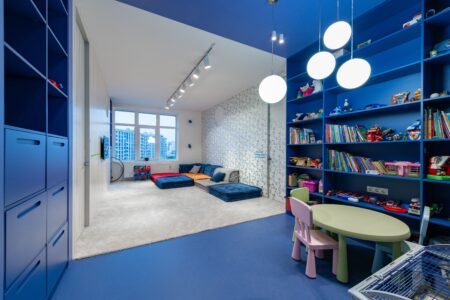




Most nursery ideas online show you a gorgeous room and stop there. They rarely tell you where the changing table should go, how to keep a dresser from tipping, or what to do if you are renting and cannot paint. This guide does all of that. Nursery Ideas Every idea below is chosen to be pretty, practical and safe, and each one comes with a reason it works, not just a photo caption.
Use it in order if you are starting from scratch, or jump to the section you need.
Before You Choose Anything: Plan the Three Zones
The best nursery ideas start with function. A baby room has three jobs, and a good layout gives each one its own zone.
- Sleep zone: the crib or bassinet. Keep it away from windows, blind cords, heaters and anything a baby could reach from the mattress.
- Change zone: a changing surface, wipes, diapers, creams and a bin, all within one arm’s reach so you never leave your baby unattended on the table.
- Feed and rest zone: a comfortable chair with a small side table and a soft light. You will spend more hours here than you expect, especially at 3 a.m.
Sketch these three zones on paper before you buy paint or furniture. Measure the room, the doorway and the window. It takes ten minutes and prevents the most expensive mistake in nursery design: buying a beautiful piece that does not fit.
Part 1: Color and Style Nursery Ideas
1. Start with one thing you love
Pick one print, rug or fabric and pull your colors from it. Nursery Ideas A single anchor piece gives you a palette, a mood and a direction in one step. It also stops the room from becoming a collection of unrelated purchases.
2. Use the 60-30-10 rule
Use a main color for about 60 percent of the room (walls and large pieces), a second color for about 30 percent (curtains, rug, bedding) and an accent for the last 10 percent (art, pillows, toys). It is an old designer rule of thumb, and it keeps a room calm even when you use bold shades.
3. Choose soft neutrals that grow with your child
Oat, warm white, sand and greige work from newborn days to the big-kid years. You change the character with accessories rather than repainting. This is also the cheapest long-term approach, because swapping a pillow costs far less than redoing a wall.
4. Try muted green for a restful feel
Sage and eucalyptus greens pair well with natural wood and white furniture. Nursery Ideas They feel fresh without leaning toward any stereotype, and they look good in both sunny and shadowy rooms.
5. Go deep and cozy if the room is small
A dark navy, forest green or plum can make a small room feel snug rather than cramped, especially if you keep the ceiling and trim light. Nursery Ideas Be honest about natural light first: a deep color in a windowless room can feel heavy. Test a large sample on the wall for a few days and look at it at morning, afternoon and night.
6. Be realistic about color psychology
You will see claims that yellow makes babies cry or that pink creates disruptive children. The research behind such statements is thin, and a newborn mostly sees contrast and light, not your paint story. Choose colors you find calming, because you are the one spending the night shifts there.
7. Mix patterns with a simple rule
Combine one large pattern (wallpaper or a mural), one medium pattern (curtains or bedding) and one small pattern (a pillow or basket). Keep them in the same color family and add solid colors in between so the eye can rest.
8. Add one wallpaper wall, not four
A single feature wall behind the crib or changing table is cheaper and easier to replace later. Peel-and-stick wallpaper is the sensible option here, because it goes up quickly and comes off without damage. Hang it well ahead of your due date and let the room air out.
9. Pick a theme that is a place or an idea, not a character
A theme such as woodland, ocean, stars or botanicals lasts for years. Nursery Ideas A cartoon character is usually outgrown in two. If you love a theme, let one or two pieces of art carry it and keep the crib, rug and curtains simple.

Part 2: Budget and Small-Space Nursery Ideas
10. Spend where it matters, save where it does not
Spend on the crib, mattress, car-related safety gear and a chair you can actually sit in for an hour. Save on decor, baskets, art and pillows. A secondhand dresser with a coat of paint looks better than a flat-pack piece that sags in a year.
11. Buy used, but check the safety rules
Secondhand dressers, chairs, shelves and bookcases are great value. Cribs need more care: check the model against the current safety standard and recall lists, make sure all hardware is present, and avoid anything with a drop side. Buy a new mattress, because an old one may not fit snugly or stay firm.
12. Repurpose adult furniture
A low console, a chest of drawers or a sideboard can become a changing station with a contoured changing pad on top and a safety strap. Add a small shelf above for diapers and wipes. You get a piece that becomes a normal dresser later, with no nursery-only furniture to dispose of.
13. Make a closet or corner work
No spare room? A bedroom corner, a walk-in closet or part of a dining area can hold a crib or bassinet and one dresser. Use a folding screen or a curtain rail to define the area. Keep the baby’s sleep space free of cords, cables and anything hanging overhead.
14. Go vertical in a small room
Wall-mounted shelves, hooks and peg rails free up the floor. Anything mounted must be fixed into studs or with proper anchors, and nothing heavy should sit above the crib. Put books on slim picture ledges where small hands will not reach them for a long time.
15. Rent-friendly nursery ideas
If you cannot paint, use removable wall decals, peel-and-stick wallpaper (test a patch first), framed art leaned on a ledge, a large rug, colorful curtains and fabric canopies kept well clear of the crib. When your lease ends, everything comes down and you lose nothing.
Part 3: Safe Sleep and Safety Nursery Ideas
Safety is the part many competitors skip or treat in one vague sentence. Treat it as the foundation, not the decoration.
16. Keep the crib bare
Pediatric safe sleep guidance in the United States, from the American Academy of Pediatrics and the NIH Safe to Sleep campaign, is consistent: place a baby on their back, on a firm, flat sleep surface with a fitted sheet, and nothing else. Nursery Ideas That means no pillows, loose blankets, bumper pads, positioners or soft toys in the crib. Plush toys and cushions look lovely in photos, so display them on a shelf or a chair, not in the baby’s bed.
17. Choose a compliant crib and mattress
Check that the crib meets current safety standards, that slats are no more than 2⅜ inches (6 cm) apart, and that the mattress fits so snugly that you cannot fit more than two fingers between the mattress and the frame. Do not use a drop-side crib. Follow the manufacturer’s assembly instructions exactly and recheck the screws now and then.
18. Anchor every piece of tall furniture
Dressers, bookcases and wardrobes can tip over when a toddler climbs them. Use the anti-tip kit that comes with the furniture or buy one, and fix it into a wall stud. Do this even if your baby will not walk for a year, because the habit is easier to start now and nursery furniture often stays for years.
19. Remove window cord hazards
Blind and curtain cords are a strangulation risk. Choose cordless blinds or shades, or use cord cleats and keep cords out of reach, and keep the crib and other furniture well away from windows. If you want to layer curtains with blackout lining, fix the rod high so no part hangs near the cot.
20. Think about air quality
Paint and wallpaper the room well before the baby arrives, use low- or zero-VOC products, and keep it ventilated for several days. New furniture can also release fumes, so unpack and air it out early. A comfortable room temperature is usually considered to be somewhere around 68 to 72°F (20 to 22°C), but follow the advice of your pediatrician.
Part 4: Function and Comfort Nursery Ideas
21. Layer your lighting
Use three levels: a dimmable ceiling light for everyday use, a small lamp for feeds and a warm, low-level night light for the middle of the night. Dimmers are one of the best upgrades you can make, since bright light at 3 a.m. wakes everyone up. Choose warm bulbs and keep cords tidy and out of reach.
22. Install blackout window treatments
Blackout shades or lined curtains help create a dark, calm room for naps and early mornings. Layer them with a lighter curtain during the day so the room still feels bright and friendly. Made-to-measure shades fit best and block light leaks at the edges.
23. Pick a floor that suits real life
Hard floors are easy to clean but cold and echoey; carpet is soft but harder to keep fresh. A good compromise is hard flooring with a large, washable, non-slip rug. Choose one that can handle spills, and add a rug pad so it does not slide on tummy-time days.
24. Invest in a chair you really like
Try a glider or armchair in the shop if you can. Look for good back support, arms at a comfortable height and a washable cover. Add a footstool and a small table for water, a burp cloth and your phone charger. If you are on a budget, a well-supported armchair you already own is better than a pricey chair that does not suit your body.
25. Plan storage in layers
Use closed storage for the things you reach for daily (diapers, wipes, spare sleepers), baskets for blankets and toys, and a high shelf for items you only need now and then. Label bins so a tired partner or grandparent can find things in the dark. Choose furniture with a drawer in the base or a dresser with a changing topper so that one piece does two jobs.
Nursery Ideas for Different Needs

Gender-neutral nursery ideas
You do not need to avoid pink or blue to make a neutral nursery. The idea is to choose a palette because you like it. Warm whites, soft greens, mustard, terracotta and natural wood look good on any baby. Let texture do the work: a woven basket, a linen curtain, a chunky knit throw and a wool rug add depth without needing a theme.
Nursery ideas for twins
Give each baby their own sleep space, even if the cribs sit side by side, and plan a changing area with enough storage for double the supplies. Matching but not identical touches, such as the same bedding in two colorways, look planned without being repetitive. Leave a clear path between the cribs and the door.
Nursery ideas that grow into a toddler room
Choose a convertible crib, a dresser that will outlast the baby years, and a rug, curtains and art that suit a four-year-old as well as a newborn. When it is time to switch, you will only need new bedding, a low shelf for books and maybe a fresh coat of paint on one wall.
Quick Nursery Checklist
- Crib or bassinet that meets current safety standards, with a firm, snug mattress and fitted sheets
- Changing surface with a safety strap, a bin and supplies in easy reach
- Comfortable chair, footstool and side table
- Dresser or storage, anchored to the wall
- Blackout window treatments with no loose cords
- Dimmable lighting plus a night light
- Washable rug, soft and non-slip
- Baby monitor placed out of the baby’s reach
- Smoke and carbon monoxide alarms checked
Frequently Asked Questions About Nursery Ideas
When should I start setting up the nursery? Many parents begin in the second trimester so that paint, wallpaper and new furniture have time to air out before the baby arrives. Start earlier if you plan to buy secondhand or need to save up.
How much does it cost to set up a nursery? It varies widely. A basic, safe setup (crib, mattress, changing area, chair, storage and window treatments) can be done on a modest budget if you buy used for non-sleep furniture and keep decor simple. Spend first on safety and sleep, and add decor gradually.
Should the nursery be next to our bedroom? Safe sleep guidance recommends that babies sleep in the same room as their parents, on a separate surface, for at least the first six months, ideally up to a year. Many families therefore use a bassinet in the parents’ room first and move to the nursery later.
What color is best for a nursery? The best color is one that makes you feel calm and suits the light in your room. Neutrals and soft greens, blues and yellows are popular, but there is no scientifically proven perfect nursery color.
Is it safe to put art above the crib? It is safest to keep wall art and shelves away from the area directly above the crib. If you want art nearby, use lightweight, shatter-resistant frames, hang them securely with proper hardware and keep them out of reach.
Final Thoughts
The best nursery ideas are the ones that make daily life easier: a safe sleep space, a comfortable spot to feed, storage you can use in the dark and a look you love. Start with the layout, put safety first, and then add color and personality in layers. You can always add a mural, a pretty rug or a new print later, but you cannot easily fix a crib that is in the wrong place or a dresser that is not anchored.
Pick one idea from each section, and your nursery will be calm, beautiful and ready long before the baby arrives.