
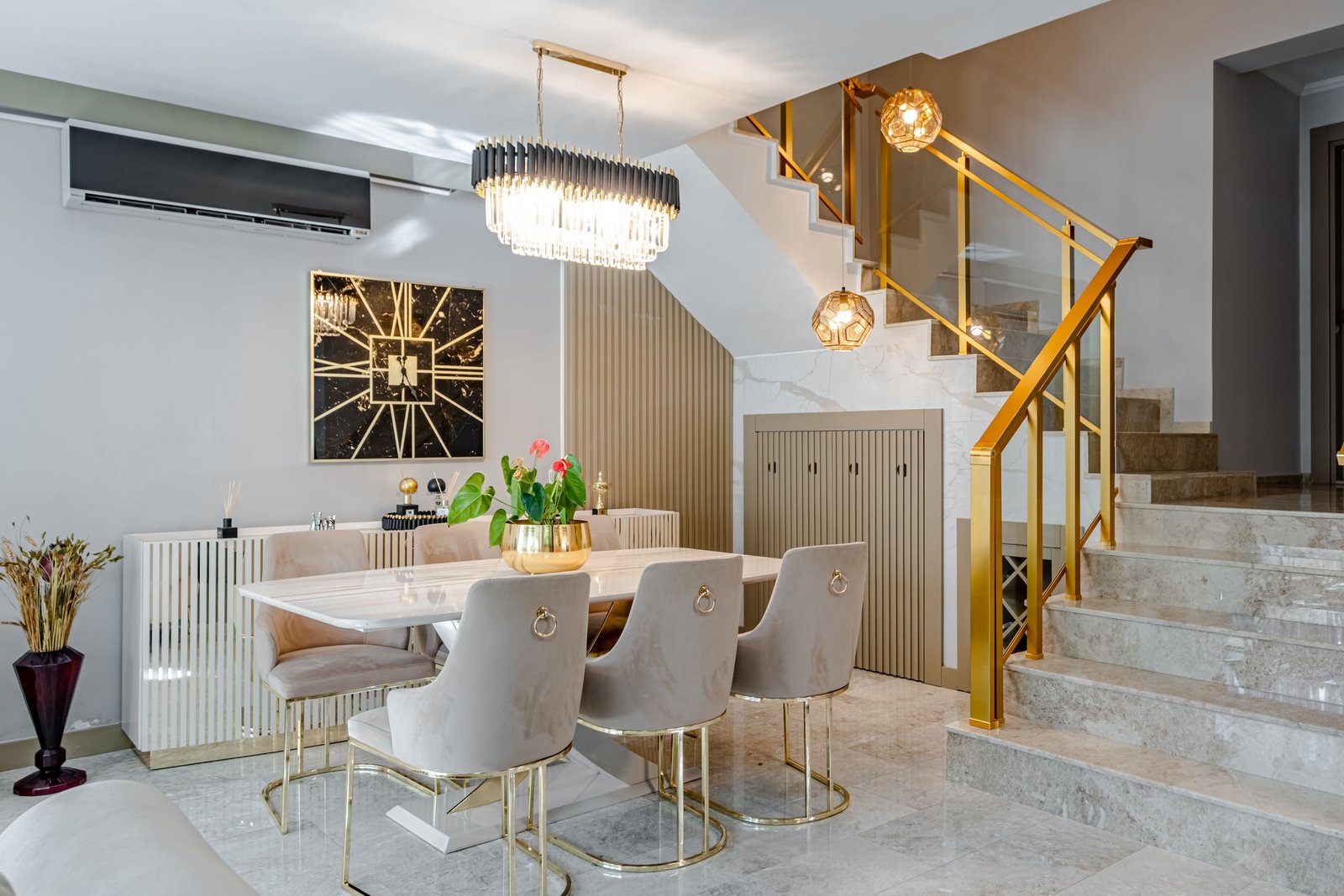
A dining room does more than provide a place to eat. It can become a comfortable gathering spot for family meals, weekend dinners, homework, celebrations, and conversations with friends. The challenge is creating a space that feels modern without becoming cold, overly minimal, or difficult to use every day.
These modern dining room ideas focus on more than appearance. The right table shape, comfortable seating, practical lighting, colors, storage, and room layout all affect how the space feels and functions. You also do not need to replace everything to create a noticeable change.
From warm minimalism and natural wood to small-space layouts, statement lighting, gallery walls, and budget-friendly updates, these ideas can work across different homes and room sizes. The goal is not to copy one particular style. Instead, use the ideas that fit your space, lifestyle, and budget.
What Makes a Dining Room Design Modern?
Modern dining rooms often combine simple forms, practical furniture, balanced colors, and carefully selected decorative details. A modern space does not necessarily have to be completely minimalist.
Common elements include:
- Clean-lined furniture
- Functional furniture arrangements
- Balanced color palettes
- Natural materials
- Thoughtful lighting
- Minimal visual clutter
- Comfortable seating
- Practical storage
The best modern dining room designs usually have a clear visual connection between the table, chairs, lighting, walls, flooring, and accessories.
Modern Does Not Have to Mean Cold
A common misconception is that modern interiors need to be white, stark, and almost empty. In reality, wood, fabric, plants, artwork, textured rugs, and warm colors can make a contemporary room feel inviting.
For example, a simple dining table can feel much warmer when paired with upholstered chairs, a textured rug, and natural wood accessories.
Function Comes Before Decoration
A dining room should still work as a dining room. Before choosing decorative pieces, consider how people will move around the table, where chairs will be pulled out, where dishes will be stored, and how much seating is actually needed.
This is particularly important in apartments, narrow rooms, and open-plan homes.
27 Modern Dining Room Ideas to Inspire Your Space
1. Embrace Warm Minimalism
Warm minimalism combines simple furniture with comfortable materials and softer colors. Instead of filling the room with accessories, choose a few pieces that add warmth.
A natural wood table, neutral upholstered chairs, soft lighting, and one large artwork can be enough.
The key is balance. Too many hard surfaces can make a minimalist dining room feel sterile, while too many decorations can remove the clean quality that makes the style appealing.
2. Choose a Sculptural Dining Table
A dining table can become the main visual feature of the room. Look for a table with a curved base, unusual legs, rounded edges, or another distinctive shape.
Because the table becomes the focal point, the surrounding furniture can remain relatively simple. Make sure the table is appropriately sized for the room rather than choosing a dramatic design that leaves little space for movement.
3. Add a Statement Chandelier
A statement chandelier or pendant can give a dining room a strong focal point without requiring major furniture changes.
Choose a fixture that relates to the size of the table and room. A very small light can disappear visually, while an oversized fixture may overwhelm a compact dining area.
Dimmable lighting is also useful because bright light may work for cleaning or everyday tasks, while softer light can create a more relaxed atmosphere during dinner.
4. Create a Neutral Dining Room Palette
Warm white, beige, cream, greige, and soft gray can create a calm modern backdrop.
However, neutral does not have to mean flat. Introduce texture through wood, upholstery, woven materials, stone, artwork, or a patterned rug.
A neutral palette also makes it easier to update the room later because smaller decorative elements can change without replacing the main furniture.
5. Introduce Natural Wood Finishes
Natural wood can add warmth to modern dining room decor. Oak, walnut, and other wood finishes can be used for dining tables, chairs, sideboards, flooring, or decorative accessories.
You do not need every wooden element to match exactly. Slight differences can add visual interest, provided the overall tones work together.
Natural wood is particularly useful when a modern room feels too cool or dominated by white, gray, glass, or metal.
6. Design a Black-and-White Dining Room
Black and white create strong contrast and can give a dining room a crisp contemporary appearance.
You might use a dark table with light chairs, white walls with black lighting, or artwork that connects both colors.
Because the contrast can become harsh, add softer materials such as wood, fabric, plants, or a textured rug. This keeps the room visually interesting without making it feel severe.
7. Experiment With Moody Wall Colors
Dark green, charcoal, deep blue, and warm brown can create a dramatic dining room.
The amount of natural light matters. A dark wall may feel rich and sophisticated in a bright room but considerably heavier in a space with limited windows.
If you are unsure about covering every wall, use a darker color on one feature wall and keep the remaining surfaces lighter.
8. Mix Dining Chair Styles
Dining chairs do not always have to come from the same collection. Mixing styles can create a more relaxed and personalized room.
The trick is to maintain a visual connection. Similar colors, materials, heights, or shapes can help different chairs look intentional rather than mismatched.
For example, different chair silhouettes can work together when they share the same wood tone or upholstery color.
9. Incorporate Upholstered Dining Chairs
Upholstered chairs can make a dining area more comfortable, especially when meals and conversations last for a while.
Consider how the fabric will be used. Homes with children or frequent entertaining may benefit from durable, easy-to-clean performance fabrics.
Neutral upholstery provides flexibility, while a stronger color can become part of the room’s design scheme.
10. Use a Round Dining Table
Round tables can work especially well in small or square dining rooms.
Without sharp corners, they can make movement around the table feel easier and create a more conversational arrangement. They can also work well when several people need to face each other during meals.
The trade-off is seating capacity. A rectangular table may accommodate more people efficiently when the room and household require additional seating.
11. Make a Glass Dining Table the Focal Point
Glass tables can create a sense of visual lightness. Because the surface does not visually block as much of the room, it can be useful in smaller modern dining areas.
Pair a glass table with wood or upholstered chairs to soften the overall appearance.
The main drawback is maintenance. Fingerprints, food marks, and dust can be more visible on glass, so it may require more frequent cleaning than some wood surfaces.
12. Pair Modern Furniture With Vintage Accents
Modern furniture can work surprisingly well with vintage artwork, traditional wood pieces, antique accessories, or family heirlooms.
The contrast prevents the dining room from looking like everything came from the same furniture collection.
To make the combination feel intentional, connect the pieces through color, material, shape, or scale.
13. Add a Large Piece of Wall Art
One large artwork can have more impact than several small decorative objects.
Place an oversized piece above the dining table or sideboard and look for colors that connect with the rest of the room.
The artwork does not need to match the furniture exactly. A shared accent color or complementary tone is often enough to create visual harmony.
14. Create a Dining Room Gallery Wall
A gallery wall can personalize the room with photographs, artwork, prints, and family pieces.
Different frame sizes can make the arrangement feel collected rather than overly formal. However, there should still be some connection between the pieces.
You can create consistency through similar frame colors, a shared color palette, or a repeated style of artwork.
15. Highlight Textured Walls or Wallpaper
Walls can add another layer of design without taking up floor space.
Wallpaper, fluted panels, textured finishes, and accent walls can all create visual interest behind a dining table or sideboard.
When using a strong wall treatment, keep some of the surrounding furniture simpler so the room does not become visually crowded.
16. Bring in Natural Greenery
Plants can soften the straight lines and hard surfaces often found in contemporary interiors.
Depending on the room, consider an indoor tree, tabletop plant, branches in a vase, or another form of greenery.
Scale matters. A large plant may work well in a spacious room but overwhelm a compact dining area. Smaller homes may benefit from vertical plants or simple branches instead.
17. Layer Lighting for a Welcoming Atmosphere
Modern dining room lighting does not need to come from one fixture.
A central pendant or chandelier can provide the main focus, while wall lighting, ambient fixtures, or accent lights can provide additional illumination.
Dimmers are particularly useful because the dining room may serve different purposes throughout the day.
18. Choose a Modern Sideboard for Storage
A sideboard can combine storage and decoration in one piece.
It can hold tableware, serving pieces, linens, or entertaining supplies while also providing a surface for artwork, plants, lamps, or decorative objects.
In a narrow dining room, choose a slimmer design. In a larger room, a wider sideboard can help balance the dining table visually.
19. Add a Statement Dining Room Rug
A rug can visually anchor the dining area and help define the table as a separate zone.
The most important consideration is size. Ideally, chairs should remain on the rug when they are pulled away from the table. A rug that is too small can look disconnected and become awkward when chairs move.
Easy-clean materials can also be useful in dining areas where spills are likely.
20. Incorporate Earthy Colors and Materials
Terracotta, olive green, walnut, beige, stone, and natural fibers can make a modern dining room feel more grounded.
Earthy colors are particularly useful when a room contains many contemporary materials such as glass, metal, or polished surfaces.
You can introduce them gradually through artwork, chairs, tableware, rugs, plants, or decorative accessories.
21. Design a Small Modern Dining Room
Small rooms require careful furniture selection.
Round tables, compact chairs, extendable tables, mirrors, and vertical storage can help use limited space efficiently.
Keep walkways clear and avoid filling every available surface with decoration. A few carefully selected elements can make a small room feel more open.
Look — if you’re working with a small dining area, here’s what actually works: prioritize movement first and decoration second.
22. Maximize a Narrow Dining Room Layout
A narrow dining room can still feel comfortable with the right furniture arrangement.
Consider a slim rectangular table, bench seating along one side, wall-mounted or vertical storage, and appropriately scaled lighting.
Placing the table carefully can preserve a usable walking path. Measure doors, windows, and other obstacles before selecting the furniture.
23. Create a Built-In Banquette Dining Area
A built-in banquette can be an efficient solution for corners and compact dining areas.
It can provide seating while using space that might otherwise be difficult to furnish. Some banquettes can also include storage beneath the seating.
The main trade-off is flexibility. Unlike movable chairs, built-in seating cannot easily be rearranged when your needs change.
24. Define an Open-Plan Dining Zone
Open-plan homes do not always have a separate dining room. A dining zone can still feel distinct without adding a wall.
An area rug, dedicated pendant light, sideboard, coordinated colors, and furniture placement can visually establish the dining area.
The key is creating enough separation while maintaining a connection with the adjoining kitchen or living space.
25. Blend Modern and Mid-Century Design
Modern and mid-century elements can complement each other when their proportions and materials work together.
Tapered legs, walnut finishes, simple silhouettes, vintage-inspired chairs, and contemporary lighting can create a balanced combination.
Here’s the thing: mixing styles works better when there is a clear connection between them. Randomly combining unrelated pieces can make the room feel unfinished rather than intentionally eclectic.
26. Use a Minimalist Dining Table Centerpiece
A dining table centerpiece should look attractive without becoming an obstacle.
A simple vase, branches, bowl, candles, or sculptural object can add personality while leaving enough space for everyday meals.
Choose the height carefully. A centerpiece that blocks eye contact across the table can become annoying during dinner.
27. Refresh the Room With Budget-Friendly Updates
A modern dining room makeover does not always require new furniture.
Start with smaller changes such as:
- Repainting the walls
- Updating the lighting
- Rearranging existing furniture
- Refreshing chair upholstery
- Adding artwork
- Changing accessories
- Buying secondhand pieces
- Introducing natural materials
Or maybe I should say it this way: a room can look significantly different when the furniture arrangement, lighting, and color balance change, even if the major pieces remain the same.
How to Choose the Right Modern Dining Room Design
Consider Your Room Size and Layout
Start with measurements rather than inspiration photos.
Consider the room’s length and width, door swings, windows, walkways, and the number of people who normally use the dining area.
Table shape matters too. Round tables can work well in compact or square rooms, while rectangular tables can provide more seating in longer spaces.
Coordinate Furniture, Colors, and Materials
A modern dining room does not need every item to match.
Instead, create connections between the major elements. The wood tone of the table might relate to the sideboard, while the chairs could connect with the rug or artwork.
Lighting can also act as a bridge between different materials.
Balance Style, Comfort, and Budget
It can be tempting to spend heavily on one impressive item, but everyday comfort should remain important.
Think about where durability matters most. A family may prioritize easy-clean upholstery and sturdy furniture, while someone who entertains occasionally may focus more on appearance.
You can also decorate gradually instead of buying everything at once.
Quick Comparison
| Option | Best For | Key Benefit | Limitation |
| Round table | Small or square rooms | Easier circulation and conversation | Less seating flexibility for large groups |
| Rectangular table | Larger or longer rooms | Flexible seating | Requires more floor space |
| Banquette seating | Compact spaces | Saves floor space | Less flexible to rearrange |
| Glass table | Small modern rooms | Creates visual lightness | Shows fingerprints and requires cleaning |
| Extendable table | Frequent entertainers | Flexible seating | Can be heavier or more complex |
Frequently Asked Questions
What Makes a Dining Room Look Modern?
Clean-lined furniture, balanced colors, uncluttered surfaces, thoughtful lighting, and complementary materials can create a modern appearance. Natural wood, textured fabrics, artwork, and plants can prevent the room from feeling too cold.
What Colors Work Best in a Modern Dining Room?
Warm white, beige, greige, charcoal, muted green, earthy brown, and carefully selected accent colors can work well. Always consider natural light because the same paint color can look very different in bright and darker rooms.
How Can I Make a Small Dining Room Look Modern?
Choose appropriately sized furniture, consider a round or extendable table, keep walkways clear, use vertical storage, and limit unnecessary decoration. Mirrors and lighter finishes can also help create a more open feeling.
How Do I Decorate a Modern Dining Room on a Budget?
Start with paint, lighting, furniture rearrangement, updated accessories, artwork, refreshed upholstery, and secondhand pieces. Small changes can create a noticeable difference without replacing every major item.
What Type of Lighting Is Best for a Modern Dining Room?
A pendant or chandelier above the dining table can provide the main visual focus. Additional ambient or wall lighting can be useful, especially when the dining room serves multiple purposes. Dimmable fixtures can provide greater flexibility.
How Do I Choose the Right Dining Table for My Room?
Consider room dimensions, seating requirements, table shape, material durability, walking space, and how often you host guests. An extendable table can provide additional seating without occupying as much everyday space.
Can Modern and Traditional Dining Room Styles Be Mixed?
Yes. Contemporary furniture can work with vintage artwork, traditional wood finishes, classic architectural details, and heirloom pieces. Create a visual connection through color, material, shape, or scale.
How Can I Make an Open-Plan Dining Area Feel Separate?
Use a large area rug, dedicated pendant light, furniture placement, coordinated colors, or a sideboard to visually define the dining area without constructing a physical wall.
Voice Search Questions and Answers
What’s the Best Table Shape for a Small Modern Dining Room?
A round table can work particularly well in a small or square room because it removes sharp corners and can make movement around the table easier.
How Do I Make a Modern Dining Room Feel Warmer?
Add natural wood, warm neutral colors, upholstered chairs, textured rugs, greenery, artwork, and softer lighting. These elements can balance the hard surfaces often found in contemporary interiors.
Should I Use a Rug Under My Dining Table?
A rug can visually anchor the dining area, but choose a durable and easy-to-clean material that is large enough for chairs to remain on the rug when pulled away from the table.
Why Does My Modern Dining Room Look Cold?
Too many hard surfaces, cool colors, and minimal accessories can create a cold appearance. Adding wood, fabric, plants, artwork, and warmer lighting can make the room feel more comfortable.
When Should I Choose a Round Dining Table?
Consider a round table when the room is small or square, when circulation is important, or when conversation is more important than maximizing the number of seats.
Final Thoughts on Modern Dining Room Ideas
Creating a modern dining room is less about following one exact style and more about making thoughtful choices that suit the way you live.
Start with the room itself. Measure the available space, think about how many people need to use it, and decide which furniture pieces are essential. Then build the design around those requirements.
A beautiful dining room still needs to be comfortable and practical. A sculptural table may create a strong focal point, but it should not leave people struggling to move around the room. A beautiful rug can define the space, but it should also handle everyday dining. Likewise, minimalist styling can look appealing, but the room still needs enough storage and useful lighting.
According to the 2025 Houzz U.S. Houzz & Home Renovation Trends study, 54% of U.S. homeowners undertook renovation projects in 2024, while 54% also undertook decorating projects. That broader interest in improving living spaces makes practical planning especially useful when deciding which changes are worth making.
There is no single modern dining room formula that works for every home. Room size, natural light, household needs, cleaning habits, budget, and personal taste all matter.
Start with one or two changes that make sense for your space. Updating the lighting, rearranging furniture, adding natural wood, changing the wall color, or introducing a carefully chosen piece of artwork may be enough to give the room a completely different feel.
