

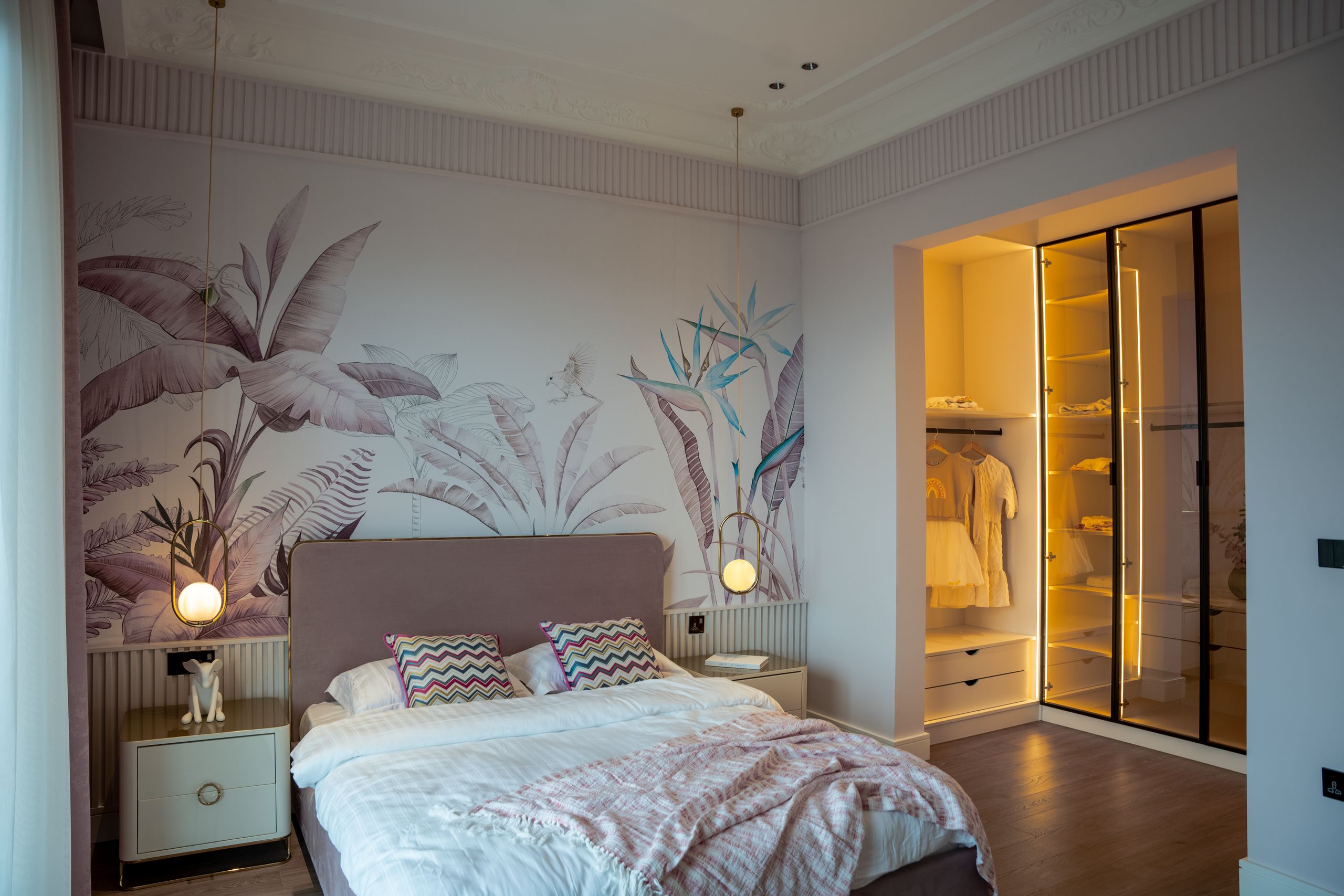
A feminine bedroom doesn’t have to mean pink walls, floral bedding, or a room filled with delicate accessories. It can be quiet and neutral, dark and dramatic, colorful and creative, or warm and earthy. The most successful spaces usually have one thing in common: they reflect the person who uses them.
If you’re looking for woman bedroom ideas, start by thinking about the atmosphere you want rather than choosing a style simply because it looks good in a photograph. Color, texture, lighting, furniture, artwork, and personal objects can work together to create a room that feels comfortable and intentional.
Woman bedroom ideas are decorating concepts for creating a bedroom that feels feminine, personal, comfortable, and visually cohesive. They can range from minimalist and neutral spaces to colorful, romantic, vintage, earthy, or dramatic interiors.
According to the supplied 2025 Houzz trend research in this brief, searches for “color drenching” increased fourfold, pointing to growing interest in more immersive and expressive color choices. That doesn’t mean every bedroom needs saturated walls. It does suggest that using color deliberately can create a stronger sense of atmosphere.
Here are 24 different directions to consider.
24 Woman Bedroom Ideas for a More Personal Feminine Space
1. Create a Soft Neutral Sanctuary
Cream, beige, ivory, and warm white can create a bedroom that feels peaceful without looking plain. The secret is layering rather than relying on a single neutral shade.
Try combining linen bedding with a textured rug, upholstered furniture, soft curtains, and natural wood. Small differences in texture keep a neutral room from appearing flat.
This approach works particularly well if you want an elegant bedroom that feels calm at the end of the day.
2. Try a Moody Burgundy Retreat
Burgundy can give a feminine bedroom considerably more depth than traditional pastel shades. Use it on an accent wall, curtains, bedding, or smaller decorative pieces rather than covering every surface.
Balance the deeper tone with cream, beige, warm white, or natural wood. Brass or muted metallic details can also complement the richer palette.
The result can feel intimate and sophisticated without becoming overly formal.
3. Build a Romantic Layered Bedroom
Romantic design is less about a particular color and more about softness, movement, and atmosphere.
Layer the bed with different fabrics, add flowing curtains, use warm bedside lighting, and introduce a few curved shapes through furniture or mirrors. Dusty rose, cream, mauve, and warm beige can work particularly well together.
Avoid filling every surface with decorative objects. A restrained room often feels more romantic than a crowded one.
4. Bring in an Earthy Feminine Escape
A feminine bedroom can be inspired by nature rather than traditionally feminine colors.
Think warm wood, sage green, terracotta, cream, woven baskets, linen, wool, and indoor plants. These materials create visual warmth while keeping the room grounded.
This is a useful direction for anyone who likes feminine bedroom decor but doesn’t want a delicate or overly polished appearance.
5. Choose a Modern Minimalist Feminine Room
Minimalism can still feel soft and feminine. The difference comes from proportion, materials, and carefully selected details.
Choose a simple bed, clean-lined nightstands, limited decorative objects, and a restrained color palette. Then introduce softness through bedding, curtains, a textured rug, or an upholstered headboard.
Less decoration means individual pieces have more visual impact.
6. Use Blush and Cream Without Going Overboard
Blush can add warmth without making the entire bedroom look pink. Treat it as an accent color rather than the main theme.
A cream base with blush cushions, a throw, artwork, or upholstered chair can create balance. Add beige or warm wood to keep the palette mature.
This is one of the easiest bedroom ideas for women who want a feminine touch while avoiding a stereotypical look.
7. Give the Room a Vintage-Inspired Character
Vintage-inspired rooms can combine traditional furniture with modern comfort. An antique-style mirror, classic bedside table, framed artwork, or patterned textile can provide character.
You don’t need every item to look old. Mixing one or two traditional elements with contemporary bedding and lighting can create a more collected appearance.
The goal is personality, not turning the bedroom into a period display.
8. Experiment With a Contemporary Dark Bedroom
Dark walls can make a bedroom feel dramatic and cocoon-like. Deep blue, charcoal, plum, forest green, or burgundy can work as a strong backdrop.
The trick is contrast.
Use lighter bedding, warm lighting, reflective surfaces, or natural materials to keep the room from feeling visually heavy. A dark bedroom can still feel distinctly feminine when softer textures and curved shapes are introduced.
9. Create an Elegant Monochromatic Bedroom
Choose one color family and build the room around several shades of it.
For example, a beige bedroom could combine ivory bedding, taupe curtains, sandy walls, and slightly darker upholstery. A mauve room could move from pale lavender to dusty rose and deeper plum.
The advantage is cohesion. Different tones create depth while the shared color family keeps the room visually connected.
10. Add a Feminine Reading Nook
A bedroom doesn’t have to be designed entirely around the bed. If space allows, create a small reading corner.
A comfortable chair, compact side table, floor lamp, and a few favorite books can turn an unused corner into a functional retreat.
For smaller rooms, choose furniture that serves more than one purpose. A slim chair can provide seating without overwhelming the available floor space.
11. Make the Headboard the Star
A statement headboard can completely change the appearance of a bedroom without requiring a full makeover.
An upholstered, curved, fluted, oversized, or sculptural headboard can become the room’s focal point. Keep surrounding furniture relatively simple so the bed remains visually dominant.
This approach is especially useful when you want one high-impact change rather than replacing everything.
12. Let Artwork Lead the Design
Instead of choosing all the furniture first, start with one piece of artwork you genuinely like.
Its colors can influence the bedding, curtains, rug, or decorative accessories. A gallery wall can also become the main personality feature of the room.
Personal artwork, photographs, illustrations, and collected pieces usually create more character than generic decorations chosen simply to fill empty walls.
13. Create a Cozy Cottage-Inspired Room
A cottage-inspired bedroom can combine floral details, natural materials, soft bedding, and traditional furniture.
Choose patterns carefully. One floral duvet or curtain can be enough when paired with quieter surrounding elements.
Natural wood, woven textures, cream fabrics, and warm lamps can make the room feel relaxed and welcoming rather than overly themed.
14. Try a Modern Romantic Bedroom
Modern romance is more restrained than traditional romantic decorating.
Use curved furniture, soft fabrics, warm lighting, and subtle colors rather than relying heavily on ruffles or elaborate patterns. An arched mirror or rounded bedside table can soften a room built around otherwise straight lines.
Here’s the thing: atmosphere often matters more than decoration.
15. Go Beyond Pastels With Bold Color
Feminine design doesn’t have to stay within pale colors. Emerald, cobalt, plum, deep blue, terracotta, and burgundy can create a much stronger visual identity.
If you’re nervous about using bold color, introduce it through one wall, the headboard, curtains, or bedding.
A bold room becomes easier to control when the stronger color is supported by quieter neutrals elsewhere.
16. Use Scandinavian-Inspired Simplicity
Scandinavian-inspired bedrooms tend to emphasize light wood, simple furniture, neutral colors, natural materials, and comfortable textiles.
This style can work beautifully for women who prefer a clean bedroom without sacrificing warmth.
Add wool or cotton textiles, a simple pendant, a soft rug, and a few carefully chosen decorative objects. Keep the surfaces relatively clear.
17. Create a Parisian-Inspired Bedroom
A Parisian-inspired bedroom can combine understated elegance with traditional architectural details.
Think classic mirrors, simple artwork, curved furniture, neutral bedding, and subtle decorative accents. If the room already has architectural features such as molding or tall windows, let them contribute to the design.
The look doesn’t need to be elaborate. A few classic details can create the impression.
18. Layer a Bohemian Feminine Bedroom
Bohemian interiors are ideal if you enjoy patterns, plants, woven materials, and collected objects.
Layer different textiles rather than buying everything from the same collection. A patterned rug can sit beneath a simple bed, while woven baskets, plants, artwork, and textured cushions add additional visual interest.
Keep one element relatively calm so the room doesn’t become chaotic.
19. Make a Small Feminine Bedroom Work Harder
Small bedrooms require careful attention to scale.
Choose appropriately sized furniture, use vertical storage, introduce mirrors strategically, and avoid filling every corner. A cohesive color palette can also make separate elements feel less visually fragmented.
Look — if you’re working with a tiny bedroom, here’s what actually works: prioritize the bed, storage, lighting, and one focal point before adding decorative extras.
20. Recreate a Luxury Hotel Atmosphere
A hotel-inspired bedroom doesn’t require expensive furniture. The feeling comes largely from consistency, proportion, lighting, and textiles.
Use coordinated bedding, a balanced pair of bedside lamps, a restrained palette, and one or two refined decorative elements.
Layering is useful here. A duvet, throw, cushions, curtains, and rug can create a more complete appearance than relying on a single decorative centerpiece.
21. Bring Nature Into the Bedroom
Plants, botanical artwork, natural wood, woven materials, and earthy colors can give a bedroom a fresh, grounded character.
Choose plants according to the available natural light and the amount of care you can realistically provide.
If live plants aren’t practical, botanical artwork or natural textures can still introduce the visual connection with nature.
22. Build a Creative Eclectic Bedroom
An eclectic bedroom allows different eras, patterns, colors, and objects to coexist.
The challenge is finding a connection between them. Repeating one color, material, shape, or finish can make seemingly unrelated pieces feel intentional.
Don’t try to match everything.
Instead, create relationships between elements. A vintage mirror might work with a contemporary bed if their colors and proportions complement each other.
23. Try Quiet Luxury Through Materials
Quiet luxury works when the room depends more on proportion and materials than obvious decoration.
Choose restrained colors, quality-looking textiles, simple furniture, and fewer accessories. Linen, velvet, wool, wood, and upholstered surfaces can add depth without demanding attention.
Most people assume a luxurious bedroom needs more decoration. Often, the opposite approach creates a calmer result.
24. Make the Bedroom Highly Personal
The most meaningful feminine bedroom may not fit a recognizable design category at all.
Use favorite colors, books, photographs, artwork, collections, travel memories, or objects that have personal significance. These details can make the bedroom feel like a real living space rather than a showroom.
Or maybe I should say it this way: the strongest design choice is often the one that makes the room unmistakably yours.
How to Make a Feminine Bedroom Feel Personal Rather Than Predictable
Choosing attractive furniture is only part of the process. The room needs a visual relationship between its elements.
Start With the Mood
Before choosing colors, describe the atmosphere you want in three or four words.
You might want the room to feel:
- Calm and airy
- Warm and intimate
- Dramatic and sophisticated
- Creative and energetic
- Minimal and refined
These words become a useful filter. If you want a calm room, extremely bold patterns may work against that goal. If you want drama, a completely pale palette may not provide enough contrast.
Start with the feeling.
Layer Color and Texture
A room can use a simple palette and still have plenty of visual depth.
Combine smooth and textured surfaces. Linen bedding can sit against an upholstered headboard, while a woven rug adds another tactile layer. Curtains can soften hard furniture, and artwork can introduce color without requiring another major furniture piece.
The key is variation.
Let Personal Details Lead
Personal objects shouldn’t be treated as an afterthought.
A favorite photograph, inherited mirror, artwork from a local artist, collection of books, or meaningful decorative object can influence the entire room’s character.
Some designers favor highly coordinated rooms, and that approach works well when consistency is the priority. But for a bedroom meant to feel personal, a few unexpected elements can make the space feel more authentic.
Small Details That Can Transform a Feminine Bedroom
A complete renovation isn’t always necessary. Several smaller changes can noticeably affect the room’s atmosphere.
Upgrade the Bedding
The bed occupies a large percentage of the visual area in most bedrooms, so changing the bedding can have an immediate effect.
Use layers rather than a single flat surface. A duvet, blanket, pillows, and textured throw can create depth while allowing colors to repeat throughout the room.
Use Multiple Light Sources
One ceiling light rarely creates the most comfortable bedroom atmosphere.
Consider combining:
- Bedside lamps for practical evening lighting
- Ambient fixtures for general illumination
- Accent lighting for artwork or architectural features
- A floor or table lamp for reading
Layered lighting allows the same bedroom to feel different at different times of day.
Add One Strong Focal Point
Every bedroom benefits from a visual anchor.
That could be a statement headboard, large artwork, distinctive mirror, wallpapered wall, pendant light, or unusual piece of furniture.
When one feature carries the visual weight, the rest of the room can remain simpler.
How to Choose the Right Feminine Bedroom Style
The right choice depends on the room itself as much as personal taste.
For a Calm Atmosphere
Choose warm neutrals, earthy shades, natural materials, soft textiles, and gentle lighting.
A neutral room doesn’t need to be boring. Texture can provide the variation that color would normally create.
For a More Dramatic Look
Use deeper colors, stronger contrast, richer fabrics, and a distinctive focal point.
Burgundy, deep blue, plum, forest green, and charcoal can all provide depth. Balance them with lighter or warmer elements so the room maintains visual variety.
For a Small Room
Prioritize proportion.
Large furniture can quickly overwhelm a compact bedroom, while too many small decorative objects can make it feel cluttered. Choose multifunctional pieces, use vertical storage, and keep the visual palette connected.
Mirrors can also help reflect light and make the room feel more open, although they should be positioned intentionally rather than added simply because the room is small.
Quick Comparison
| Option | Best For | Key Benefit | Limitation |
| Soft Neutral | Calm bedrooms | Flexible and timeless | Can feel flat without texture |
| Moody | Dramatic spaces | Creates depth and atmosphere | Requires thoughtful lighting |
| Minimalist | Smaller or uncluttered rooms | Clean visual structure | Less room for decorative variety |
| Bohemian | Creative personalities | Highly expressive | Can become visually busy |
| Luxury-Inspired | Refined interiors | Strong sense of polish | Needs careful coordination |
A Simple Way to Plan Your Bedroom
If you’re overwhelmed by dozens of inspiration photos, narrow the process down to a few decisions.
- Choose the mood you want.
- Select a small color family.
- Pick the main focal point.
- Add two or three major textures.
- Plan ambient, task, and accent lighting.
- Finish with meaningful personal details.
This approach prevents the common mistake of buying individual pieces that look attractive separately but don’t work together.
The process also makes it easier to adapt an inspiration photo to your own room. You don’t need to copy the entire design. Identify what creates its atmosphere, then reinterpret those elements using the space and furniture you already have.
Frequently Asked Questions
Q: What’s the best way to make a bedroom look feminine without using pink?
A: Focus on texture, lighting, curved furniture, elegant artwork, warm neutrals, natural materials, and colors such as sage, lavender, burgundy, cream, or dusty rose.
Q: How do I make a small bedroom feel feminine?
A: Use appropriately scaled furniture, layered but restrained textiles, vertical storage, cohesive colors, strategic mirrors, and one clear focal point.
Q: Should a feminine bedroom have floral patterns?
A: No. Floral patterns are one option, not a requirement. A feminine bedroom can use solid colors, geometric patterns, natural textures, artwork, or minimal decoration.
Q: Why does layered lighting matter in a bedroom?
A: Different light sources serve different purposes. Ambient lighting illuminates the room, task lighting supports activities such as reading, and accent lighting highlights specific features.
Q: Can dark colors work in a feminine bedroom?
A: Yes. Deep blue, burgundy, plum, charcoal, and green can feel feminine when balanced with softer textures, warm lighting, lighter fabrics, or curved furniture.
Final Thoughts
There is no single formula for a feminine bedroom. It can be soft or dramatic, minimal or eclectic, neutral or colorful, traditional or contemporary.
The most useful woman bedroom ideas are the ones that give you a starting point rather than a strict set of rules. Think about how you want the room to feel, then use color, texture, furniture, lighting, artwork, and personal objects to create that atmosphere.
Choose one high-impact change first. It could be new bedding, better lighting, an upholstered headboard, artwork, a fresh wall color, or a more functional storage solution.
Then build from there.
A bedroom doesn’t need to follow a trend perfectly to feel beautiful. It needs to feel comfortable, intentional, and connected to the person who lives in it.
